






























London, 5 October 2026 — EBM Newsdesk Analysis — By Anthony Gill
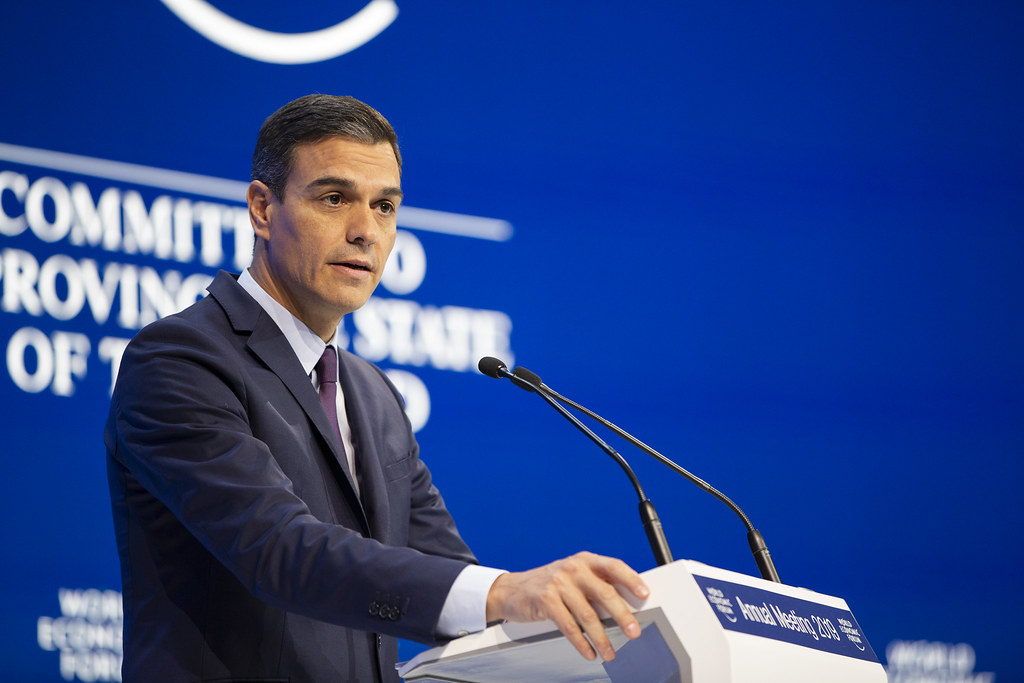
On Monday, 5 October, Spanish Prime Minister Pedro Sánchez called an early general election for 29 November. The move comes after Spain’s fragmented parliament rejected his government’s key housing measures last week, amid protests across the country. “We need to renew people’s support,” Sánchez said in a televised address, saying he wanted a much larger progressive majority to overcome vested interests. It is a big gamble. His Socialist Party is trailing in the polls, and those polls point to a conservative People’s Party government relying on the far-right Vox.
For European business, the stakes go well beyond Madrid. Spain has been one of the eurozone’s strongest major economies in recent years, and Sánchez leads one of Europe’s last left-leaning governments. A change of government would bring a far-right party into Spain’s central government for the first time since the return of democracy after Franco. That would shift Spain’s position on migration, EU budgets and climate policy just as Brussels needs unity on trade and defence.
Why Housing Brought Him Down
Housing is Spain’s most explosive issue. Rents and prices have soared in Madrid, Barcelona and the coastal cities, driven by tourism, short-term lets and a shortage of new homes. Anger boiled over after an 87-year-old woman was evicted from her Madrid flat, sparking protests nationwide.
Join The European Business Briefing
New subscribers this quarter are entered into a draw to win a Rolex Submariner. Join 40,000+ founders, investors and executives who read EBM every day.
SubscribeSánchez’s minority government proposed measures to help tenants, including automatic renewal of rental contracts and limits on evicting vulnerable people. Opposition parties voted them down. Sánchez has decided to turn that defeat into his campaign, framing the vote as a choice between continuing progressive policies and handing power to the right.
He also admitted he had made mistakes and fallen short of his promises. That is unusual for a sitting leader, and a sign of how much ground he needs to win back.
How Markets Reacted
So far, calmly. Spanish shares held steady after the announcement, and government bonds barely moved. That contrasts sharply with France, where political uncertainty has pushed borrowing costs to their highest in decades.
The difference is Spain’s stronger finances. Investors see either outcome as manageable, at least for now. But Spain isn’t immune to the wider pressures. Inflation came in above forecasts in Spain and the eurozone’s other big economies in September, and the global bond sell-off is raising borrowing costs everywhere. A messy campaign, or a long coalition negotiation afterwards, could change the mood quickly.
What Business Should Watch
Energy is one area where Spain has done better than its neighbours. It still has eight refineries and more than 13% of Europe’s refining capacity, which has cushioned it from the diesel crunch hitting much of Europe, as we explained in our Weekend Read on refinery closures. A new government would inherit that advantage, along with a housing crisis no party has yet shown how to fix.
The bigger question is stability. Spain has had several elections in recent years and rarely produces clear majorities. Another hung parliament, followed by weeks of talks, would slow decisions on housing, budgets and EU funds.
Where This Goes
Sánchez has surprised his critics many times, and nobody should write him off yet. But this time he is calling an election from behind, on an issue where voters blame the government as much as the opposition. If the polls are right, Spain will move to the right, and a far-right party will enter government in one of Europe’s largest economies. Business would see it as a manageable change. Brussels may not.
Related Analysis