





























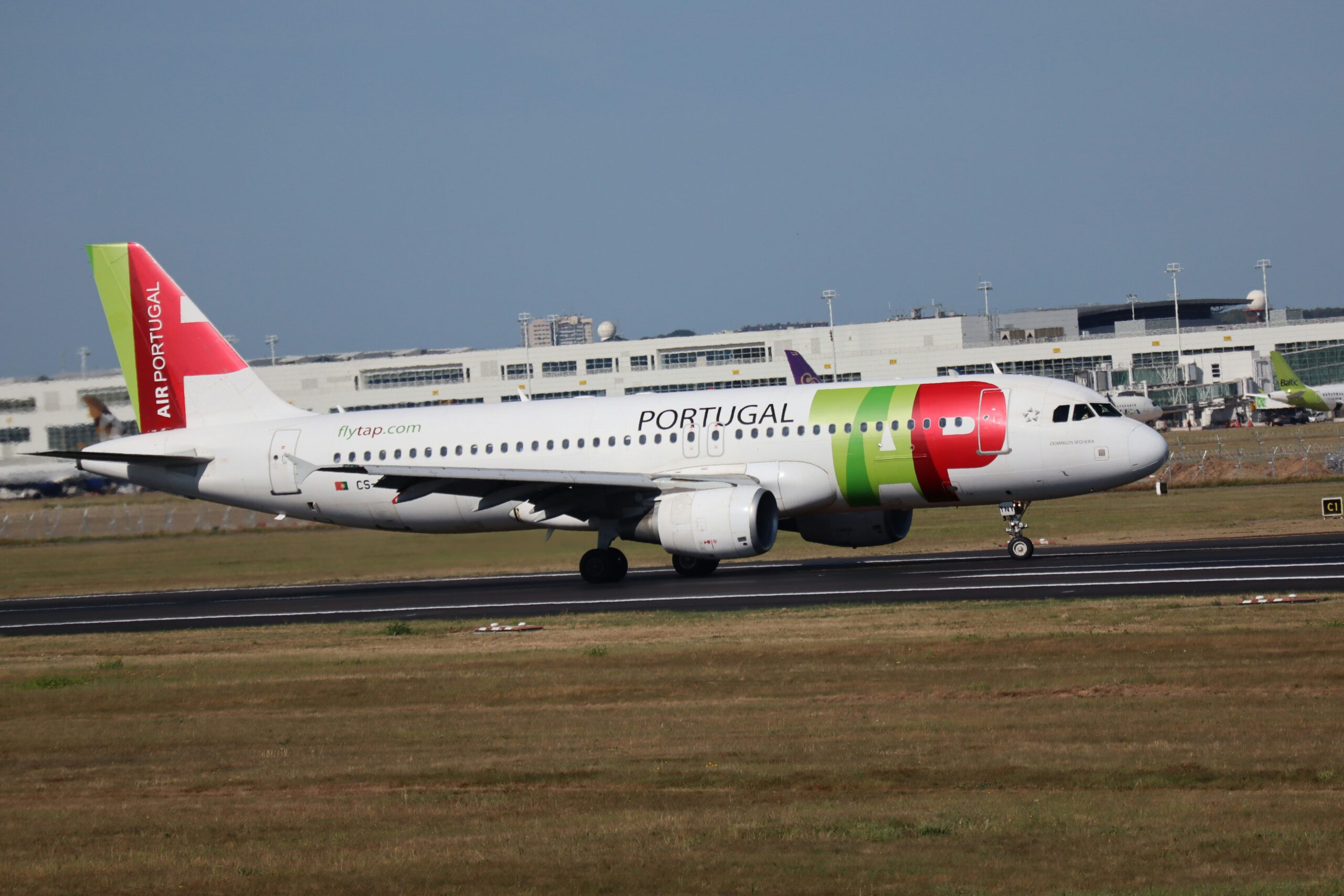
The privatisation of TAP Air Portugal has entered its decisive phase. Air France-KLM became the first of Europe’s three major airline groups to formally submit a non-binding offer for a minority stake in the Portuguese flag carrier on Thursday, firing the starting gun on what promises to be one of the most strategically significant aviation deals in European business this decade.
“TAP is a natural fit within Air France-KLM’s multi-hub strategy,” said CEO Benjamin Smith. “Our ambition is to strengthen the operations at Lisbon while developing connectivity in other cities across the country including Porto.” The offer was submitted to Parpublica, the Portuguese state agency that manages public holdings. German carrier Lufthansa and IAG — the parent company of British Airways, Iberia and Aer Lingus — have also confirmed interest, making this a three-way contest between the continent’s dominant airline groups.
Why TAP Is Worth Fighting For
Join The European Business Briefing
New subscribers this quarter are entered into a draw to win a Rolex Submariner. Join 40,000+ founders, investors and executives who read EBM every day.
SubscribeTAP is not simply another European short-haul carrier. Its value lies in its geography and its history. Lisbon’s position on the western tip of Europe makes it a natural transatlantic gateway, and TAP has spent decades building a route network that no rival can easily replicate. Its prime slots connecting the Lisbon hub with Brazil, Portuguese-speaking African countries and the United States are the crown jewel — routes that carry both commercial weight and political significance for any Portuguese government signing off on a sale.
For Air France-KLM, the strategic logic is compelling. Lisbon would become the group’s sole southern European hub, plugging a geographic gap that neither Paris Charles de Gaulle nor Amsterdam Schiphol can fill. The group already serves five Portuguese airports and has grown its capacity in Portugal by 44% since 2019 — TAP is a natural extension of a commitment already being made. According to Air France-KLM’s official statement, the group carried 103 million passengers in 2025 and posted €33 billion in revenue, giving it the financial firepower to see this deal through.
The prize also carries alliance implications. Should Air France-KLM succeed, TAP would likely switch its global alliance membership from Star Alliance to SkyTeam — reshaping the competitive balance between airline partnerships and significantly boosting SkyTeam’s coverage across South America and Africa, two of the fastest-growing aviation markets in the world. The deal would further accelerate the consolidation of European aviation that has been reshaping the continent’s airline landscape for the better part of a decade.
A Three-Way Fight With Complications
The contest will not be straightforward. IAG has made clear it wants guarantees of potential full ownership rather than being locked into a minority position indefinitely — a condition that has complicated its negotiations with Lisbon. Lufthansa, fresh from its protracted battle to acquire ITA Airways in Italy, brings a track record of European corporate dealmaking but faces scrutiny over how aggressively it integrates acquired carriers. Middle Eastern airlines had also been circling, though none submitted formal bids.
Portugal is selling TAP to recover €3.2 billion in state aid provided during the Covid-19 pandemic. The carrier was renationalised in 2020 and remains one of the last state-owned flag carriers in Europe. The government is offering a 44.9% stake to a strategic partner, with 5% reserved for TAP employees, while retaining majority control for now — though the privatisation decree allows for a later sale of the remaining stake to whoever wins this round.
Air France-KLM has been explicit about its own conditions. The group will not invest in an airline unless it is confident of achieving an 8% profit margin, and governance structure — specifically how much autonomy TAP retains — remains a live issue in negotiations. That discipline reflects a broader lesson from costly airline mergers that have taught Europe’s airline giants to be precise about the terms on which they consolidate.
What Comes Next
The privatisation is expected to conclude in the second half of 2026. Binding bids will follow the current non-binding round, with European Commission scrutiny on competition grounds almost certain — mirroring the prolonged regulatory process that shadowed Lufthansa’s ITA deal and illustrating how closely EU competition policy watches cross-border consolidation in strategically sensitive sectors.
For Portugal, the outcome will define the future of its national carrier and Lisbon’s role as a European business hub. For the winning group, it locks in access to the most strategically valuable long-haul network available to a European carrier outside of organic growth. Brazil is booming, Lusophone Africa is expanding, and the transatlantic corridor remains the most lucrative route system in global aviation. The race has only just begun.