
































Madrid, 30 August 2026 — EBM Weekend Read. By Brad Adams/Nick Staunton
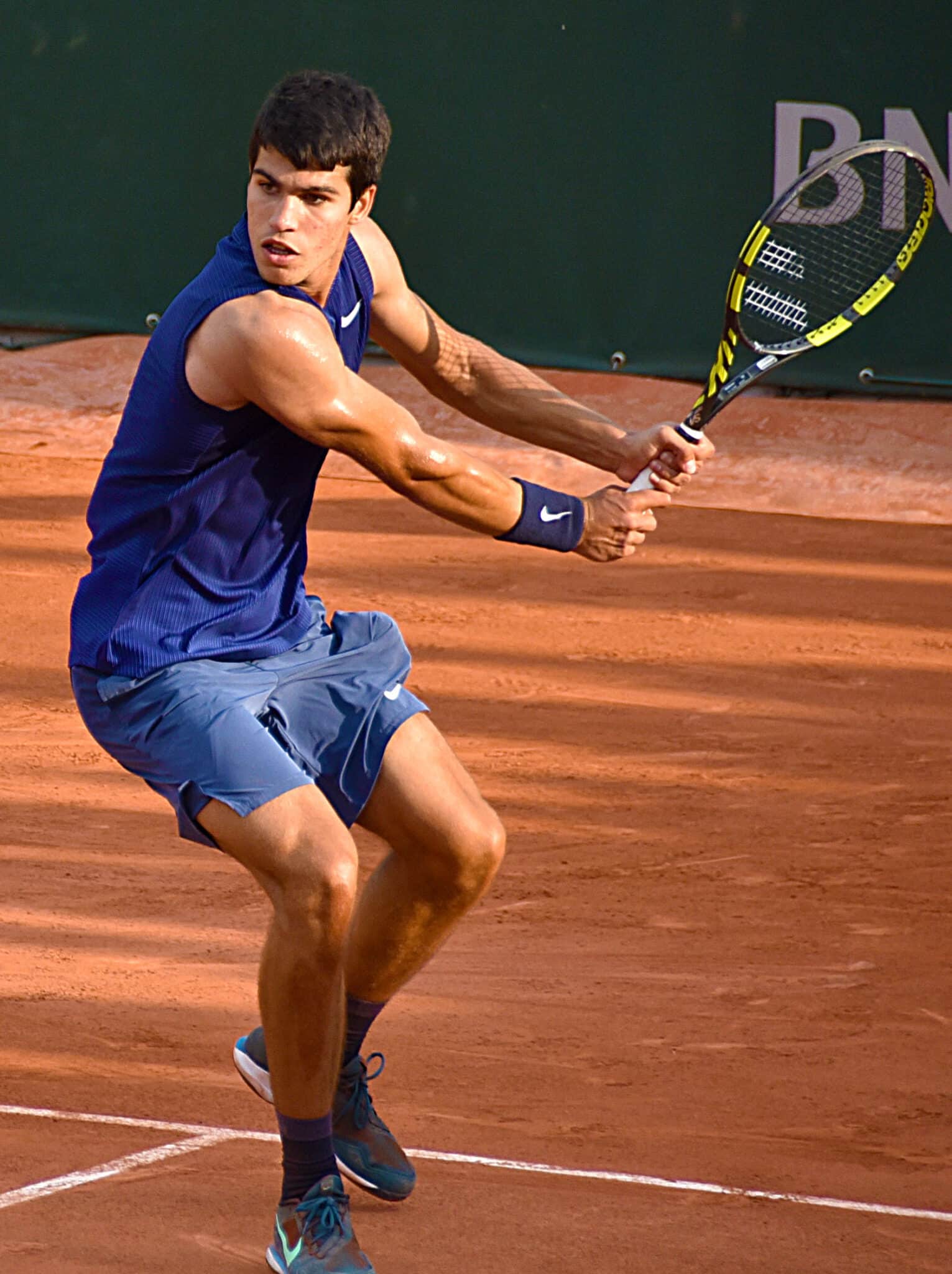
Carlos Alcaraz is already rich enough to make the question sound faintly absurd. At 23, the Spaniard has won seven Grand Slam singles titles, earned tens of millions of dollars in prize money and become one of the most recognisable athletes on the planet. Yet the really interesting part of his financial story is not what he has already made, but what he may be capable of building.
Alcaraz is no longer simply a tennis player who earns a great deal of money. He is becoming something considerably more valuable: a global sporting property whose commercial appeal increasingly extends beyond the results of the next match. Forbes estimates that he earned $53.7 million over the latest 12-month period, with an extraordinary $38 million coming from off-court activities including endorsements, appearances and other commercial ventures. Roughly seven dollars in every ten he earned, therefore, came from somewhere other than a tennis court.
Join The European Business Briefing
New subscribers this quarter are entered into a draw to win a Rolex Submariner. Join 40,000+ founders, investors and executives who read EBM every day.
SubscribeThat is where the comparison with Roger Federer, Rafael Nadal and Novak Djokovic becomes unavoidable. Alcaraz still has a long way to go before he can be mentioned alongside them purely as a tennis player, but commercially he has arrived at a fascinating moment. The Big Three built their fortunes when tennis stars became global brands; Alcaraz is emerging in an era when the biggest athletes can become something closer to media companies, luxury brands and investment platforms simultaneously. The danger is obvious: the more famous he becomes, the greater the temptation to monetise every available inch of that fame. The opportunity is equally clear. If he gets the balance right, Alcaraz could build a sporting fortune that survives his playing career by decades.

The Tennis Is Only the Beginning
The obvious starting point is the tennis itself. Alcaraz’s career prize money has already reached extraordinary levels for someone still in his early twenties, placing him among the leading earners in the history of men’s tennis. The ATP’s 2026 media guide listed him fifth on the all-time career prize-money rankings, behind only Djokovic, Nadal, Federer and Andy Murray, with more than $60 million already recorded.
That figure is worth pausing over because it illustrates just how dramatically the economics of elite tennis have changed. The sums now available at the very top of the sport place its biggest stars in a different financial universe from even the world’s best athletes in many other global sports. Put the $5.5 million available to a single US Open champion alongside squash, for example: Mostafa Asal, the highest-earning male squash player in the 2024–25 season, earned around $400,686 in prize money across the entire year, while the average among the men’s top 10 was approximately $183,734. A single tennis title can therefore now be worth more than thirteen times what the world’s highest-earning squash player makes over an entire season.

That is why squash cannot simply look at tennis and ask why it does not possess the same commercial ecosystem. Tennis has four Grand Slams with enormous histories, global television audiences, multinational sponsors and athletes who have become household names far beyond their sport. Squash has extraordinary players — arguably among the finest athletes in any racket sport — but even a world No.1 can spend an entire year earning what a top tennis player now collects from one tournament. The question for squash is not whether it can compete with tennis on tennis’s commercial terms; it probably cannot. The real challenge is whether it can build a model that turns its exceptional athletes into recognisable global stars and gives broadcasters and sponsors a compelling reason to invest.
Yet prize money tells only part of the Alcaraz story. In fact, it increasingly looks like the smaller part.
Where the Real Money Is Made
Alcaraz’s estimated $38 million in annual off-court income demonstrates how dramatically the economics of elite sport have changed. Nike, Rolex, Louis Vuitton, BMW, Calvin Klein and other global brands are not simply paying for access to the latest Grand Slam champion; they are investing in a longer proposition that Alcaraz could become one of the defining sporting personalities of his generation.
Winning creates attention. Personality turns attention into commercial value.
Roger Federer understood that better than almost anyone. His career prize money was immense, but his real commercial revolution came from converting sporting excellence into a premium global brand built around elegance, precision and longevity. His partnerships felt coherent rather than opportunistic, and his investment in Swiss sportswear company On demonstrated the next stage of the modern athlete’s evolution. Rather than simply appearing in an advertisement, Federer became an investor and business partner. As EBM explored in Federer’s On bet, that shift from endorsement to ownership offers a powerful lesson for the next generation of sporting stars.
That should be the longer-term commercial ambition for Alcaraz. Sponsorship is valuable, but ownership can be transformative. The important question is not how many endorsement cheques he can collect this year, but whether he can eventually identify businesses in which his name, reputation and audience genuinely create value. As EBM has examined in athlete ownership, equity is most powerful when the athlete brings something distinctive to the business rather than simply lending a famous name to a poor investment.
Alcaraz does not need to own everything. He needs to own the right things.
Why Sponsors Want Carlos
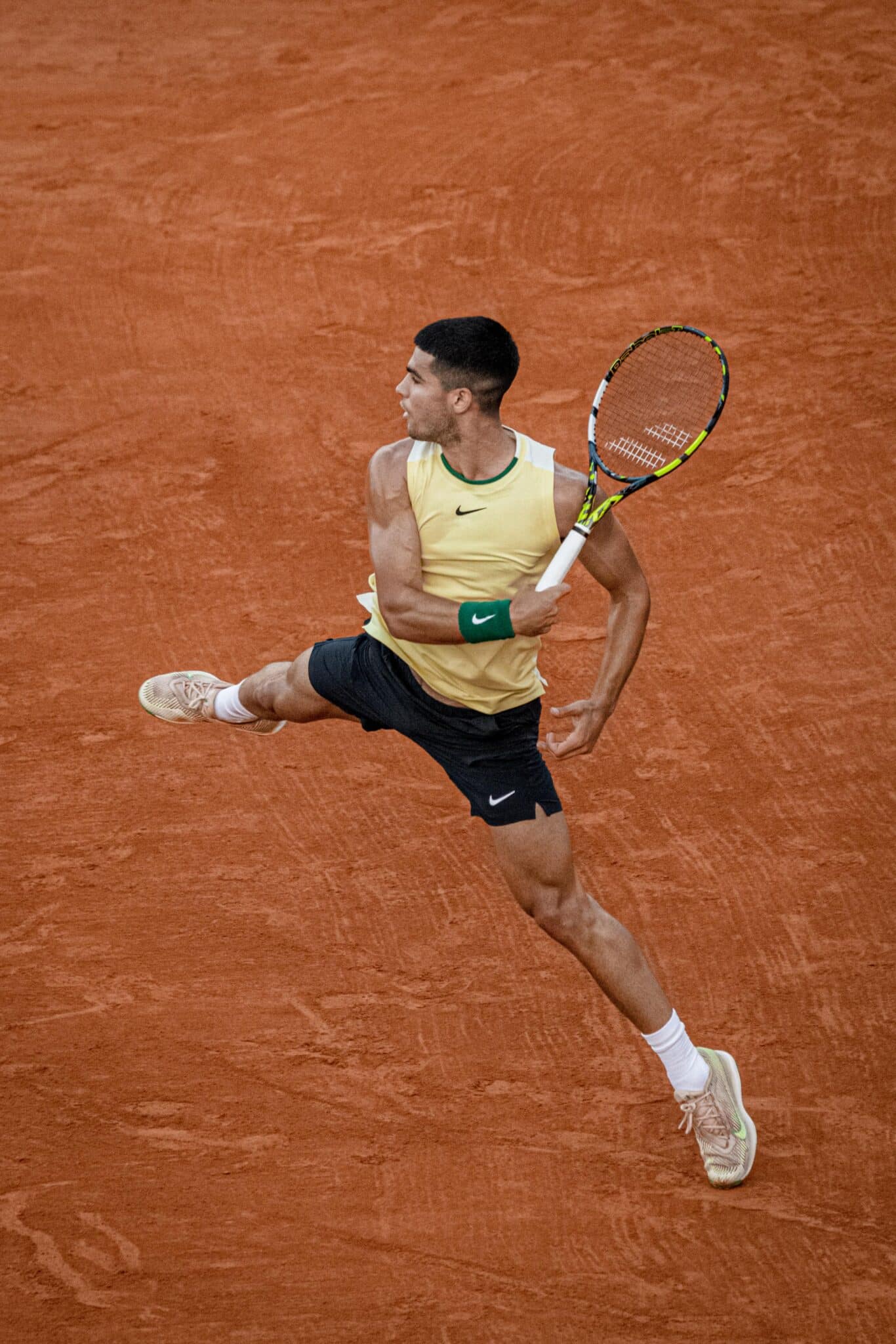
His commercial appeal is not difficult to understand. First, there is the tennis: an attacking, athletic game that is as spectacular as it is successful and produces moments that travel effortlessly across social media. But there is also his personality. Alcaraz appears comfortable with fame without yet appearing consumed by it, and that matters enormously to sponsors looking for an athlete capable of moving between sport, fashion and popular culture.
Then there is the timing. Federer and Nadal have retired, while Djokovic is approaching the final stage of an extraordinary career. For nearly two decades, global tennis marketing revolved around three contrasting but instantly recognisable personalities. Federer represented refinement, Nadal endurance and humility, Djokovic relentless competitive excellence.
Alcaraz is the first genuinely convincing heir to that era precisely because he does not need to copy any of them.
His connection with Nadal will always be commercially powerful, particularly in Spain, but becoming “the next Nadal” would be a mistake. Nadal’s brand was built around his particular personality and his almost monastic relationship with competition. Alcaraz has a different energy: younger, more expressive and more naturally suited to an era in which athletes are expected to exist across social media, entertainment and fashion as well as competition. As Wimbledon’s business demonstrates, modern tennis is now a sophisticated ecosystem of broadcasting, luxury partnerships, sponsorship and global audiences. Alcaraz is not merely one of its best players; he is becoming one of its most valuable assets.

The Federer Blueprint — and the Nadal Lesson
Federer remains the commercial benchmark, not simply because Forbes estimates his career pre-tax earnings at around $1.1 billion, but because of the discipline with which he built his brand. Even at the height of his fame, he rarely felt overexposed. Rolex, Nike and On formed a coherent commercial world that reinforced the qualities that had made Federer valuable in the first place, and his move into ownership showed how an athlete could eventually turn sponsorship into something more enduring.
Alcaraz should study that model, although copying it would be the wrong conclusion. Federer represented elegance and restraint; Alcaraz represents a different generation. The important lesson is commercial discipline. There is a considerable difference between being globally successful and becoming globally ubiquitous, and athletes who monetise everything risk diluting the scarcity that made them valuable.
Nadal offers a different lesson: authenticity. His commercial appeal was never separated from the qualities that made him successful on court, and that carefully protected reputation is now supporting serious interests beyond tennis. As EBM explored in Nadal’s property empire, he is already developing substantial business interests, including luxury real estate, demonstrating how a sporting name can become the foundation for long-term assets once the playing career begins to recede.
Djokovic provides the third lesson: longevity. His unprecedented success has allowed him to continue generating prize money, sponsorship income and business opportunities deep into his thirties. As EBM examined in Djokovic’s empire, sustained excellence itself becomes a formidable commercial asset.
Alcaraz has one advantage none of them can now buy.
Time.
The Sinner Rivalry Could Be Worth a Fortune
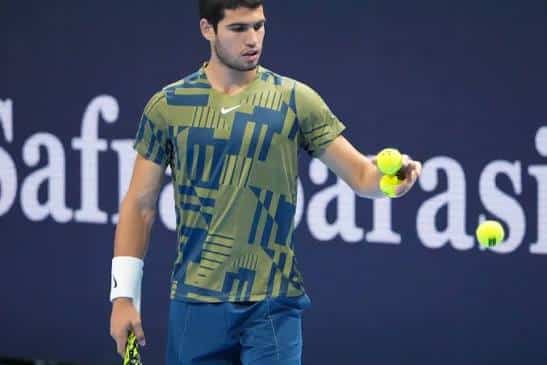
The rivalry with Jannik Sinner may ultimately become one of Alcaraz’s most valuable commercial assets because individual greatness is only part of the sporting business equation. Federer had Nadal, Nadal had Djokovic, and Djokovic had both of them. For nearly two decades, tennis possessed a continuously renewable narrative involving contrasting personalities and playing styles competing for the same prizes, and that rivalry created an economic ecosystem around itself.
Alcaraz and Sinner are beginning to build the next version.
Every major meeting between them has the potential to become an event, giving broadcasters a story to sell, sponsors global visibility and fans a rivalry in which to invest emotionally. Forbes estimated Alcaraz’s off-court earnings at around $38 million over the latest 12 months, compared with approximately $35 million for Sinner, suggesting that their commercial competition is already running alongside the sporting one.
A great rival does not diminish an athlete’s value. History suggests it can multiply it.
Tennis Must Still Come First
That is the tension at the centre of Alcaraz’s extraordinary opportunity. The sponsorships, fashion campaigns, appearances and investment possibilities are valuable because he is Carlos Alcaraz the tennis player, and there is always a danger that an athlete surrounded by commercial opportunity begins to treat sport as the platform for the business rather than recognising that the business exists because of the sport.
His best business decision may therefore be the least glamorous one: protect the tennis.
Federer’s discipline was to protect the scarcity of his public image. Nadal ensured his wider interests never overwhelmed the identity that made them valuable. Djokovic extended his sporting dominance for so long that every additional year created another layer of commercial opportunity. Alcaraz must do something similar.
At 23, he already possesses extraordinary foundations: major titles, more than $60 million in career prize money, enormous off-court earnings and a rivalry capable of defining the next decade of tennis. Federer showed how sporting fame could become ownership. Nadal is showing how a carefully protected name can become serious business interests. Djokovic demonstrated the financial power of sustained excellence.
Alcaraz now has the opportunity to learn from all three without becoming an imitation of any of them.
The most successful sporting empires are not built by monetising everything immediately. They are built by protecting the excellence that gives everything else its value. If Alcaraz can continue winning while choosing the right sponsors, investments and ownership opportunities, he may eventually discover that the Grand Slam trophies were only the first stage of the business he was building.
First win the tennis. Then own the future.