































Leiden, 14 September 2026 — EBM Weekend Read — Anthony Gill
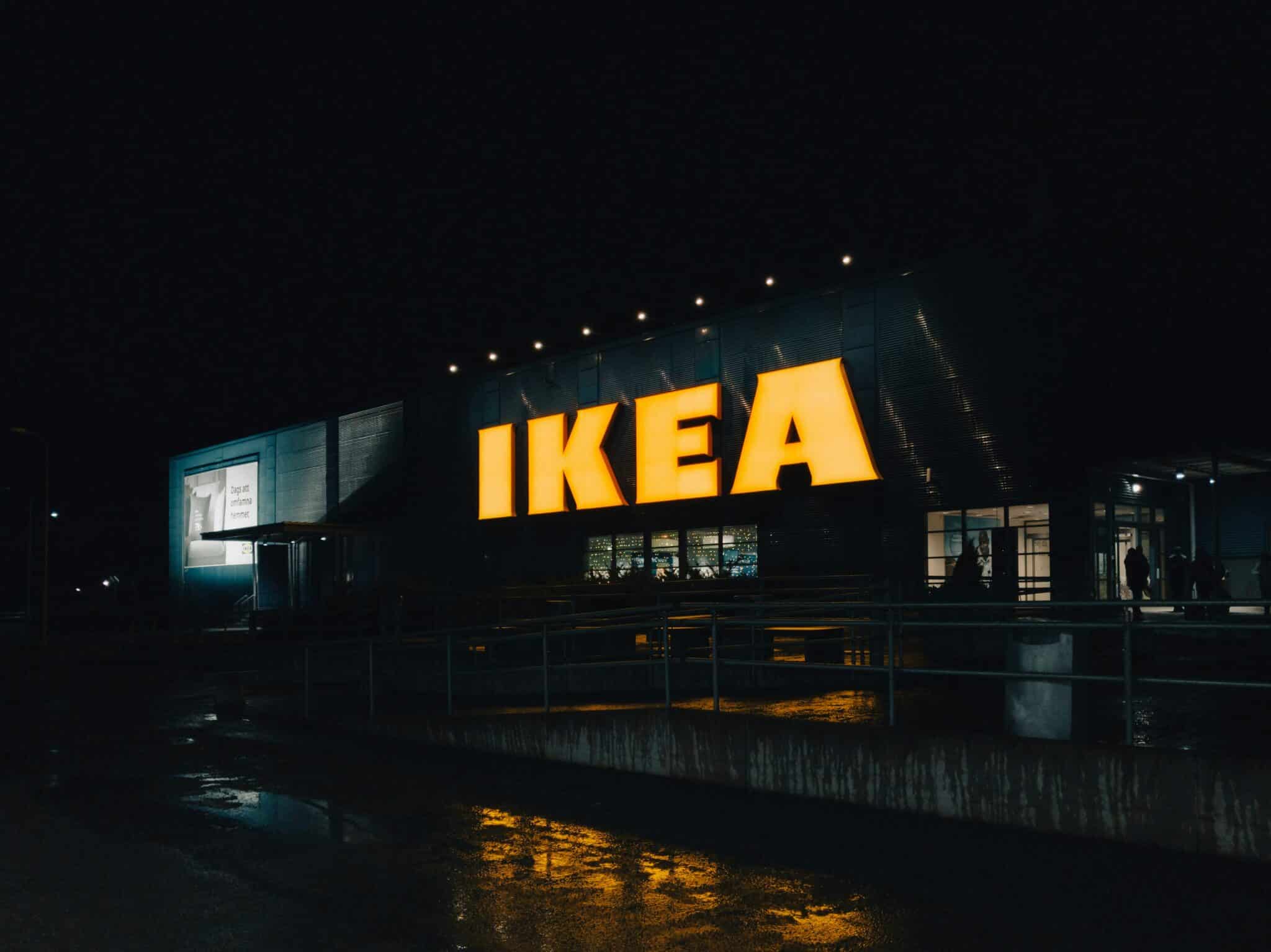
Ingka Group, the company that runs most IKEA stores on earth, reported €41.5bn in revenue for the financial year ending August 2025. It has no shareholders. It cannot be bought, sold, or taken over, because there is no stock to acquire and no owner to negotiate with. IKEA is not controlled by the Kamprad family in the straightforward way most people assume. Most of it belongs to a Dutch foundation that, in legal terms, owns itself.
Two Businesses, Two Foundations

Join The European Business Briefing
New subscribers this quarter are entered into a draw to win a Rolex Submariner. Join 40,000+ founders, investors and executives who read EBM every day.
SubscribeSo the money runs in a specific direction: customers pay the stores, the stores hand 3% of everything they take to the brand owner in Liechtenstein, and from there the structure has, for decades, kept that money largely outside any government’s reach. Kamprad himself once described the Liechtenstein reserves to researchers as a “piggy bank.” He was more direct still in a Swedish television documentary, where he said tax efficiency was simply “a natural part of the company’s low-cost culture” — treating the avoidance of national tax systems as a company value on the same level as flat-pack shipping or self-assembly furniture.
Why It Was Built This Way
The timing explains the motive. Sweden in 1982 had punishing inheritance tax on large fortunes, plus a further tax on the sale of stock needed to pay that inheritance bill in the first place — a combination that could have gutted the Kamprad family’s control of the company the moment Ingvar died. Placing ownership inside a Dutch foundation solved that problem permanently: a foundation has no shareholders to tax an inheritance from, because nobody technically owns it. As a direct bonus, the Dutch tax authority at the time granted Stichting INGKA “Institution for General Benefit” status — the Dutch charitable classification — despite the foundation’s primary function being ownership and control of a for-profit furniture retailer rather than charitable giving in any conventional sense. Research by Swedish broadcaster SVT estimated the structure would save the Kamprad family somewhere between €2.3bn and €3.2bn in tax across twenty years. It also happens to make IKEA immune to a hostile takeover, since there’s no majority stake to accumulate and no board that answers to an activist shareholder.
The foundation split isn’t just financial engineering, either — it created two genuinely different organisations answering to different logics. Stichting INGKA reinvests 85% of Ingka Group’s net profit straight back into the retail business, with the remaining 15% funding the IKEA Foundation’s charitable work, which had a budget of €282.7m as recently as 2022. Interogo Foundation, sitting over the brand and franchise side in Liechtenstein, exists for a narrower stated purpose: to secure the independence and longevity of the IKEA concept, not to give money away. For years, critics including the Netherlands-based advocacy group SOMO and Switzerland’s Berne Declaration argued this made INGKA one of the wealthiest charitable structures in the world while remaining one of the least generous relative to its size — an accusation the company has pushed back on by pointing to the reinvestment structure and the IKEA Foundation’s disbursements.
The Family Kept a Side Door Open Anyway

The Same Pattern, a Different Motive
IKEA’s foundation ownership sits in the same family as two other structures EBM has examined this year, and it’s worth being precise about how it differs from both. Rolex answers to no shareholder because a private Swiss foundation lets it control both supply and myth, publishing nothing and explaining nothing, which is precisely what sustains the brand’s pricing power. Aldi and Lidl are owned by foundations that let them fight price wars for years without a share price to defend, grinding down listed rivals who have no equivalent patience. IKEA’s foundation exists for neither reason. It was built to solve a specific 1982 Swedish inheritance-tax problem and to keep the company outside anyone’s ability to buy it, not to win a pricing war or protect a scarcity myth — the closest real parallel isn’t Rolex or Aldi at all, but the vertically integrated control EssilorLuxottica built in plain sight on a public exchange, except IKEA achieved its version of permanence by leaving the public markets entirely rather than dominating them from within.
The Bottom Line: IKEA’s foundation structure is often described using the language of generosity — a charitable foundation, a not-for-profit owner, a company that answers to a higher purpose than shareholder return. That framing survives about as long as it takes to read the 3% royalty flowing to Liechtenstein and Kamprad’s own description of tax efficiency as a core company value. What IKEA actually built is a permanence machine: a structure immune to inheritance tax, immune to hostile takeover, and largely immune to the disclosure obligations a listed company can’t avoid. It has delivered real benefits — €41.5bn in revenue, genuine reinvestment in the retail business, a real charitable foundation funding real programmes. But the foundation didn’t emerge from an act of generosity. It emerged from a 1982 tax problem, solved so completely that fifty years later almost nobody buying a €3 hot dog at the exit till has any idea who, in any conventional sense, actually owns the company selling it to them.






