





























With Europe unveiling an ambitious energy roadmap at the end of last year, infrastructure projects are taking centre stage. For more than a decade, one idea has been particularly compelling: connecting Cyprus to continental Europe’s electricity network through one of the world’s most ambitious subsea power cables, ending the energy isolation of the European Union’s last non-interconnected member state. But turning that vision into infrastructure has proved considerably more difficult. New investors Meridiam could be about to help turn the tide.
In December 2025, the European Commission announced a far-reaching plan to integrate the totality of Europe’s energy grids through the European Grids Package and the Energy Highways initiative, marking a new, modern approach to energy infrastructure planning and financing. “By further connecting national grids, we enhance resilience across borders, allowing national systems to mutually support each other (…) European grids pave the way for integration of more renewables and support the electrification of our economy, accelerating our shift away from fossil fuels.” said Teresa Ribera, Commissioner for Clean, Just and Competitive Transition.
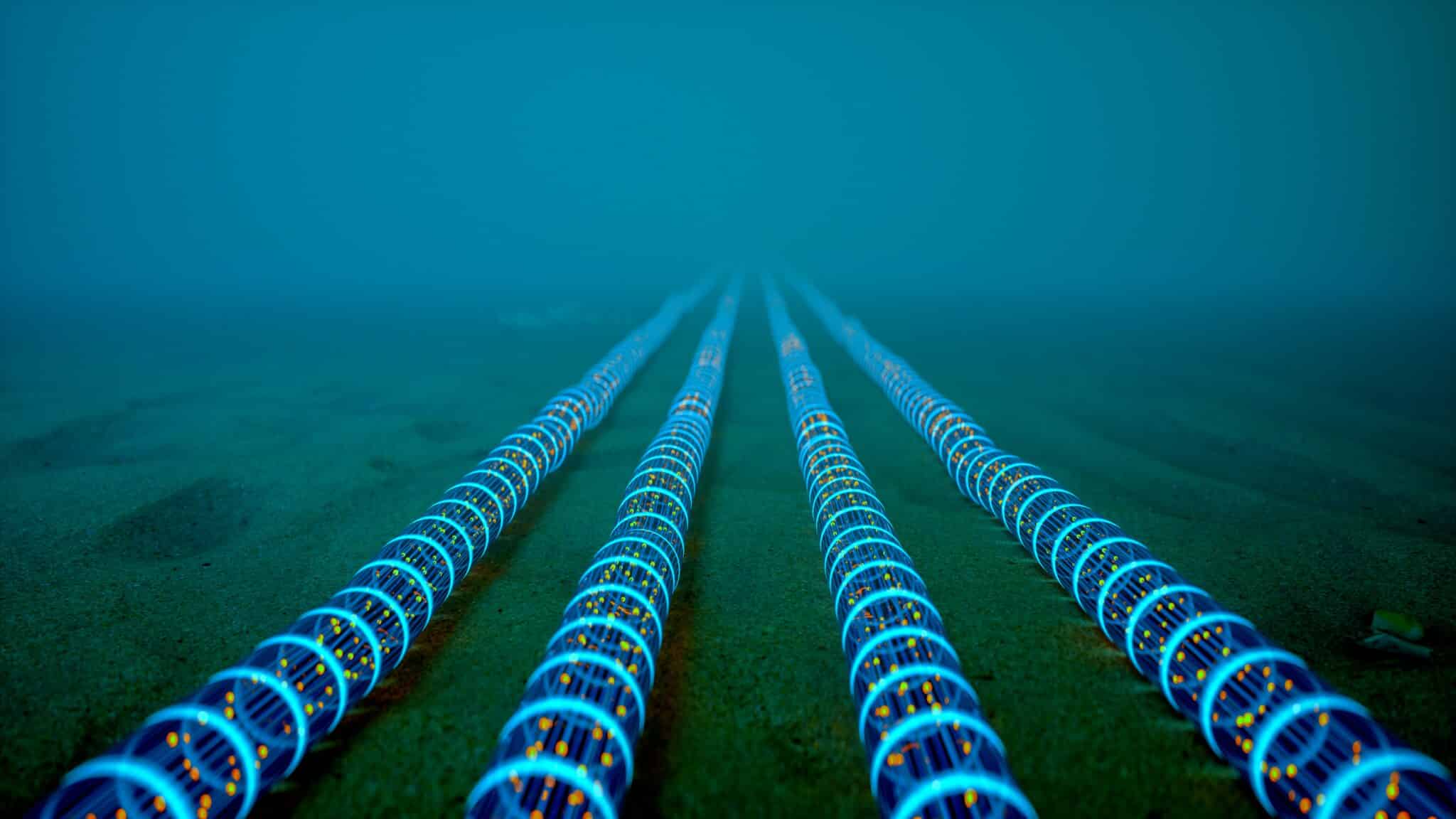
The Great Sea Interconnector (GSI), formerly known as the EuroAsia Interconnector, is part of this wider initiative. Designed ultimately to end Cyprus’ energy isolation, it represents “one of the largest submarine power transmission projects in the world,” according to the European Commission. Its first major section, between Crete and Cyprus, would run for 898 km beneath the Mediterranean, with a transmission capacity of 1,000 MW. The full system would extend approximately 1,208 kilometres, with parts of the cable reaching depths of around 3,000 metres.
Join The European Business Briefing
New subscribers this quarter are entered into a draw to win a Rolex Submariner. Join 40,000+ founders, investors and executives who read EBM every day.
SubscribeThe strategic rationale is particularly strong for Cyprus. According to the European Commission, it remains the last EU member state disconnected from the European electricity grid, restricting both its participation in the internal energy market and its ability to integrate renewable electricity. Its dependence on imported hydrocarbons also remains striking: Commission figures published in June show that oil and petroleum products accounted for 85.2% of the island’s gross energy consumption in 2024, while its energy import dependency stood at 87.7%.
The GSI promises to change that equation. Yet it has been repeatedly slowed by financing disagreements, regulatory uncertainty and geopolitical tensions. The arrival of French infrastructure investor Meridiam as the 66% shareholder in the project company in August could therefore represent something more important than another financial transaction: an attempt to turn a strategically attractive but repeatedly delayed project into a deliverable one.
Ending Cyprus’s energy isolation
The immediate objective is the Crete-Cyprus link. The European Union has already committed €657 million through the Connecting Europe Facility, while French cable manufacturer Nexans has been contracted for the cable works and Siemens selected as preferred contractor for the converter stations.
For Cyprus, interconnection would provide access to a much larger electricity market and allow power to flow in both directions. That could improve security of supply, facilitate greater renewable penetration and create opportunities to export surplus solar generation rather than curtail it.
The economic argument is important because Cyprus continues to pay a price for its isolation. The IMF noted in its 2026 Article IV assessment that the country’s electricity system is “largely oil-powered and non-connected, leading to high costs and emissions.” Recent analysis by the University of Cyprus likewise found that, despite falling prices in its newly competitive electricity market, Cyprus continued to record substantially higher wholesale electricity prices than most European markets.
Interconnection should give the island considerably greater flexibility. Electricity generated more cheaply elsewhere in Europe could be imported when required, while Cyprus’s substantial solar potential could increasingly feed into a wider regional market.
That does not mean lower bills are automatic. Cyprus’s government has been notably cautious on this point. Energy Minister Michalis Damianos said earlier this year that the government needed an updated assessment of the project’s real cost precisely to ensure that electricity prices ultimately fall rather than rise.
This is one reason why the European Investment Bank’s ongoing due diligence is important. The project is currently estimated at around €1.9 billion, but Reuters reported in May that additional financing could be necessary if updated assessments confirm higher costs.
The potential environmental impact is nevertheless substantial. Greater interconnection should allow Cyprus to integrate more renewable generation while reducing its dependence on imported oil-fired power. It also fits the EU’s broader effort to create a more interconnected and resilient electricity system in which renewable power can move more easily between national markets.
Meridiam gives a long-delayed project new momentum
Meridiam’s arrival could prove decisive. On 5 August, in the presence of Greek Prime Minister Kyriakos Mitsotakis, an agreement was signed making the French infrastructure investor the majority shareholder in the GSI project company. A separate agreement between IPTO, GSI and Nexans was signed to advance the seabed surveys required for construction.
Mitsotakis described the transaction as a “very strong vote of confidence” and argued that the new structure creates “a much stronger, a much more credible platform for the construction and successful completion of the project.”
Meridiam brings both capital and experience in long-term infrastructure. The Paris-headquartered group manages around €24 billion in assets and has more than 130 projects under development, construction or operation worldwide. GSI also closely reflects its investment strategy. Meridiam defines its mission as delivering “sustainable infrastructure that improves the quality of people’s lives”, with priorities including resilient infrastructure, clean energy and emissions reduction.
GSI potentially combines all three: strengthening Cyprus’s energy infrastructure, facilitating renewable generation and addressing some of the structural factors behind high electricity costs. CEO Thierry Déau presented the investment in similar terms, describing GSI as “a very strategic project for Europe” and linking it to Meridiam’s “long-term policy of basically building equipment for Europe to become more resilient.”
Important uncertainties nevertheless remain. Cyprus has yet to determine the terms of its participation, while the European Investment Bank’s assessment and questions over costs and their distribution remain unresolved. As University of Nicosia researcher Constantinos Hadjistassou cautioned, “The most important thing remains the viability of the project.”
Meridiam cannot resolve those issues alone. What its arrival does provide is additional financial credibility and infrastructure expertise to a project that the Cypriot government itself says has gained “new momentum”.
The geopolitical cable
Finance, however, is only part of the challenge. GSI crosses a politically sensitive maritime region where Turkey contests Greek and Cypriot interpretations of maritime jurisdiction and maintains that infrastructure crossing areas it claims as part of its continental shelf requires Ankara’s approval.
Those tensions became concrete in July 2024, when Turkish naval vessels appeared near survey operations south of the Greek island of Kasos. The International Institute for Strategic Studies has subsequently identified GSI as part of the broader collision between energy development and competing maritime claims in the Eastern Mediterranean. The resumption of seabed surveys will therefore be an important test. Meridiam’s arrival adds a significant French commercial interest to a project already strongly backed by the EU, with Energy Commissioner Dan Jørgensen describing the GSI as being of “strategic importance.”
For Cyprus, success could fundamentally reshape how the island produces, imports and eventually exports electricity while reducing its longstanding dependence on oil-fired power.