






























Neckarsulm, 26 July 2026 — EBM Weekend Read — By Nick Staunton
In 2025, Lidl started a price war in Germany and its parent company grew anyway, to €185.6 billion. That is not a typo and it is not a rounding of some global luxury conglomerate. It is what one family-controlled German grocer now turns over in a year, which makes the Schwarz Group the largest retailer in Europe and one of the largest on earth. Its nearest rival is another German discounter that also cuts prices for a living and also answers to no shareholder anywhere
Between them, Aldi and Lidl set the price of groceries across much of the continent. Neither is listed. Neither publishes the detail a public company must. Both are controlled through private foundations, and that arrangement is not a quirk of German tax law sitting to one side of the business. It is the business. The thing that lets these two companies grind down every listed competitor is the same thing that keeps them off the stock market.
Join The European Business Briefing
New subscribers this quarter are entered into a draw to win a Rolex Submariner. Join 40,000+ founders, investors and executives who read EBM every day.
SubscribeTwo brothers, one idea, and a very long game
The story starts in Essen in 1913, with a small shop run by Anna Albrecht. After the war her sons Karl and Theo took it over and did something radical for the time. They stripped retailing back to almost nothing.
No advertising. No fresh-food counters. A few hundred products instead of thousands. Stock left in the shipping boxes rather than arranged on shelves. Every cost that did not lower the price to the customer was treated as waste and removed. The German word for it is hard discount, and the Albrechts more or less invented it.
In 1960 the brothers split the company in two, reportedly over whether to sell cigarettes. Theo took the north, Karl the south, and to this day Aldi Nord and Aldi Süd are separate businesses with separate territories, divided by an invisible line across Germany that locals call the Aldi equator. In June 2025 the two branches were reported to be exploring a merger for the first time in over sixty years, which tells you something about the pressure even they now feel.
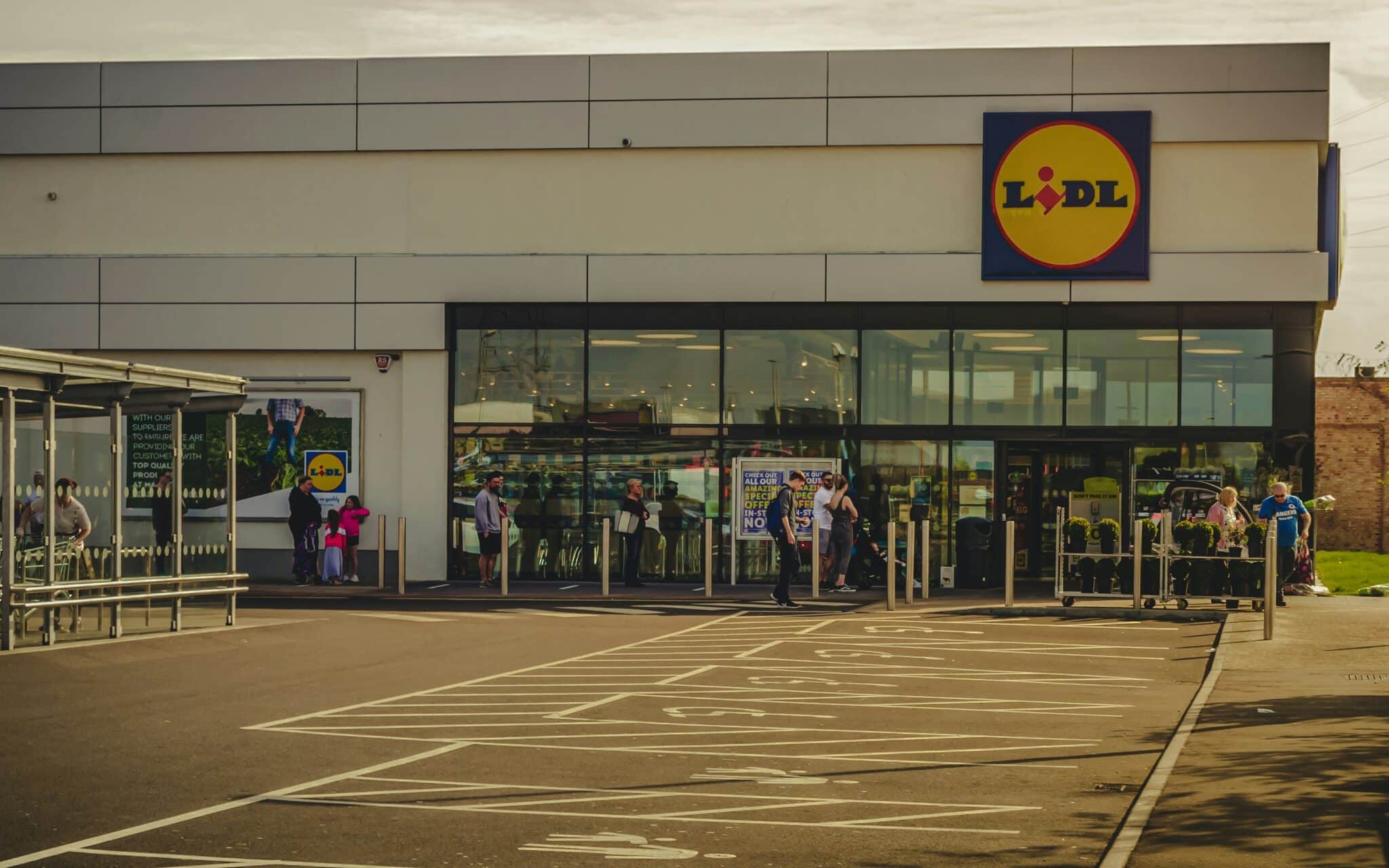
Lidl came later and copied the template. Dieter Schwarz built it out from his father’s fruit wholesaler, opening the first Lidl in 1973 and deliberately not putting the family name over the door. It worked. Lidl alone did €140.2 billion in 2025, up 6.1 per cent, and is the group’s engine.
Why fewer things means lower prices
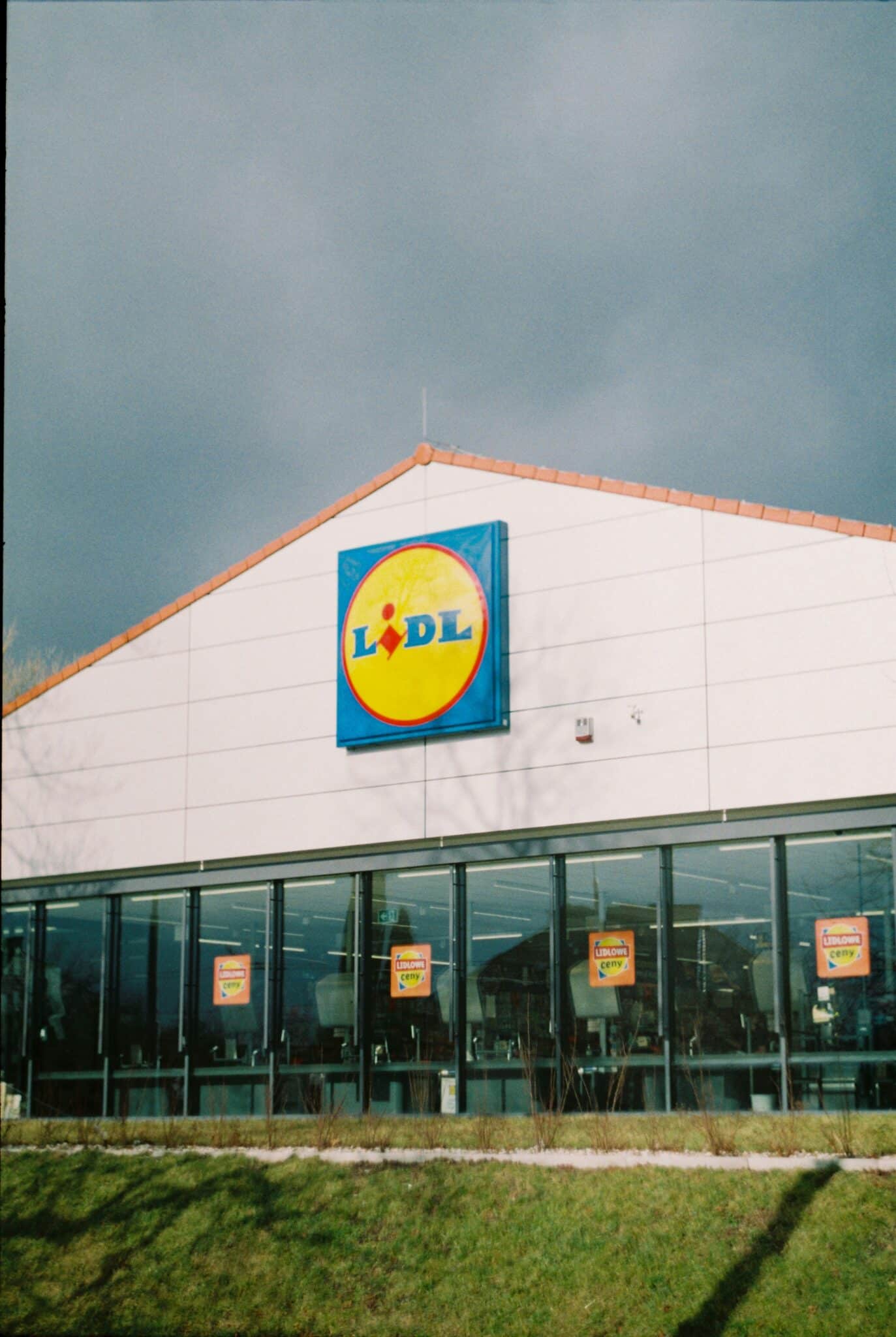
A typical Tesco carries around 30,000 to 40,000 separate products. A Walmart supercentre holds far more. An Aldi carries roughly 1,400 to 1,800. Lidl a bit more, around 4,000. That single decision cascades through the whole business.
Fewer products means enormous orders of each one, which means the buyer can squeeze the supplier harder than any full-range grocer can. It means simpler shops, less staff, faster restocking and far less wasted food. It means a smaller store that still sells a lot per square foot, because customers are not wandering twelve varieties of peanut butter. And it means the shelves can be filled with the discounter’s own label rather than a brand.
That last point is the quiet core of it. Around 90 per cent of what Aldi sells is its own brand. When you own the brand, you are not paying for the manufacturer’s marketing, and you can switch supplier whenever you like. The usual link between low price and low quality is broken, because the discounter controls the recipe and the packaging and simply leaves out the advertising budget. The customer gets something close to the branded product for meaningfully less, and the shop keeps a healthy margin while still undercutting the supermarket down the road.
None of this is secret. Tesco and Sainsbury’s have known the mechanics for twenty years. The question that matters is why they have never been able to answer it, and that is where ownership comes in.
The foundation is the weapon
Aldi and Lidl are not owned by people in the way a listed company is owned by its shareholders. They are owned by foundations.
Aldi Süd sits under the Siepmann-Stiftung and two smaller foundations, controlled by the heirs of Karl Albrecht. Aldi Nord runs through three separate foundations, Markus, Lukas and Jakobus, controlled by Theo’s side. The Markus foundation alone holds 61 per cent of Aldi Nord. Lidl and its sister chain Kaufland sit under the Dieter Schwarz Stiftung. Three different structures, one shared effect.
The effect is this. There are no public shares, so nobody outside the families can buy in, and the companies can never be taken over. There is no share price, so there is no quarterly number to defend and no analyst to placate. There is no dividend obligation, so the profit is not pulled out and handed to investors. It is poured back into new stores, cheaper prices and bigger warehouses. The Albrechts built the three-foundation split at Aldi Nord specifically to stop any single family member selling or seizing control. It was designed as a fortress.
We saw the same architecture doing the same work in last week’s piece on the Rolex Foundation. A company owned by a foundation is not run for an exit. It is run to continue. In watches that means protecting scarcity. In groceries it means something more aggressive: the freedom to compete on price for as long as it takes, without ever being punished for it.
What that does to a listed rival
When Lidl cut prices across Germany in 2025, it did not have to explain a thinner margin to anybody. There was no earnings call, no share-price wobble, no activist investor demanding the margin back. It simply cut, and grew to €140 billion while doing it.
Now imagine Tesco or Sainsbury’s doing the same. Both are listed. Both must report to the City every few months. A grocery chief executive who deliberately sacrificed margin for two or three years to match a discounter would spend every results day defending the decision and would likely not survive to see it pay off. The market punishes exactly the patience the discounter model requires.
This is the same discipline gap we traced across luxury, where Ferrari’s refusal to chase volume and the Swiss watchmakers holding price through the downturn both rested on being insulated from the quarterly demand to grow. Grocery is the same lesson in a lower-margin key. The listed British grocers were forced to compete on price against opponents who never have to justify a bad six months to anyone. That is not a fair fight, and it was never designed to be.
The results are on the shelves. Aldi took fourth place in the UK from Morrisons in 2022. Lidl passed 8 per cent of the British market and became the fifth-largest chain, making a pre-tax profit of £156.8 million in the year to February 2025, up from £43.6 million the year before. The same rise of own-label that is remaking European retail has now pushed UK own-brand past half of all grocery volumes for the first time. That is the discounters’ worldview winning even inside their rivals’ stores.
The Upshot
There is a real cost to all this, and it should be said plainly. These are among the most secretive large companies in the world. No listing means no public accounts, no external scrutiny, no market for control if the stewardship ever slips. Aldi Nord has already had bruising family disputes over its foundations, and a court had to curb the family’s power in 2017. A structure with no shareholders also has no shareholder to sound the alarm.
But as competitive engineering it is close to unbeatable. Europe spends a great deal of energy asking how to make its listed champions leaner and quicker. Its two most relentless retailers answer the question by not being listed at all. They took the continent’s grocery market with a model any rival could copy and none can match, because the part that cannot be copied is the absence of a shareholder.
The cheapest trolley of food in Britain and much of Europe is filled, in the end, by companies that no investor can own and no rival can buy. That is not an accident of the discount model. It is the whole of it.
Related Analysis






