





























Milan, 27 July 2026 — EBM Weekend Read — By Nick Staunton
Look at the glasses on your face. If they are Prada, and the pair beside them on the shelf were Chanel, the same factory in Italy made them both. The same company owns the brand names on each, licences them from the fashion houses, and very likely owns the shop where you tried them on. Its name is EssilorLuxottica, it turned over €28.5 billion in 2025, and most people who wear its products have never heard of it.
This is the purest version of a story EBM has been circling for weeks. We looked at how Rolex answers to no shareholder and how Aldi and Lidl win by staying private. Those companies control one link in their chain and defend it fiercely. EssilorLuxottica controls every link at once — the brands, the licences, the factories, the wholesale, the shops, even the insurance that pays for the glasses. And unlike Rolex, it did it in plain sight, on a public stock exchange, with the regulators watching and waving it through.
Join The European Business Briefing
New subscribers this quarter are entered into a draw to win a Rolex Submariner. Join 40,000+ founders, investors and executives who read EBM every day.
SubscribeWhat one company actually owns
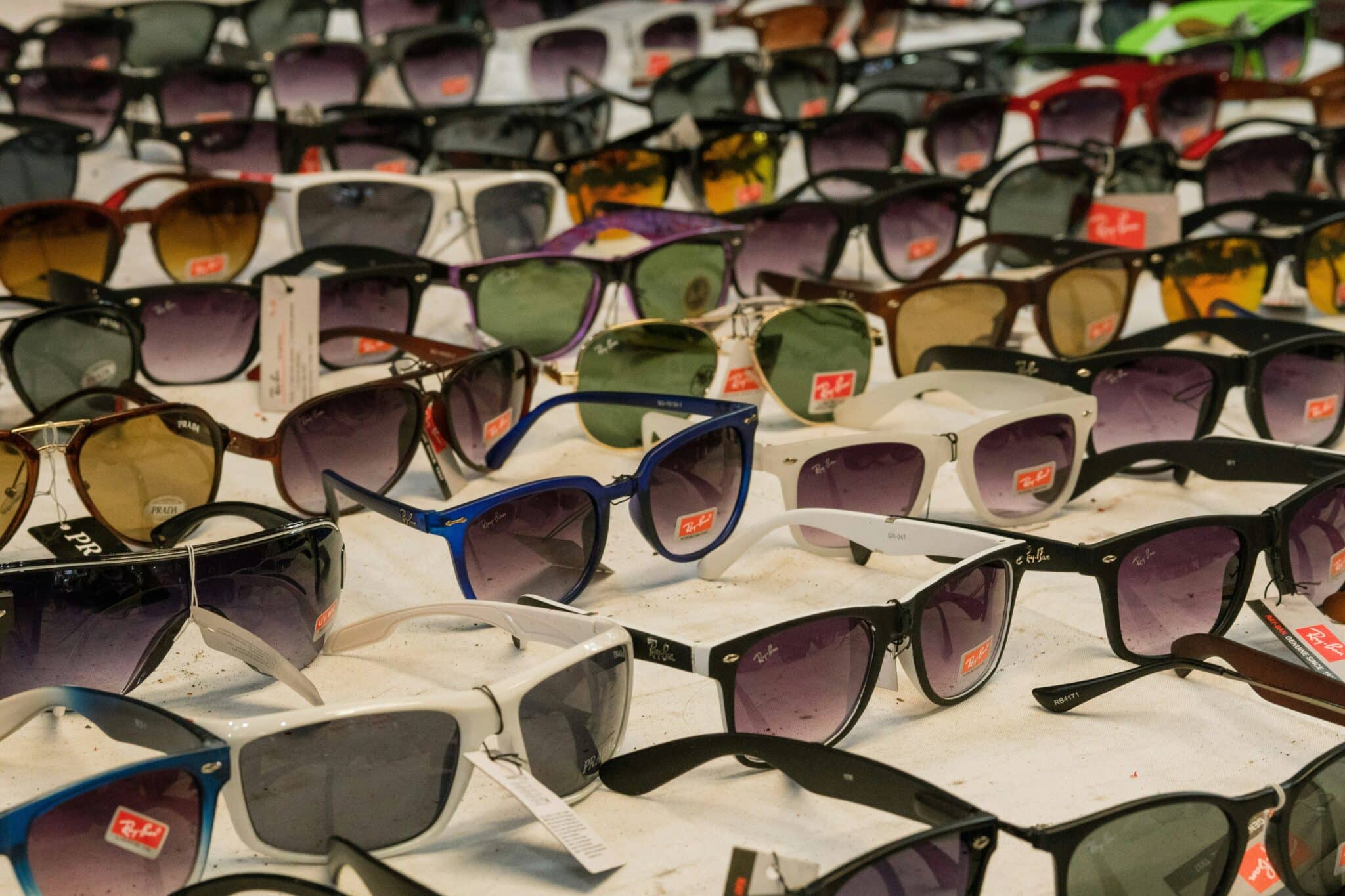
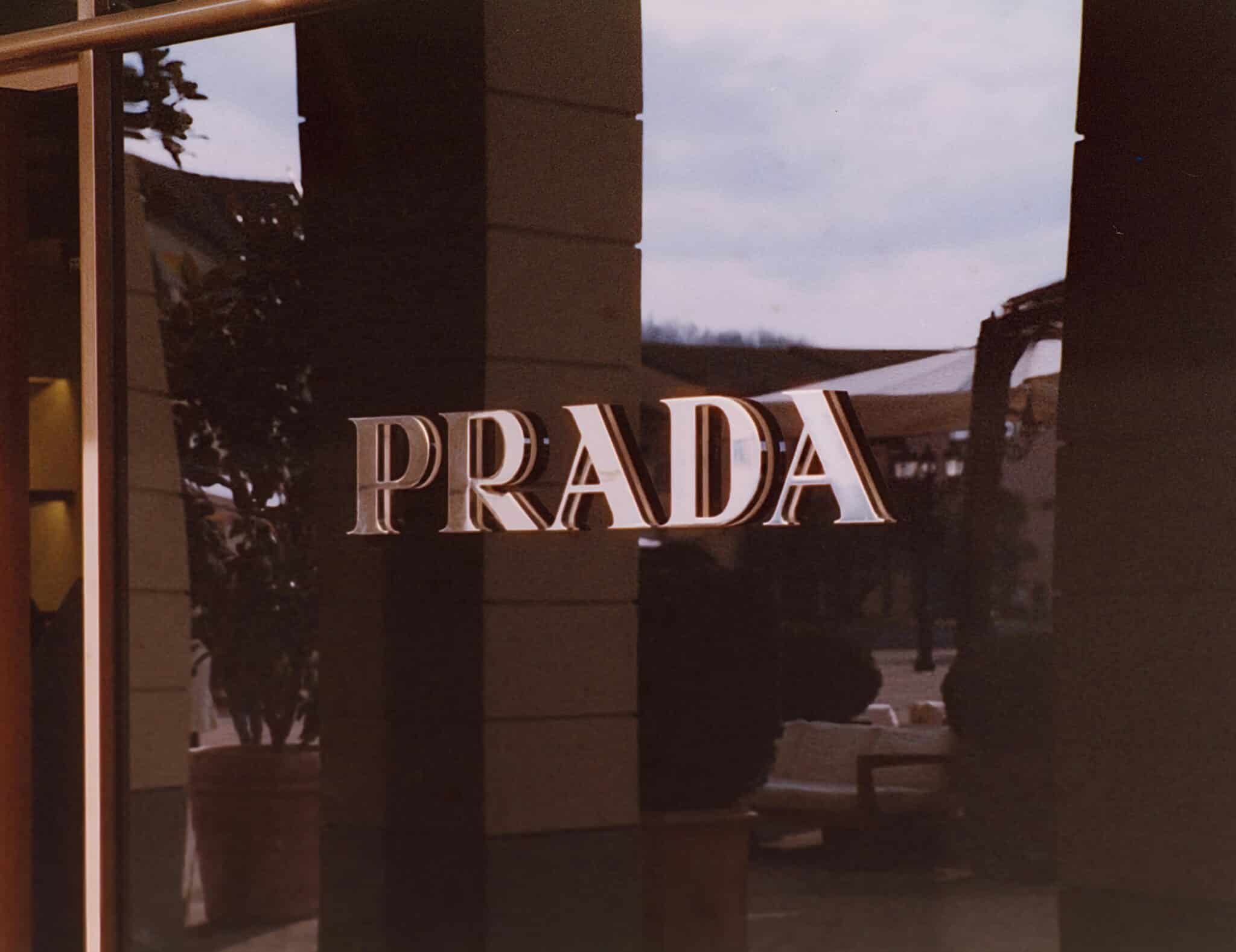
Start with the frames. EssilorLuxottica owns Ray-Ban, the best-selling eyewear brand on earth, along with Oakley, Persol, Oliver Peoples, Vogue and Arnette. Then it makes the eyewear, under licence, for the fashion houses whose names sell at a premium: Chanel, Prada, Armani, Burberry, Versace, Dolce & Gabbana, Ralph Lauren, Michael Kors, Coach, Tiffany. More than twenty designer labels. When you choose between a Prada frame and a Versace one, you are choosing between two products made by the same factory.
Then the lenses. The Essilor half is the world’s largest lens maker — Varilux progressives, Crizal coatings, Transitions photochromics, Stellest myopia-control lenses for children. So the company that made your frame very likely also made the lens inside it.
Then the shops. It owns Sunglass Hut, the largest sunglasses chain in the world, and LensCrafters, the largest optical chain in North America, plus Pearle Vision, Target Optical, and after the €7 billion GrandVision deal, much of European high-street optics too. Around 17,750 stores.
And then, in the United States, it even owns EyeMed, one of the largest vision-insurance plans. The company can sell you the insurance, the eye test, the frame, the lens and the shop you buy them in. It is present at every single step between your eyes and your wallet.
Why that lets it set the price
Here is the mechanism, because the ownership list is only shocking once you see what it does.
A normal branded product passes through hands that each take a cut: factory, brand, distributor, retailer. Competition at each stage is supposed to keep any one of them from charging too much. EssilorLuxottica occupies every one of those stages itself. There is no independent distributor to negotiate the brand’s price down, because the distributor is the same company as the brand. There is no rival retailer refusing to stock an overpriced line, because the retailer is the same company too.
The cost side makes the point sharper. The founder of LensCrafters, Dean Butler, once told the Los Angeles Times that a good frame can be made for four to eight dollars. Branded sunglasses routinely sell for a hundred and fifty and up, luxury-licensed ones for several hundred. The gap between the manufacturing cost and the shelf price is not explained by materials. It is explained by the absence of anyone in the chain with the independence to compete the price down.
There is a second, quieter lever. Because EssilorLuxottica owns Sunglass Hut and the other chains, it decides what goes on the shelves. A rival brand trying to reach customers has to get into shops largely controlled by the company it is trying to compete with. The story that hardened this reputation is Oakley’s. In the years before EssilorLuxottica bought it in 2007, Oakley was an independent challenger; a pricing dispute reportedly saw Luxottica reduce Oakley’s presence in its stores, Oakley’s share price suffered, and the company was eventually bought by the giant it had fallen out with. Whether or not every detail of that retelling is exact, the shape of it is the point: you cannot easily fight a company that owns the shelves you need.
The number nobody agrees on
Now the fairness, because this is where a lazy version of the story overreaches, and EBM should not.
The famous claim, from a 2012 60 Minutes report and repeated ever since, is that Luxottica controls around 80 per cent of the eyewear market. That figure is almost certainly too high. Luxottica itself has said its share of the global market is far smaller, in the region of 10 per cent by some measures, and the global eyewear market is genuinely large and fragmented, with cheap independents everywhere. A €15 pair from a beach kiosk is not made by EssilorLuxottica.
But the 80 per cent number, while wrong as stated, points at something real. The company’s dominance is not evenly spread. It is concentrated at the premium and mid-premium end — the branded and designer eyewear most people picture when they think of buying “proper” sunglasses — and in the physical retail chains where those glasses are sold. In that segment, in those shops, the control is close to total. The honest statement is not “one company owns 80 per cent of all eyewear.” It is “in the part of the market where you are likely to shop, your choices are largely owned by one company.” That is less lurid and more damning.
The part that should trouble Europe
Here is what makes this an EBM story rather than a curiosity. EssilorLuxottica is not a private foundation hiding from scrutiny like Rolex, nor a web of private entities like Musk’s. It is a public company, listed on the CAC 40, and it is still controlled — Delfin, the holding company of the late Leonardo Del Vecchio’s family, owns around 32 per cent. Total vertical control, sitting in plain view, on a regulated European exchange.
And the regulators cleared it. When Essilor and Luxottica proposed their merger, the European Commission approved it in 2018 without conditions. Margrethe Vestager, then competition commissioner and not a soft touch, said a market test of nearly 4,000 opticians suggested the combined company would not gain the power to harm competition. The reasoning was that a lens maker and a frame maker did not directly overlap, so combining them removed no competition between them.
That is technically correct and arguably misses the wood for the trees. The concern was never that Essilor and Luxottica competed with each other. It was that stacking the world’s largest lens maker on top of the world’s largest frame maker and the world’s largest eyewear retailer created a chain no rival could enter at any point. Vertical integration is precisely the kind of dominance that traditional merger review, focused on head-to-head overlap, is worst at seeing. The GrandVision retail deal that followed was cleared with only limited divestments. Europe looked at the most vertically integrated consumer company on its own exchange and largely nodded it through.
The counter-case, honestly
The integration is not only extraction, and a fair piece has to say so. Owning the whole chain has funded real innovation: Ray-Ban Meta smart glasses, whose sales more than tripled year on year, are a genuine new category, and Stellest lenses slow the progression of childhood myopia. LensCrafters can grind a prescription in an hour because it owns the lab. The OneSight foundation has brought vision care to more than 760 million people in underserved communities, which is not nothing when uncorrected sight is a real barrier to work and school. A fragmented industry of tiny players might charge less and innovate slower. Scale bought the smart glasses.
The verdict
The choice on the shop wall is mostly an illusion, and it is an illusion the buyer pays for. A dozen proud brand names, one owner, one price-setter, one set of shelves. That is not a conspiracy; it is the logical endpoint of letting a company own every link in a chain, and it was permitted at each step by regulators applying rules built for a simpler kind of dominance.
The lesson runs alongside the others EBM has told this month. Rolex and Aldi escape the market’s discipline by leaving it. EssilorLuxottica did something subtler and arguably bolder: it built a structure that looks exactly like a normal public company, competes with itself on its own shelves, and sets the price of seeing clearly for much of the Western world. The next time you pay two hundred euros for a pair of sunglasses that cost eight to make, you are not paying for the frame. You are paying for the absence of anyone in the chain with a reason to charge you less.
Related Analysis