






























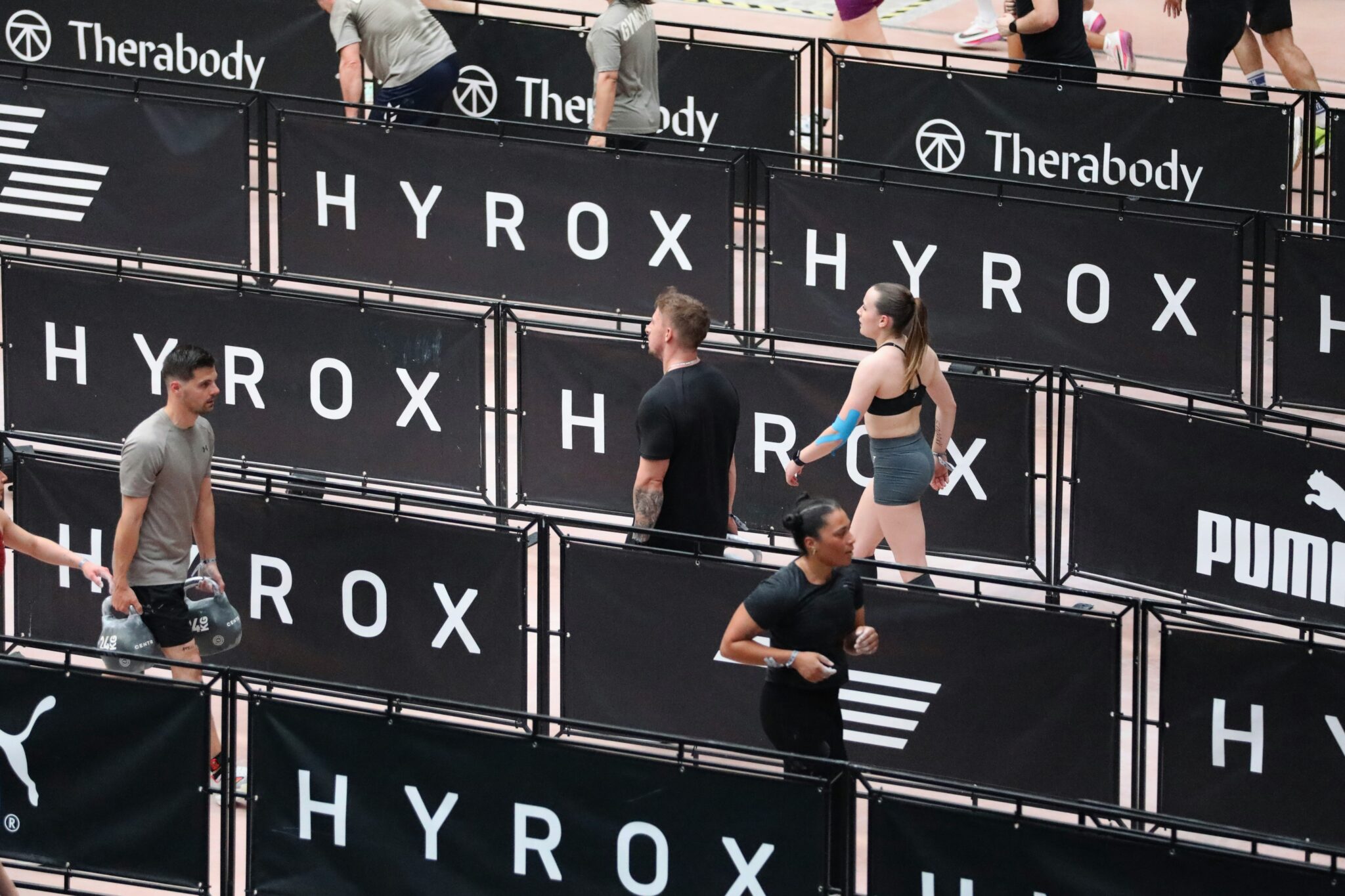
Ivmh hyrox
Paris, June 27 (EBM Weekend Read) —By Nick Staunton, Editor-in-Chief
L Catterton, the private equity firm backed by the family office of LVMH chief executive Bernard Arnault, is in exclusive talks to buy a substantial stake in Hyrox, the indoor fitness race that has grown from 650 participants at its 2017 launch to an estimated 425,000-550,000 athletes across more than 80 events in 30 countries during the 2024-25 season alone, according to Sky News and confirmed by Bloomberg. Industry estimates, based on leaked EBITDA figures, place the implied valuation between €700 million and €1 billion — a striking number for a business built on people paying to run eight kilometres and push a sled across a conference centre floor.

Join The European Business Briefing
New subscribers this quarter are entered into a draw to win a Rolex Submariner. Join 40,000+ founders, investors and executives who read EBM every day.
SubscribeA Business With Almost No Customer Acquisition Cost
The detail that makes Hyrox genuinely unusual as a consumer business, rather than simply a fast-growing one, is its economics. Hyrox’s 2025 revenue is estimated between €130 million and €140 million, up roughly 87% from approximately €40 million two years earlier, with 2026 projections ranging from €200 million to €270 million and reported 2025 EBITDA of around €30 million — implying a margin of roughly 20%, a figure most consumer fitness businesses never approach. Most fitness brands pay between $100 and $300 to acquire a single paying customer through digital advertising. Hyrox’s affiliated gyms and its own participants market the brand organically: a competitor who finishes a race and posts their time is, functionally, an unpaid marketing channel, and the sheer volume of people doing this at scale is what produces both the unusual revenue growth and the unusually clean margin profile.
Why a Luxury Family Office Is the Buyer
L Catterton’s interest reflects a genuine strategic pattern rather than an opportunistic one-off. The firm previously backed Peloton in 2015 and acquired Pilates chain Solidcore at a $700 million valuation in 2024 — both businesses that began as niche fitness communities before professionalising under institutional ownership into considerably larger commercial properties. Hyrox fits the same template: a format with genuine grassroots credibility, now large enough that institutional capital can apply a proven playbook to extract additional monetisation without damaging the brand’s authenticity, which remains the single biggest risk in acquiring any community-driven fitness property. The clearest historical comparable is Ironman, the triathlon brand: once it came under institutional ownership, it systematically raised entry pricing, built out broadcast and spectator revenue streams, and converted a participation-only business into a genuine media and sponsorship property over time — a trajectory multiple industry analysts covering the Hyrox talks have explicitly drawn as the template now expected to follow under new ownership.
The Wider LVMH Sports Strategy This Sits Inside
This deal is one data point inside a considerably larger, deliberate pivot by entities connected to LVMH and Bernard Arnault toward sport as a marketing and investment category. In the build-up to the Paris 2024 Olympics, Louis Vuitton signed athletes including Victor Wembanyama and Carlos Alcaraz, partnered with Real Madrid, and — in the clearest single signal of LVMH’s broader sporting ambitions — committed more than $1 billion over ten years to become Formula 1’s title sponsor, a deal EBM has previously detailed as part of F1’s remarkable commercial transformation under Liberty Media from a sport once dismissed by its former owner as having no interest for young, money-poor fans. L Catterton has separately taken stakes in the luxury fitness chain Equinox alongside its existing Peloton position. The strategic logic connecting all of these moves is consistent: traditional luxury marketing — magazine placements, runway shows, celebrity ambassador campaigns — reaches an affluent customer passively, at moments of rest or leisure. Sport-adjacent marketing reaches the same customer at the exact moment they are physically active, performance-focused, and visibly surrounded by people in a comparable income bracket. Luxury capital is no longer associating itself only with indulgence; increasingly, it is associating itself with discipline and measurable physical achievement, because that is how its own customer base increasingly defines status.
The Fine Print: A Wearables Deal That Pre-Dates the Talks
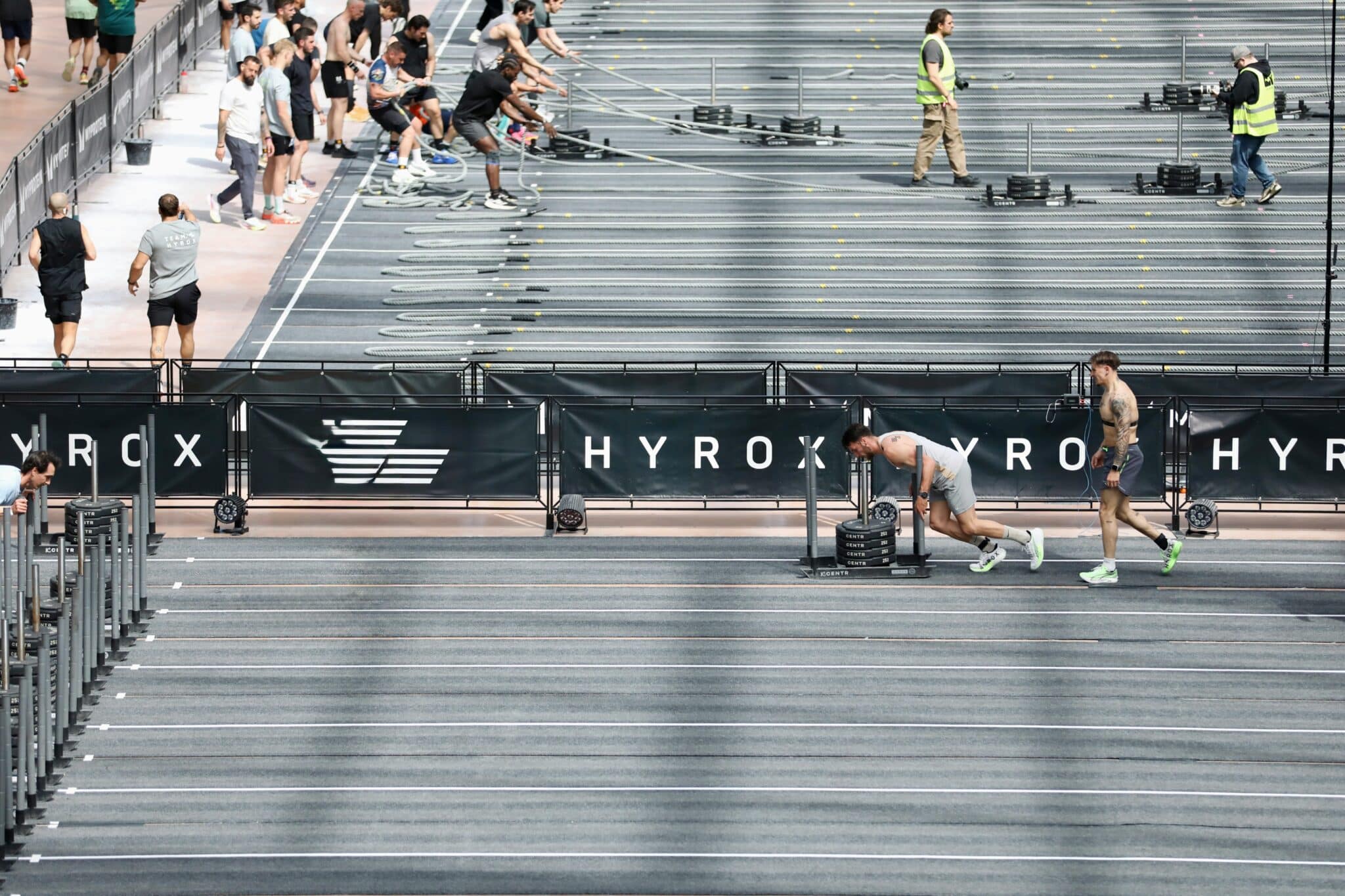
One detail in this story tells you precisely how confident Hyrox already was in its own growth trajectory, months before the L Catterton talks became public. In April 2026, Hyrox signed Amazfit to a three-year global exclusive wearable partnership, covering smartwatches, rings, cameras and access to the Hyrox 365 gym and coaching network — locking out every competing wearable brand from the entire Hyrox ecosystem for the contract’s duration. Amazfit secured those terms when Hyrox was already valued, by any reasonable measure, at approximately €140 million in revenue. The L Catterton investment now effectively endorses and extends that valuation range, meaning Amazfit’s exclusivity looks considerably more valuable today than it did at signing, since every additional participant and event Hyrox adds under new institutional ownership becomes incremental reach the wearable brand already secured at no additional cost. The lesson for any brand evaluating a fast-growing property: capturing exclusivity before institutional capital arrives, rather than after, captures the appreciation in that asset’s value for free.
The Customer Insight Behind the Whole Deal
Hyrox’s core demographic skews toward professionals in their 30s and 40s, frequently with existing marathon or endurance sport experience, and disposable income that makes a recurring entry fee, travel to events, and specialised training unremarkable spending. This is functionally the same customer who buys luxury goods for identity signalling rather than pure utility — the same psychographic profile, applied to a different category of spend. A participant who finishes a race and posts their time produces a number they can compare against their own past performance and against other people, rather than simply an experience that makes them feel generically healthier. A regular gym membership does not produce a comparable, shareable number. A Hyrox finish time does.
The Bottom Line
The pattern across Hyrox, Solidcore, Peloton and Equinox — all now connected through the same institutional capital — reveals where the broader fitness category is structurally heading. Fitness is fragmenting away from the generic, all-purpose gym membership and toward narrow, identity-driven, competitive or performance-tracked formats that give a specific demographic a specific, comparable, shareable outcome. The generic gym sells access to equipment. The new wave of fitness businesses sells a result you can post, compare against your own history, and repeat. That shift, from selling access to selling outcome, is arguably the single most important structural change underway in global fitness right now — and L Catterton’s willingness to underwrite it at a billion-euro valuation, for a business that spends almost nothing on its own marketing, is the clearest signal yet of how seriously institutional capital now takes that thesis.
Related reads: