



























Doha, June 27 (EBM Weekend Read) —Nick Staunton
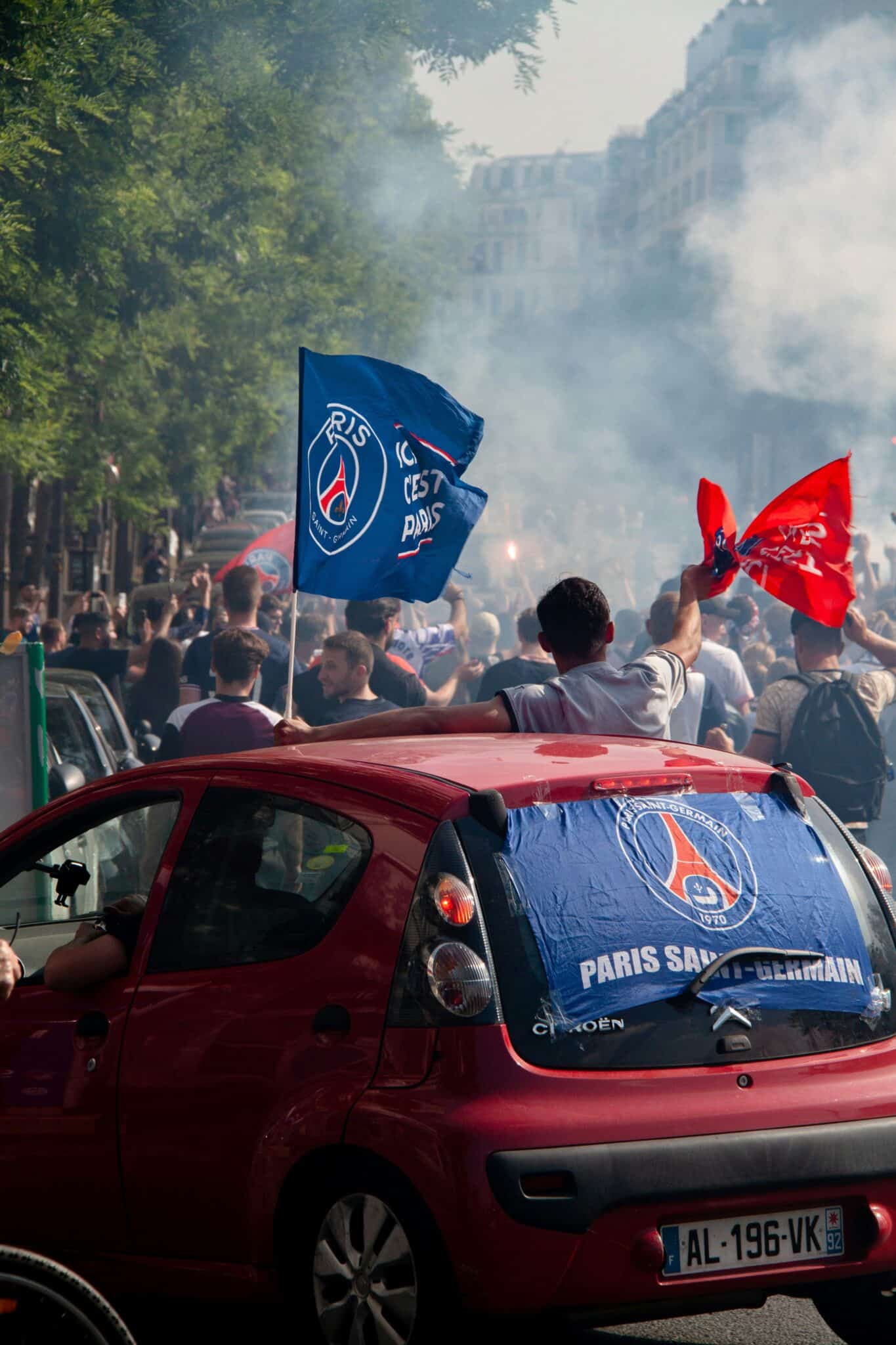
When Qatar Sports Investments acquired a 70% stake in Paris Saint-Germain in June 2011, the deal was reported at around €70-100 million for a club that had spent decades as a mid-table French side with little European relevance. Fifteen years later, PSG sits fifth in Forbes’ 2026 global club valuation rankings at $5.8 billion, having just won back-to-back UEFA Champions League titles and posted revenue of €837 million — a club whose turnover has grown ninefold since the Qatari takeover. The Instagram-friendly version of this story focuses on glamour: Messi, Neymar and Mbappé arriving, then leaving, then the trophy finally landing anyway. The more interesting version is what QSI actually did differently once the superstar era ended — and why it worked.
A Club Bought to Win the Champions League, on Repeat
Join The European Business Briefing
New subscribers this quarter are entered into a draw to win a Rolex Submariner. Join 40,000+ founders, investors and executives who read EBM every day.
SubscribeQSI’s stated objective from day one was explicit: win the Champions League. For over a decade, the strategy looked like buying individual brilliance at almost any cost — Neymar’s $263 million transfer in 2017 remains the most expensive in football history, and PSG’s combined spending on Messi, Neymar and Mbappé-era recruitment pushed the wage bill above €500-550 million at its peak, more than 60% of total revenue and, by the club’s own later admission, financially unsustainable without continued Qatari subsidy. The approach delivered domestic dominance — 14 Ligue 1 titles and counting — but the specific prize QSI had set out to win remained elusive for 14 consecutive seasons.
The Pivot: Rebuilding Around Hunger Instead of Celebrity
The turning point came after Mbappé’s departure to Real Madrid, when PSG’s hierarchy made a deliberate strategic reversal rather than simply replacing one superstar with another. The club won the 2024-25 Champions League spending just $111 million on transfers that season — ranking 34th globally in transfer investment, a remarkable contrast to the blockbuster-signing era that preceded it. The wage bill, which had exceeded 111% of turnover at its peak, has since been brought below 65% — still high by conventional business standards, but a structural transformation from the financially reckless spending pattern UEFA’s Financial Fair Play regulators had repeatedly fined the club over. PSG followed the 2025 triumph with a second consecutive Champions League title in 2026, becoming only the latest team to win back-to-back European crowns and proving the post-superstar model wasn’t a one-off.
The Revenue Engine Behind the Trophies
PSG’s financial growth has tracked its sporting success closely, but the underlying revenue mix tells a more nuanced story than simple ticket sales. For the 2024-25 season, PSG generated €367 million in commercial revenue and €175 million in matchday income — the latter having multiplied sevenfold since 2011, with the Parc des Princes selling out for 170 consecutive matches and season-ticket renewal sitting at 98%. Commercial revenue includes Qatar Tourism Authority payments reportedly approaching €200 million when combined with shirt sponsorship and stadium rights arrangements — related-party transactions between the club and Qatari state entities that have drawn repeated scrutiny, including a €60 million UEFA fine in 2014 over Financial Fair Play breaches tied to inflated sponsorship valuations. Nike’s kit deal, at approximately €80 million annually, remains PSG’s most significant third-party commercial partnership not connected to Qatari state entities directly.
A Brand That Outgrew the Sport
What distinguishes PSG’s commercial trajectory from a typical football club’s is how deliberately it has positioned itself as a lifestyle and fashion brand rather than purely a sporting one. The club’s collaborations with Jordan Brand have become one of the most commercially successful crossovers in sports apparel, and PSG’s global fanbase now exceeds 500 million people with a combined social media following above 235 million. That cultural reach is precisely the strategic asset Qatar set out to build: a European football club doubling as a soft-power vehicle and tourism magnet, generating the kind of global visibility for the Qatari brand that no traditional state marketing campaign could replicate at comparable cost.
The Multi-Club Playbook QSI Is Now Exporting
PSG was never intended to be QSI’s only sporting asset, and the firm’s more recent moves reveal a broader institutional pattern increasingly common across European football, where roughly 36% of clubs in the continent’s Big Five leagues now carry some form of private equity, sovereign wealth, or institutional financial backing. QSI has taken stakes in Portugal’s SC Braga and Belgium’s K.A.S. Eupen, building a multi-club network that mirrors the asset-diversification logic of a conventional investment portfolio rather than a single-club passion project. The fund has also moved into entirely new sporting categories, acquiring the World Padel Tour to build a unified global circuit in a sport with minimal existing institutional infrastructure but clear long-term growth potential — a pattern of strategic diversification that increasingly defines how Gulf sovereign capital approaches sport, treating individual properties less as trophies and more as components of a broader brand and influence portfolio.
The Geopolitical Dividend Money Can’t Buy Directly
PSG’s enterprise value reaching roughly €5 billion by 2025 is the headline financial figure, but the more consequential return for Qatar has arguably been reputational rather than monetary. The club’s transformation from a struggling French side into one of European football’s most recognisable global brands has elevated Qatar’s international profile in a way that complements the country’s post-2022 World Cup infrastructure investment, with that tournament alone estimated to have generated $2.3-4.1 billion in tourism and media rights revenue. This is the same strategic logic now playing out across other Gulf state sporting investments — Saudi Arabia’s PIF taking a stake in Newcastle United, and its considerably more expensive and ultimately scaled-back LIV Golf venture, which EBM covered in detail when PIF walked away from a $6 billion commitment after concluding the economics simply didn’t work, even with sovereign patience behind it. PSG’s case is instructive precisely because it succeeded where LIV largely didn’t: QSI was willing to absorb 14 years of near-misses and FFP scrutiny before its model produced the actual silverware it was built to win.
The Bottom Line
PSG’s trajectory under Qatari ownership is best understood as two distinct experiments running sequentially rather than one consistent strategy. The first, lasting roughly a decade, tested whether superstar talent alone could buy Champions League success — and it couldn’t, regardless of how much was spent on Messi, Neymar and Mbappé. The second, beginning only after that approach was abandoned, tested whether a financially disciplined squad built around cohesion rather than individual brilliance could deliver what unlimited spending hadn’t — and within two seasons, it delivered back-to-back European titles. For Gulf sovereign wealth funds evaluating their own sporting investments, and for the European clubs still courting that capital, the lesson is less about the size of the cheque and more about patience: QSI’s eventual success came from being willing to fundamentally restructure the model after the first one failed, rather than simply doubling down on the same approach with more money behind it.
Related reads:
- Europe’s Richest Football Clubs in 2026: Who Makes the Most
- Private Equity in European Football: The Boom, and the Debt
- WEEKEND READ: Why Saudi Arabia Just Walked Away From a $6 Billion Golf Bet