




























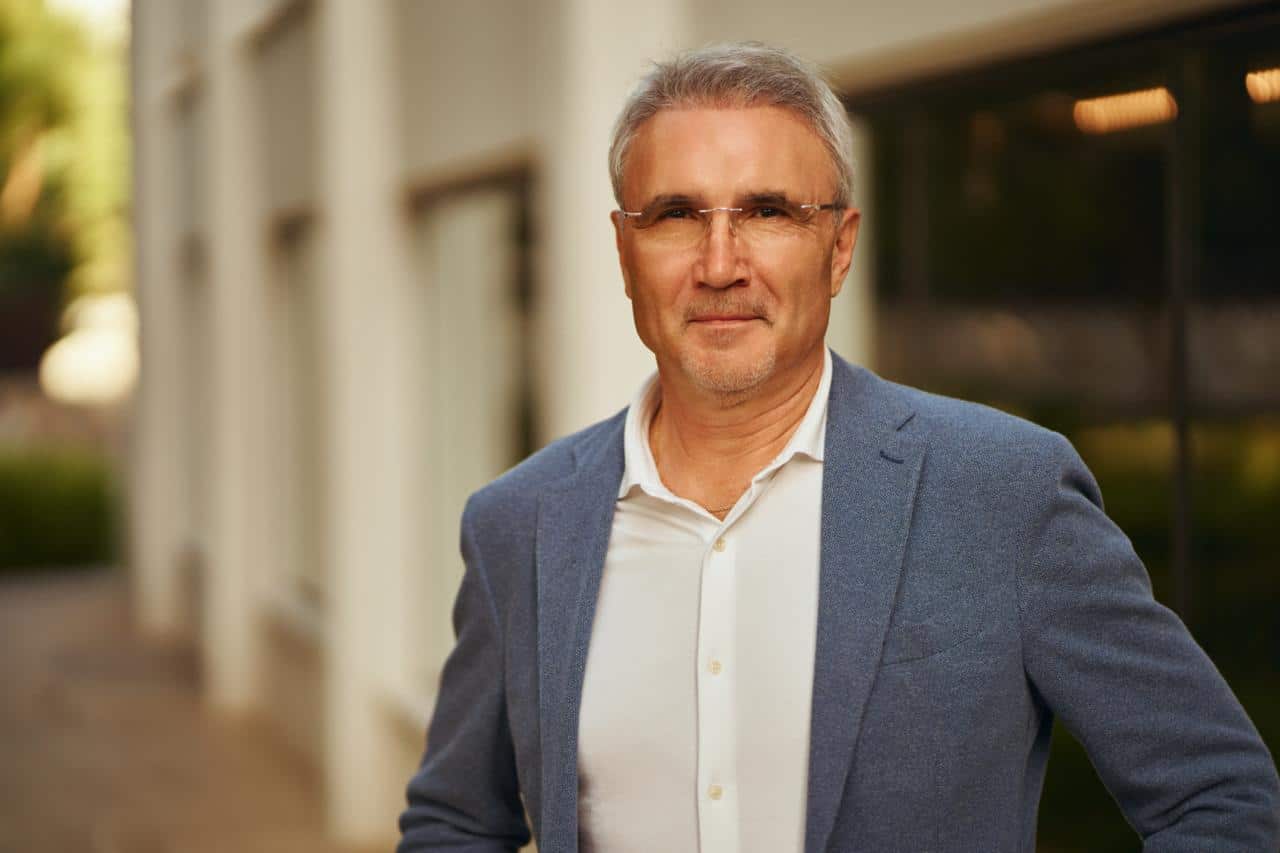
By Oleg Khusaenov – CEO&Founder of Cyprus-based Zubr Capital
What changed in Q2 was the financing infrastructure becoming more visible. This became clearer through continued capital concentration, dedicated funding structures, a quantum cluster that became impossible to ignore, and direct U.S. strategic capital moving into European strategic tech. This digest examines how the shifts from Q1 to Q2 evolved.
Join The European Business Briefing
New subscribers this quarter are entered into a draw to win a Rolex Submariner. Join 40,000+ founders, investors and executives who read EBM every day.
SubscribeStrategic Sectors Draw Funds and Facilities, Not Just Big Checks
Large funding rounds help identify strategic sectors, but do not guarantee market support as the need for capital grows into more complex or longer-term demands. In Q1, large company rounds showed which strategic sectors investors wanted to back. In Q2, the funding picture expanded beyond those first big checks. Support increasingly came through growth capital vehicles, public equity channels, guarantees, and credit facilities.
Some of this need stemmed from strategic companies requiring more capital than was available in Europe’s traditional venture market. For example, EIFO committed €200 million to the Scaleup Europe Fund, pushing larger growth-capital channels for European tech companies.
Public capital also garnered more attention. The British Business Bank had direct equity activity of over €695 million in British science and tech scaleups, providing state-backed support as both an ecosystem funder and a direct market participant. Defence added more sector-specific logic of the same kind, with the planned €500 million E2D growth fund aimed at addressing Europe’s dual-use and DefenceTech scaling gap. These changes demonstrate the initial attraction of strategic sectors in Q1 maturing into organised capital around those sectors in Q2.
One Clean Equity Round Doesn’t Tell the Whole Story
Another Q2 signal was the impact of hybrid capital on European tech funding. Debt, grants, public backing, and strategic capital have appeared alongside equity rounds for several quarters. Q2 made that funding mix more apparent. Companies needed funding for more than product development and market spending.
Hybrid sources are supporting more infrastructure in AI, space, climate, and energy. Sectors like these, including deeptech hardware, often require physical assets. That means higher upfront costs, longer deployment cycles, and risk-sharing mechanisms that traditional venture capital alone is not designed to provide.
Nscale secured an additional €670 million for AI data centre infrastructure in Norway. ICEYE’s €300 million revolving credit facility offered flexibility in the space and sovereign intelligence markets, given the cost of its assets and global deployment. InSoil’s €120 million senior secured credit facility (backed by an EIF guarantee under InvestEU) relied on both debt and public risk-sharing over equity alone. Microamp’s €6.5 million EIC package was split between grant funding and EIC Fund equity.
While hybrid capital isn’t new, Q2 provided stronger, more visible use cases. Tech companies that need physical infrastructure, assets, and risk-sharing are harder to explain through a single clean equity round. Hybrid funding fills the gaps.
DefenceTech: From Validated Category to Funded Market
During Q1, the signal was that DefenceTech was moving beyond niche legitimacy with only a few specialist investors, toward a validated sector attracting capital across many stages.
Q2 solidified the changes to DefenceTech as the capital structure built around the sector became more visible. Germany’s Quantum Systems, the unmanned systems DefenceTech company, demonstrated how the sector can now command a €1 billion Series D. Around the sector, Earlybird and AVP’s planned €500 million E2D growth fund focused on sector-specific funding gaps, with larger tickets for later-stage dual-use companies.
Public capital also moved into DefenceTech funding stacks. EIF Defence Equity Facility 2.0 set an initial €1 billion target as a fund-of-funds mechanism for defence and cybersecurity-focused VC, private equity, private credit, and infrastructure funds. The EIC STEP Scale Up Defence call added an even more direct equity route in the sector, providing up to €30 million per company. That was echoed at the project level, with the European Defence Fund injecting €1.07 billion across 57 projects, including those focused on AI, cyber defence, drones, counter-drone systems, and space missions.
Q1 may have signalled that investors are willing to fund DefenceTech across stages, but the rapid infrastructure and support capital in this sector in Q2 signal a more durable market taking shape.
Maturing DeepTech: Quantum Moves From Lab Curiosity to Investment Cluster
Quantum computing is no longer just a long-term scientific promise. What used to be a “blue sky” dream, 10 years from being reality, is now attracting larger and more concrete investment. European investors are no longer hesitant about exploring such developments.
IQM Quantum Computers’ €275 million Series B signalled a broader deeptech pattern, especially when viewed alongside major rounds in photonics, advanced materials, and other research-heavy tech. Investors are not treating quantum computing as something only possible in the future.
Q2 reinforced the narrative that the quantum stack is rapidly evolving. Oxford Quantum Circuits raised €301 million in Europe’s largest private funding round for a quantum computing company. QuantWare raised €152 million for quantum processors and manufacturing infrastructure. In France, Quobly closed a €115 million Series A round to industrialise silicon-based quantum computers and launch its first commercial product.
Hardware saw plenty of investor interest, as did software and enabling technologies. Algorithmiq raised €18 million for quantum software and moved its global headquarters from Helsinki to Milan. Smaller layers also received attention, with FrostByte raising €1.3 million for cryogenic electronics used in many quantum tech developments.
These Q2 movements in quantum demonstrate a much clearer investment cluster than Europe had only a year ago. It’s not just larger rounds, but more activity across diverse computing platforms, processors, and software.
Geography Split Revisited: The UK Still Leads, But CEE Is No Longer Just an Experiment Garden
About a year ago, the UK hosted the biggest rounds in European tech funding, while Central and Eastern Europe stuck to smaller rounds focused more on variety over scale and individual bets below €5 million. Q2 didn’t change those splits but changed what they mean.
In the UK, the largest signals were no longer only company rounds. Oxford Quantum Circuits’ €301 million Series C set headlines, but there was also Mouro Capital Fund III, which reached a €343.7 million first close, bringing Mouro Capital’s total investment commitments to €859 million. Transition Ventures Fund II closed at €128 million, boosting AUM to over €257 million. New vehicles from Lansdowne Partners, Tapestry VC, and Osney Capital also closed during the quarter, with the British Business Bank appearing as a key backer across several of them. The UK has the largest checks and a larger capital base, built on a stronger funding infrastructure.
CEE remained a quieter, yet structurally similar story. Prague’s Wultra raised €6.8 million. Ljubljana-based DDD Invoices raised €1.31 million. These regional deals remained small, almost exploratory, with a few exceptions. Warsaw- and Munich-based Viktor closed a €64.7 million Series A, Prague’s EquiLibre Technologies was valued at over €438 million, and Vilnius-based InSoil, as mentioned above, secured a €120 million credit facility backed by an EIF guarantee under InvestEU. Those go beyond the experiment level.
Q2 shows that the CEE region is starting to get dedicated capital behind some of the same strategic themes. While not quite at the UK scale, it’s no longer just small experiments. When EIF and Poland’s BGK committed €85 million to three Polish venture funds — Expeditions, focused on early-stage defence; Balnord, focused on frontier and dual-use technology; and Cogito Capital Partners, focused on growth-stage AI and fintech — the story shifted toward dedicated regional capital behind strategic sectors.
The Strategic Tech Capital Race: U.S. Strategics Find a Route Into European Scaleups
As Europe organises more capital around AI infrastructure, defence, and deep tech, recent activity demonstrates direct U.S. strategic capital moving into the region, beyond using European venture funds as intermediaries. This was visible in NEURA Robotics’ up to €1.2 billion Series C, which included Tether alongside U.S. strategic participants such as Qualcomm, Amazon, and NVIDIA. QuantWare’s €152 million round included Intel Capital and In-Q-Tel, the latter linked to U.S. intelligence-community venture activity. Oxford Quantum Circuits’ €301 million Series C was another example, with Alpha Edison joining the broader investor syndicate.
U.S. corporate and, in some cases, state-linked capital directly played a role in European robotics and quantum hardware. These areas need larger funds, public backing, and dedicated facilities, and U.S. strategic capital is entering the same sectors directly. What looked like earlier-stage, fund-mediated interest before has shifted to direct U.S. involvement in Q2. Even when Europe tries to keep strategic capital at home, U.S. strategics are finding ways into developing and promising European scaleups.
Europe Can Build Strategic Tech Winners. Can It Keep Them?
Q1 demonstrated where European tech capital is concentrated, and Q2 revealed how that infrastructure and support are being built. The next logical question is whether these companies can scale on European terms.
Deeper shifts in AI infrastructure, DefenceTech, and quantum are now being supported by funds, facilities, guarantees, public equity channels and strategic investors, rather than single, larger rounds. As these growth signals continue, the investors and institutions providing the capital will shape the conditions under which companies will scale. Transatlantic signals matter, especially as Europe builds more of the capital base around local strategic companies.
It’s not a question of whether Europe can produce strategic tech winners. Q2 showed it can. The question is whether Europe can provide enough capital infrastructure so that such companies can scale on their own terms.