































New York, 28 July 2026 — EBM Newsdesk Analysis — By Nick Staunton
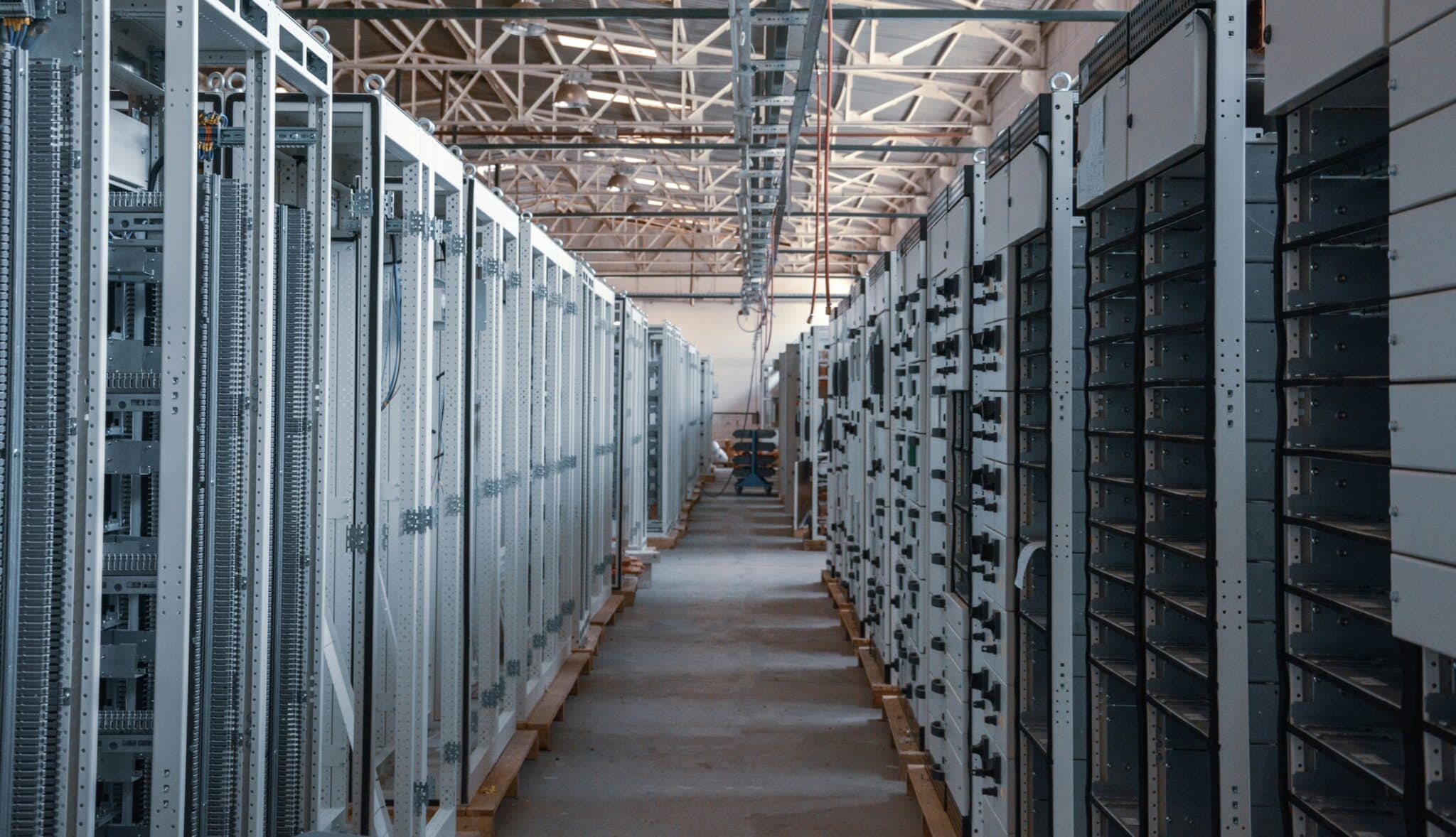
Nvidia is the tenant behind leases worth up to $50 billion at a Texas data centre campus being built by Hut 8, the Financial Times reported on Tuesday 28 July, citing five people familiar with the arrangement. Eight days earlier Hut 8 had told investors it had fully commercialised the site through two leases of 352 megawatts each, signed with what it described only as a “high-investment-grade tenant”. The campus, Beacon Point in Nueces County, is a gigawatt site designed around Nvidia’s own reference architecture for large AI installations. So the tenant is the company whose chips will fill the racks, in a building designed to its specification.
Read that back slowly, because it is the whole story. Nvidia designed the blueprint, has committed to the lease, and sells the hardware that goes inside. The customer, the financier and the supplier are the same company wearing three hats. None of that is unlawful, and none of it is even unusual in a young industry where demand runs ahead of anybody’s ability to fund it. But it does make a particular question harder to answer than it was a month ago: how much of Nvidia’s demand is somebody else’s decision?
Join The European Business Briefing
New subscribers this quarter are entered into a draw to win a Rolex Submariner. Join 40,000+ founders, investors and executives who read EBM every day.
SubscribeWhat Hut 8 told investors, and what it left out
On 20 July, Hut 8 put a number on Beacon Point. Two 352MW leases, $19.6 billion of contracted base-term value over fifteen years, and a potential campus-level value of $50.2 billion once renewal options are counted. It named the counterparty only by credit quality.
That is normal commercial confidentiality. It is also the reason the disclosure worked. A fifteen-year lease is worth precisely as much as the tenant’s ability to pay it, and “high investment grade” was doing the load-bearing work in that sentence. Investors priced a long-dated income stream on the strength of an unnamed covenant.
The FT’s reporting supplies the name, and with it a question the original announcement did not raise. Nvidia’s credit is not in doubt. What is now in view is that the tenant underwriting the campus is also the vendor whose equipment fills it, which means the lease is not quite the independent third-party validation it appeared to be.
Why this pattern keeps appearing
Because building AI capacity costs more than the people who want it can currently pay.
We have written before about the circular structures inside Elon Musk’s companies, where entities fund one another and revenue travels in a loop. The AI infrastructure build-out is producing the same shape at far greater scale, for the same reason: the hyperscalers are spending faster than their cash flow allows. Google’s AI spending has already pushed its free cash flow negative, and Amazon’s build-out plans exceed what its own operations generate. Somebody has to fill the gap. Increasingly it is the chipmaker.
For Nvidia the logic is straightforward. Capacity that does not get built is capacity that never buys chips. Backstopping the lease removes the financing risk that would otherwise slow the project, and the company can afford it. On its own terms this is a rational use of a very strong balance sheet.
The difficulty is what it does to the numbers everyone else relies on. Nvidia’s order book has been treated for two years as an objective reading of demand for AI, and therefore as evidence that the spending is justified. If part of that order book rests on capacity Nvidia has itself underwritten, the reading loses some of its independence. A supplier that finances its own customers is not measuring demand. It is partly creating it.
The European read
Europe owns almost none of this build-out and is exposed to nearly all of it.
The exposure runs through index funds and pension allocations that hold Nvidia at its current weight, through European ambitions for sovereign AI that still depend on American silicon, and through the European industrial suppliers selling into American sites. When the AI trade wobbled this month, European indices caught the fall without ever having held the upside.
The upshot
This is not a scandal, and the market is unlikely to treat it as one. Nvidia has the balance sheet, the deal is disclosed, and the capacity is real.
But it is a change worth naming. For two years the case for AI infrastructure has rested on the argument that customers are queuing to buy. When the seller starts guaranteeing the leases, that argument becomes partly self-referential — and the moment to notice a circular structure is while it is still growing, not afterwards.
Related Analysis