































London, 9 August 2026 — EBM Weekend Read
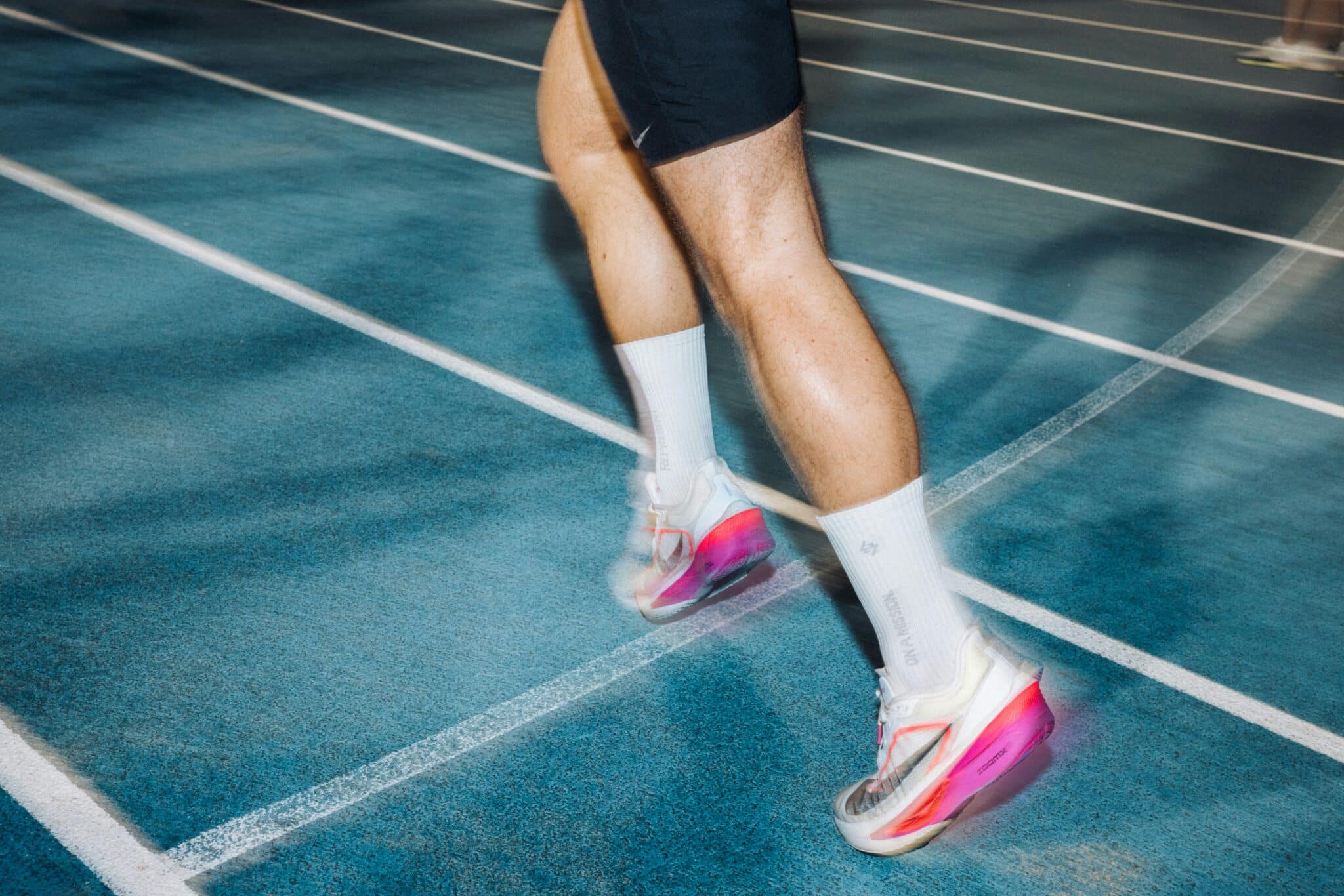
Look down on any commuter train in Europe and count the shoes. Thick foam soles, rocker profiles, colours nobody would have chosen for a trainer a decade ago. Most of those people are not runners. That gap — between what the shoe was engineered for and what it is actually being used for — is the whole business story, and it is worth roughly $105bn a year.
The branded athletic footwear market grew about 5% in 2024. Underneath that placid figure, something violent is happening. In 2025 running footwear grew 8.9% year on year in the United States while lifestyle footwear shrank 0.9%. Nike lost share in both channels simultaneously. What makes the pattern unusual is that the share did not go to one challenger. It scattered across four.
Join The European Business Briefing
New subscribers this quarter are entered into a draw to win a Rolex Submariner. Join 40,000+ founders, investors and executives who read EBM every day.
SubscribeThe Numbers That Explain the Panic
Nike remains enormous: roughly $51bn of revenue in its 2025 financial year and about 27% of the global sports brand market. Adidas follows at $26bn. On any static measure the hierarchy is intact.
The direction of travel is not.
Hoka did $153.5m of sales in its 2018 financial year. In its 2026 financial year it did $2.587bn — a seventeen-fold increase in eight years. Six separate Hoka product families now generate over $100m each.
On has gone from a Zurich startup to roughly $3.2bn, growing 285% in three years, and has done it while discounting less than any of its rivals.
Salomon crossed $2bn in annual sales in 2025 for the first time in the brand’s 79-year history. Its parent, Amer Sports, grew group revenue 27% to $6.6bn that year, then reported a 32% jump in the first quarter of 2026 with the Salomon-led Outdoor Performance division up 42%. Management raised full-year guidance from 16–18% growth to 20–22%.
Those three brands did not exist as serious competitors when Nike last held uncontested control of running. Two of them did not exist at all.
The Shoe Everybody Is Wearing
The engineering that started this is specific and datable.
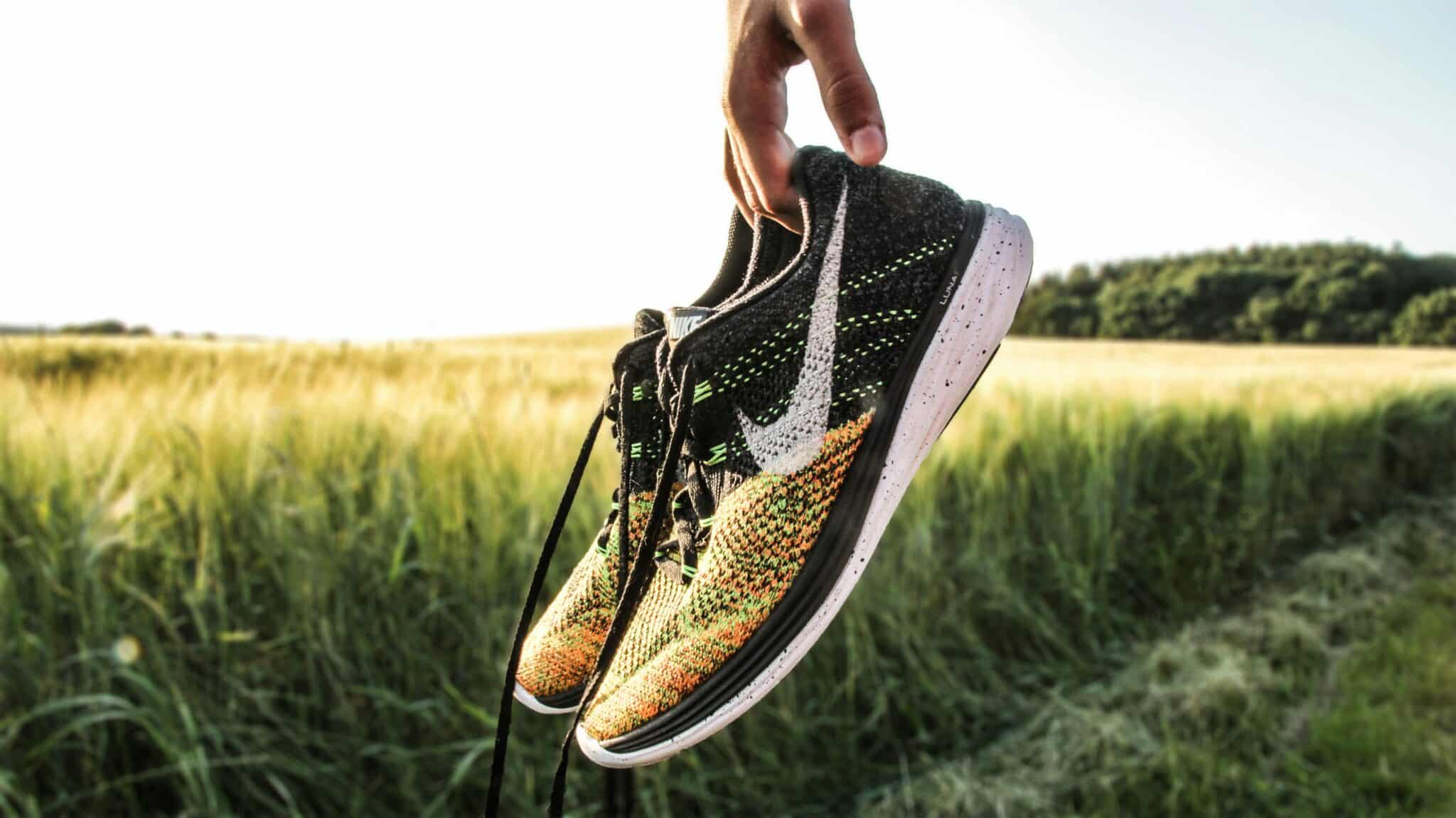
Nike invented the category and then, remarkably, failed to own it.
The reason is that the technology escaped its intended purpose. Thick, soft, energy-returning foam is pleasant to run in. It is also extremely pleasant to stand in for eight hours, walk the dog in, or wear round a hospital ward. The performance benefit is contested at the elite level and irrelevant at the everyday one — but the comfort is immediate and obvious to anyone who tries a pair.
Hoka understood this earliest, largely by accident. It was founded in 2009 by two Frenchmen, Nicolas Mermoud and Jean-Luc Diard, both former Salomon executives, who wanted a shoe that would let ultra-runners descend mountains faster. The oversized sole was a technical solution to a niche problem. Nurses and teachers found it independently, and word of mouth did the rest. Hoka’s audience today shows genuine gender parity, no income skew, and rapidly rising interest among the over-45s.
That is not a running brand. It is a comfort brand that happens to be certified by runners, which is a considerably larger market.
Four Different Bets
The interesting part is that the challengers are not running the same strategy.
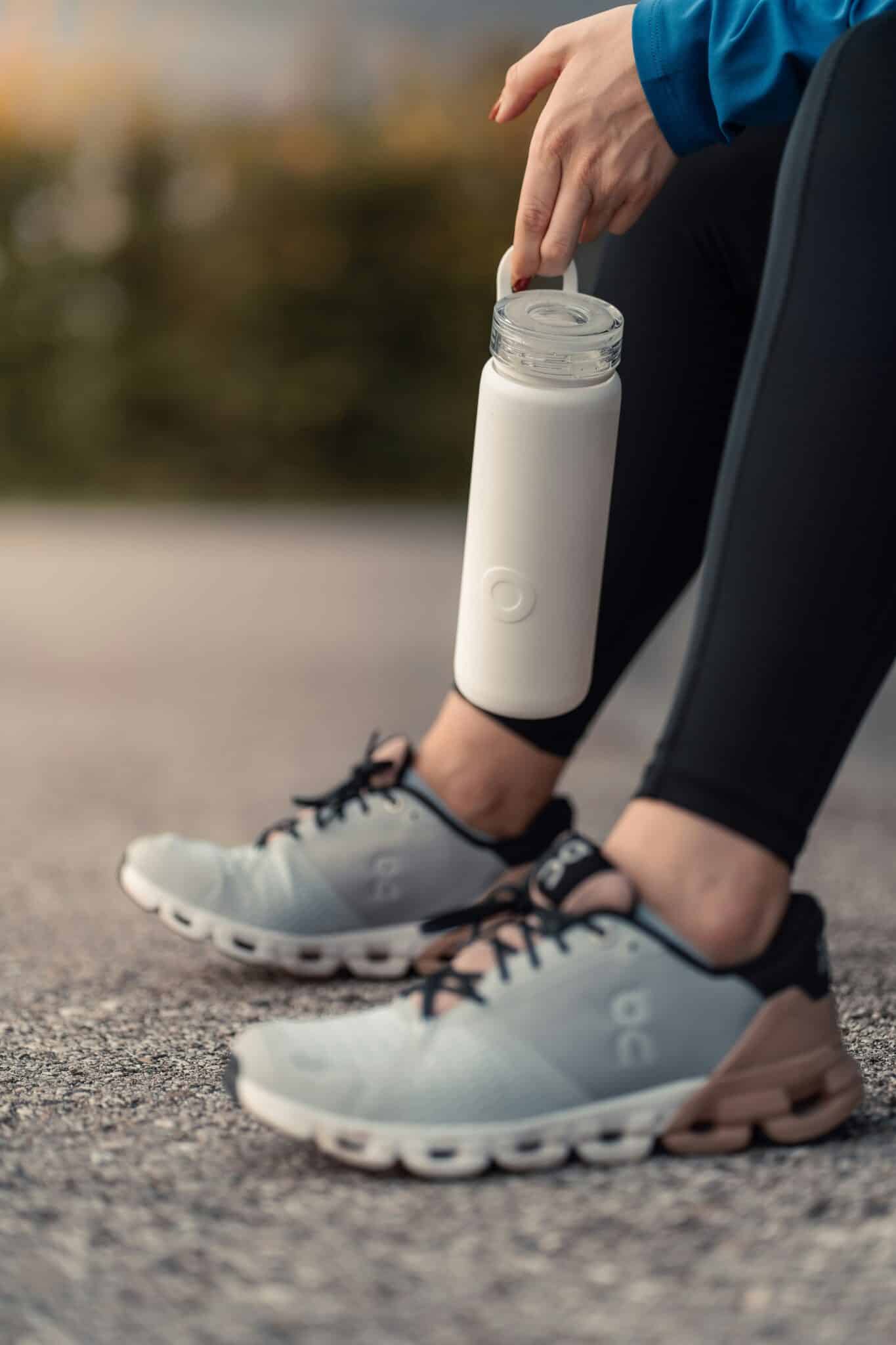
Hoka is playing discipline. Every product family maps to a running use case: Bondi for maximum cushion, Clifton for daily training, Speedgoat for trail, Mach for tempo. It has largely refused the lifestyle crossovers that On has embraced. That protects the brand’s credibility and caps its ceiling — and the growth rate shows it, decelerating from 28% to 24% to 15.9% across three years.
Salomon is playing heritage, and it is the most interesting of the four. A 79-year-old French mountain-sports company with genuine technical credibility discovered that Asian consumers wanted its trail shoes as street wear. Rather than resist, it leaned in — and its footwear business is now the fastest-growing part of a $6.6bn group.
Nike is playing defence. It is discounting more heavily, losing share across wholesale and direct simultaneously, and facing what analysts describe as its most serious competitive challenge in twenty years. Its scale, which was the moat, is now part of the problem: a company that size cannot move at the speed of a category being redefined underneath it.
Who Actually Owns These Brands
Follow the ownership and the story stops being about shoes.
Hoka is owned by Deckers, an American group that also owns Ugg — meaning the two defining comfort-footwear phenomena of the past fifteen years sit inside one company.
On is independent and listed, which makes it the rarest thing in the sector.
Salomon belongs to Amer Sports, which is controlled by Anta of China — the same Anta that in January agreed to buy Artémis’s 29.06% of Puma for €1.5bn, and which also owns Arc’teryx and Wilson.
That is worth pausing on. A Chinese group now controls a French mountain brand, a Canadian outerwear brand and an American racquet brand, and is the largest shareholder in a German sportswear company founded by one of the Dassler brothers. The pattern I described last week — Europe builds the brands, someone else ends up holding them — is not confined to Herzogenaurach.
Lifestyle or Trend
The honest answer is both, and the distinction matters commercially.
The trend part is visible and will correct. Chunky maximalist soles are a look, looks cycle, and some of the current demand is people buying a silhouette rather than a shoe. When that turns, the brands most exposed to fashion rather than function will feel it first — which is On’s risk, not Hoka’s.
The structural part will not correct. Populations are ageing, standing occupations are not disappearing, and a large group of people have now discovered that a shoe engineered for a 100-mile mountain race is also the most comfortable thing they have ever put on their feet. That customer does not go back. It is the same permanence that turned athleisure from a phase into a category, and the reason brand value compounds independently of the underlying product cycle.

The Verdict
My view is that On is winning and Hoka is more valuable than its growth rate suggests.
On has what the others do not: pricing power, an independent listing, and a brand that people buy for reasons unrelated to performance. Holding price while everyone around you discounts is the hardest thing in consumer goods, and it is the clearest signal in the sector.
Hoka’s deceleration is real but partly a function of discipline. A brand with genuine word-of-mouth acquisition and no income skew has extraordinarily cheap growth, and six franchises over $100m is a portfolio rather than a fad. The risk is that staying pure to running caps the audience precisely as the audience stops being runners.
Salomon is the sleeper, and its numbers this year are the best in the sector.
Nike will not collapse. It has $51bn of revenue, unmatched distribution and the best marketing organisation in sport. But it has lost something specific: the assumption that a performance running shoe is a Nike unless proven otherwise. That assumption took thirty years to build and about six to erode. As the Dassler brothers demonstrated, being first to understand what a shoe means to the person wearing it is worth more than being biggest — and the advantage does not stay with whoever holds it now.
Related Analysis






