































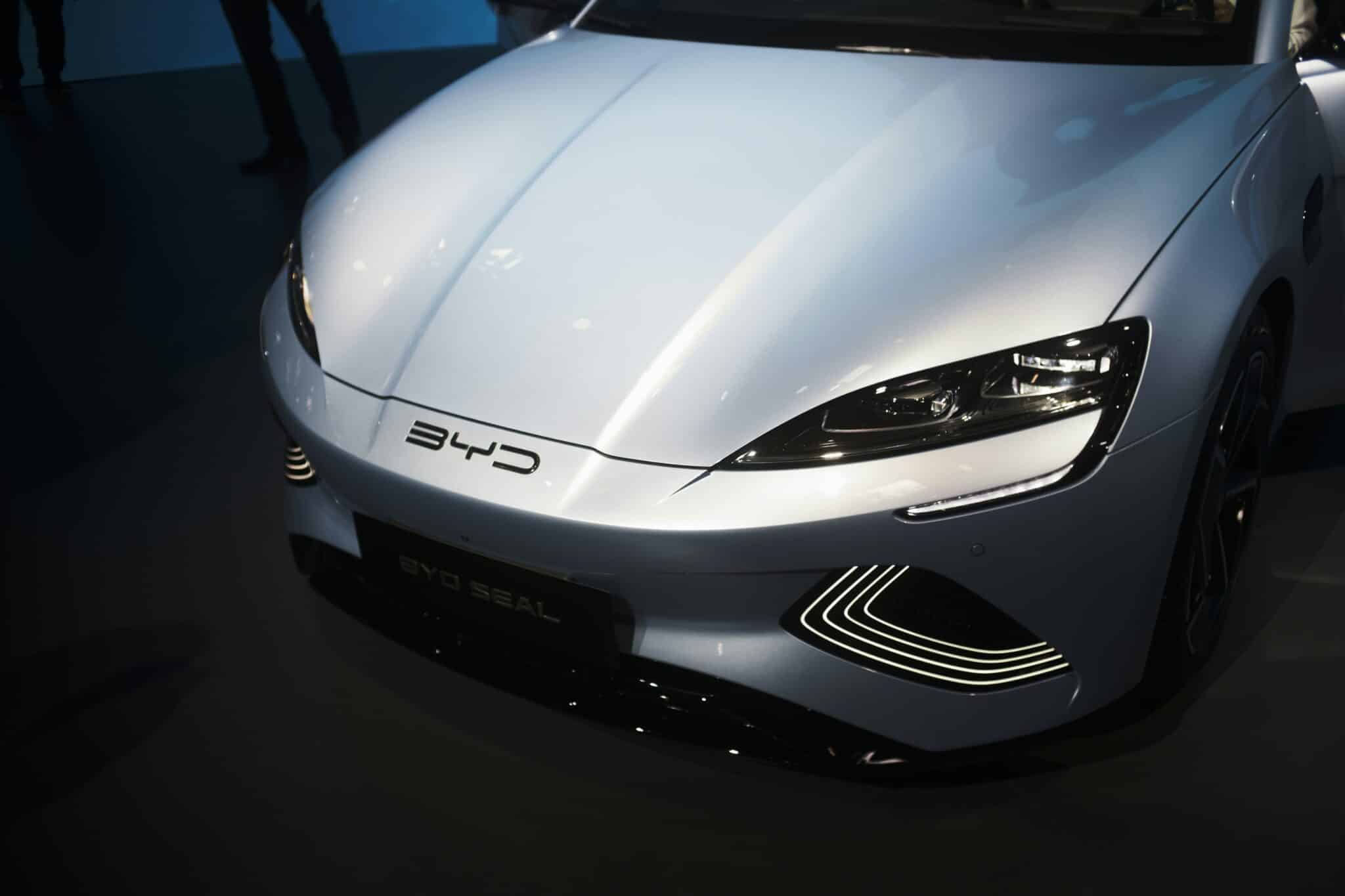
London, 14 August 2026 — EBM Newsdesk Analysis — By Nick Staunton
Chinese carmakers could hold between 15% and 30% of the European market by 2035, against roughly 10% today, according to Citi analysts. The bank warns European manufacturers face a decade of volume losses and restructuring.
Read the range carefully, because it is not a forecast about China. It is a forecast about Brussels.
Join The European Business Briefing
New subscribers this quarter are entered into a draw to win a Rolex Submariner. Join 40,000+ founders, investors and executives who read EBM every day.
SubscribeThree Policies, Three Outcomes
Citi’s base case — current EU rules left as they are — is 30%.
Extending the existing tariffs on Chinese electric vehicles to plug-in hybrids brings it down to 25%. Plug-in hybrids are the fastest-growing Chinese segment in Europe and sit outside the current duties, which is why Brussels has been examining them.
The lowest number, 15%, depends on the “Made in Europe” requirement in the proposed Industrial Accelerator Act.
So the entire fifteen-point spread turns on decisions not yet taken. That is several million cars a year, and the difference between a manageable competitive shift and a restructuring of European manufacturing. Citi has published a policy menu rather than a projection.
The Underlying Data
The trend beneath the forecast is what makes it credible.
Schmidt Automotive Research found Chinese brands took 10% of the market across 18 western European countries in April, up from 4.9% a year earlier. That is a doubling in twelve months, achieved while paying duties of up to 35%.
Citi’s own June work put the five largest Chinese-owned groups — SAIC, BYD, Geely, Chery and Leapmotor — at 10.6%. BYD sold more than 32,000 cars in Europe in May, up 137% year on year, overtaking SAIC to become the bestselling Chinese brand on the continent. Chery and Leapmotor more than trebled their registrations.
Worth noting who is actually losing. Citi expects Japanese and South Korean brands to fall from 20% to below 16% by 2035. Berenberg found European manufacturers dropped from about 71% of the market in 2021 to 66.5% in 2025, with Stellantis the largest single loser.
The forecasters disagree, and honestly so. Berenberg sees a peak of 12–15%, UBS at least 15% by 2030, JPMorgan 20% of western Europe by 2028. Beatrix Keim of Germany’s Centre Automotive Research recently cut her 2035 estimate to 15%, arguing the turning point has arrived.
The Rule That Will Not Work
Here is the problem with the 15% scenario, and it has not been widely noticed.
A Made in Europe requirement only constrains Chinese manufacturers if cars built in Europe by Chinese companies do not qualify. And European carmakers are currently helping them build exactly that.
As we reported this month, Stellantis is putting Dongfeng into its Rennes plant and offering space at two Spanish sites. Chery is producing at a former Nissan plant in Barcelona. Geely has taken an idle hall at Ford’s site near Valencia. Those cars have European workers, European suppliers and European plates.
Volkswagen, Stellantis and Renault jointly asked Brussels for the Made in Europe rule. Three of them are simultaneously leasing the means of satisfying it to the companies it targets. Unless the Act defines local content in a way that captures ownership rather than assembly, the 15% scenario is not reachable — and defining it that way means telling Stellantis it cannot rent out a plant running at 55% capacity.
That is the same collision between competitiveness and climate that Brussels keeps discovering, and the reason European regulation so often lands as self-inflicted damage.
Where I Land
My view is that the 25% scenario is the realistic one, and that Europe will get there while believing it chose 15%.
Extending duties to plug-in hybrids is politically straightforward and will probably happen. The Made in Europe rule is where the real argument sits, and it will be diluted, because every serious manufacturer has a commercial reason to want the definition loose. Rules written by an industry against itself do not survive contact with that industry’s balance sheet.
The uncomfortable part is that 25% may not be a failure. Chinese brands doubled their share in a year while paying a 35% tariff, which suggests price and product are doing the work, not trade policy. Tariffs postpone that outcome. They do not change it, and Fitch said the same this week about trade more broadly.
Citi’s most important sentence is not about market share. It is the warning of a decade of volume losses and restructuring, which is what happens to a European industry that keeps its factories busy by renting them to the competition.
Related Analysis






