































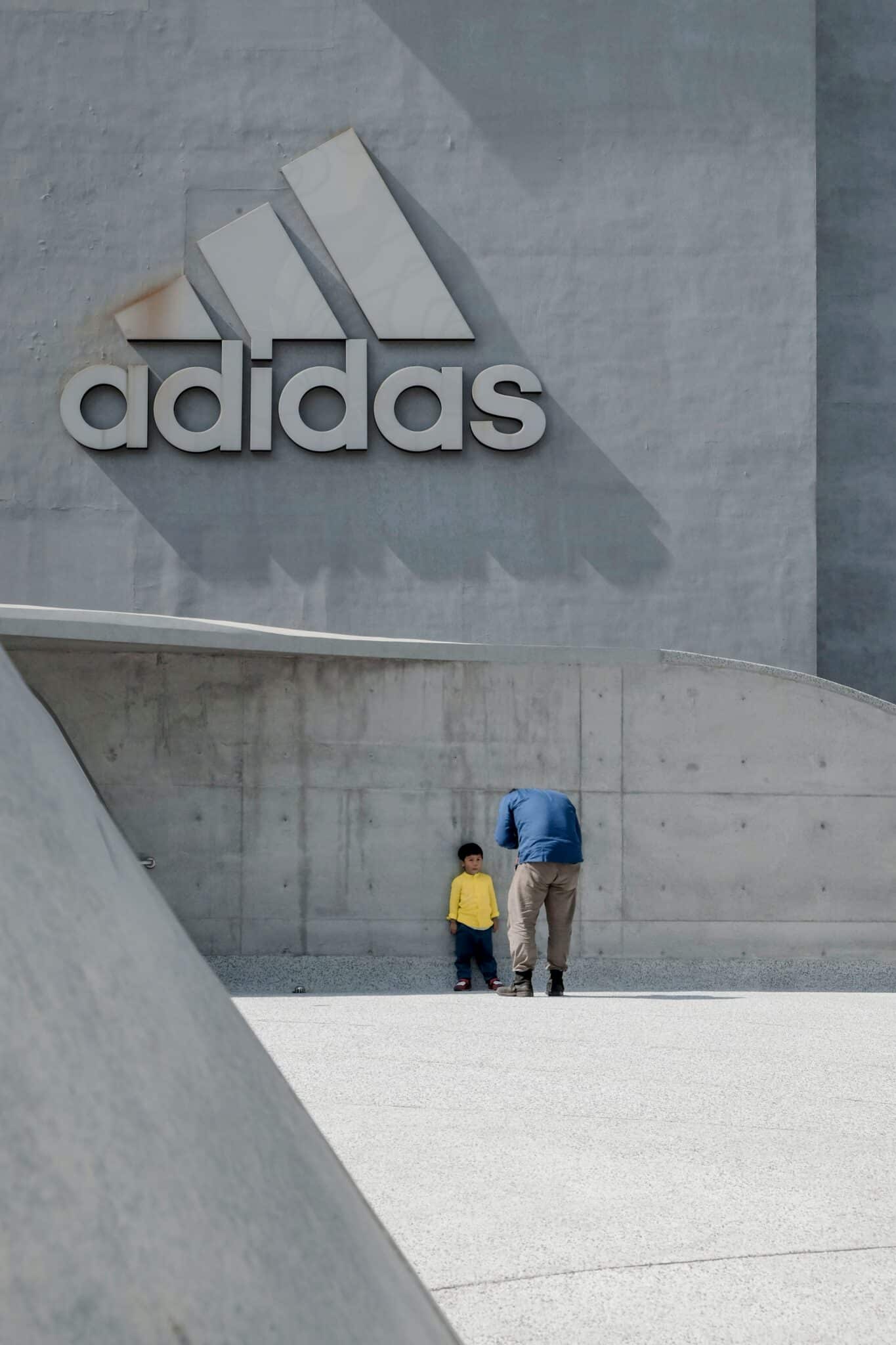
Herzogenaurach, 1 August 2026 — EBM Weekend Read — By Nick Staunton
There is a town in Bavaria of about 24,000 people where, for the better part of fifty years, the first thing anyone did on meeting a stranger was look down at their feet. The Aurach river runs through Herzogenaurach, and for most of the twentieth century it separated more than two banks. On one side was Adidas. On the other was Puma. Locals called it die Stadt der gebeugten Nacken — the town of bent necks — because a glance at a man’s shoes told you which company he worked for, which baker he used, which pub he drank in and, in most cases, who he was allowed to marry.
Two brothers did that. Adolf and Rudolf Dassler started making shoes together in their mother’s laundry room and ended up building the two companies that would define global sportswear, having stopped speaking to each other entirely. It remains the most instructive family business story in Europe, and the reason to revisit it now is that the ending has just changed.
Join The European Business Briefing
New subscribers this quarter are entered into a draw to win a Rolex Submariner. Join 40,000+ founders, investors and executives who read EBM every day.
Subscribe
One Workshop, Four Gold Medals
Gebrüder Dassler Schuhfabrik was registered in 1924. Adi, the younger brother, was the craftsman — obsessive about the shoe itself, spikes, weight, the mechanics of a sprinter’s foot. Rudolf was the salesman, louder and better at rooms.
The division worked. By the 1936 Berlin Olympics the brothers had persuaded Jesse Owens to run in their shoes, and Owens won four gold medals in front of a regime that had expected otherwise. It was arguably the first modern sponsorship coup: an athlete, a product, and a global audience watching at the same moment.
Both brothers joined the Nazi party, as did most German businessmen who wished to keep trading. Both were later cleared. That period is not incidental to the story, and it is where the relationship broke.
The Air Raid
The rupture has a canonical version and it is probably too neat. During an Allied bombing raid, Adi and his wife are said to have climbed into a shelter already occupied by Rudolf and his family, with Adi remarking about the dirty bastards coming back again. Rudolf took it as a reference to himself. Whether he was right has never been established.
What is documented is worse and duller. Rudolf was conscripted while Adi stayed to run the factory. Rudolf was later detained by American forces and became convinced his brother had informed on him. Adi believed the reverse. There were accusations about the wives. By 1948 it was finished.
They divided the company. Rudolf crossed the river and founded what became Puma. Adi kept the original site, registered three stripes in 1949, and named his firm from his own nickname and surname. The workforce chose sides. So did the town.
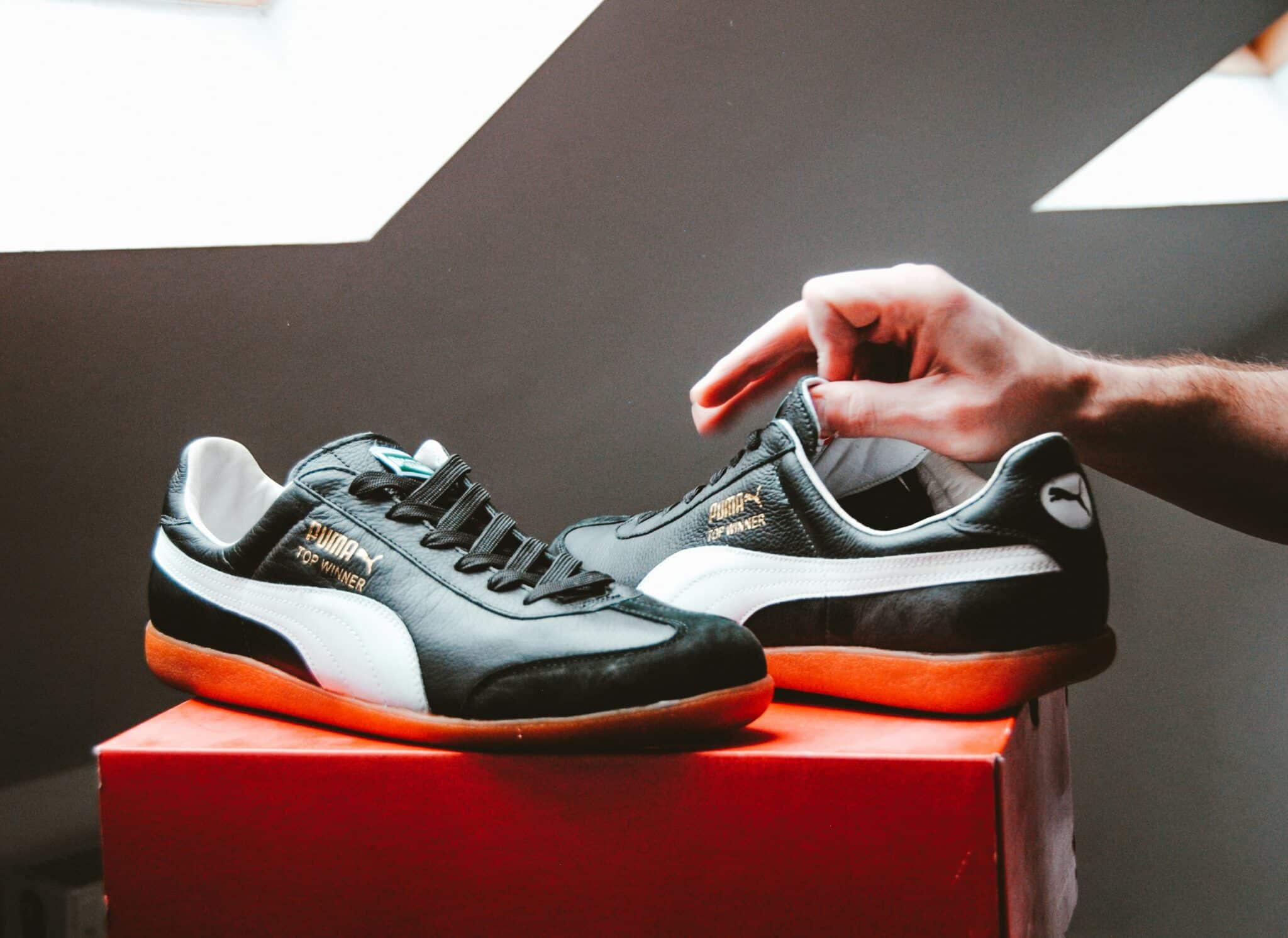
Fifty Years of Proxy War
What followed was a rivalry conducted almost entirely through other people’s feet.
In 1954 West Germany beat a Hungary side that had not lost in four years, in a final played on a waterlogged pitch in Bern. The German players wore Adidas boots with screw-in studs that could be lengthened for the conditions. The Miracle of Bern is the founding myth of postwar German sporting confidence, and Adi Dassler was on the touchline.
The most famous skirmish came at the 1970 World Cup. The brothers had reportedly agreed a truce over Pelé — neither would bid for him, since the bidding would be ruinous. Puma broke it. Before a match, Pelé asked the referee for a moment, knelt to tie his laces, and the cameras of the world found his boots. Adidas is said to have understood immediately what had happened.
This is the part worth pausing on, because it is where the modern sports economy begins. The Dasslers did not invent the sports shoe. They invented the idea that a shoe worn by the right person at the right moment is a media asset, and that its value is set by attention rather than by leather. Every subsequent argument about athlete equity, sponsorship inflation and the streaming rights wars now reshaping European sport descends from two brothers competing to get their product onto the most-photographed feet on earth.
Neither lived to see how large it became. Rudolf died in 1974, Adi in 1978. They are buried in the same Herzogenaurach cemetery, at opposite ends, as far apart as the ground allows.
The Families Lost Both Companies
Here is the part that gets left out of the anecdote, and it is the part that matters commercially.
Neither family kept its company.
The Dassler heirs sold control of Adidas in 1989 to the French businessman Bernard Tapie, in a transaction that later became entangled in one of France’s longest-running financial scandals. Adidas passed through further hands before its recovery as a listed German group. Puma spent decades in the wilderness, was rescued and rebuilt, and in 2007 was bought into by the French luxury group then called PPR, now Kering, controlled by the Pinault family.
Two generations. That is how long the founding families held assets they had built from nothing. It is a familiar arc — the Rolex Foundation exists precisely to make that outcome impossible, and the contrast is instructive. Ownership structures decide who is still there in seventy years. Sentiment does not.
The pattern repeats across European brand-holding. Luxottica’s dominance of eyewear rests on the same insight the Dasslers reached first: the manufacturing is a commodity, the name is the asset, and the name can be traded.
The Ending Changed in January
In January 2026, Anta Sports of Fujian agreed to buy Artémis’s 29.06% holding in Puma for €1.5bn, at €35 a share — a premium of more than 60% to the previous close, making the Chinese group Puma’s largest shareholder. Anta stated it had no plans for a full takeover but would assess deepening the relationship. The deal is expected to close by the end of this year.
It was not a triumphant sale. Puma shares had fallen more than 70% over five years and ended 2025 down nearly half. Third-quarter organic sales dropped 10.4% and operating profit fell by more than 80%, with the company citing weak brand momentum and excess inventory. Puma itself has designated 2026 a transition year following a reset.
Anta already owns Salomon, Wilson and Arc’teryx. It is assembling exactly the sort of multi-brand Western portfolio that European groups spent thirty years assembling and are now, in a broader retreat from non-core holdings, unwinding.
The Business Case
The Dassler story is usually told as a fable about family bitterness. It is really a story about what the founders’ feud produced and what it could not protect.
The rivalry was extraordinarily productive. Two firms in one small town, driven by mutual loathing, invented modern sports marketing between them and built brands that outlasted their creators by half a century. Herzogenaurach today has an Adidas headquarters, a Puma headquarters, an unremarkable peace, and a football match in 2009 where employees of both finally played on mixed teams.
But the brothers built brands and neglected structures. They fought over athletes and lost their companies. Adidas is now a large German listed business with no Dassler in it. Puma’s biggest shareholder will shortly be in Fujian province.
Europe is very good at making brands people want. It has been consistently worse at arranging to still own them. That is the same argument playing out in critical minerals, in technology funding and in who ultimately profits from European industrial policy.
Two brothers stopped speaking in 1948 and divided a town for fifty years. In the end, neither side won it. Somebody else bought it.