




























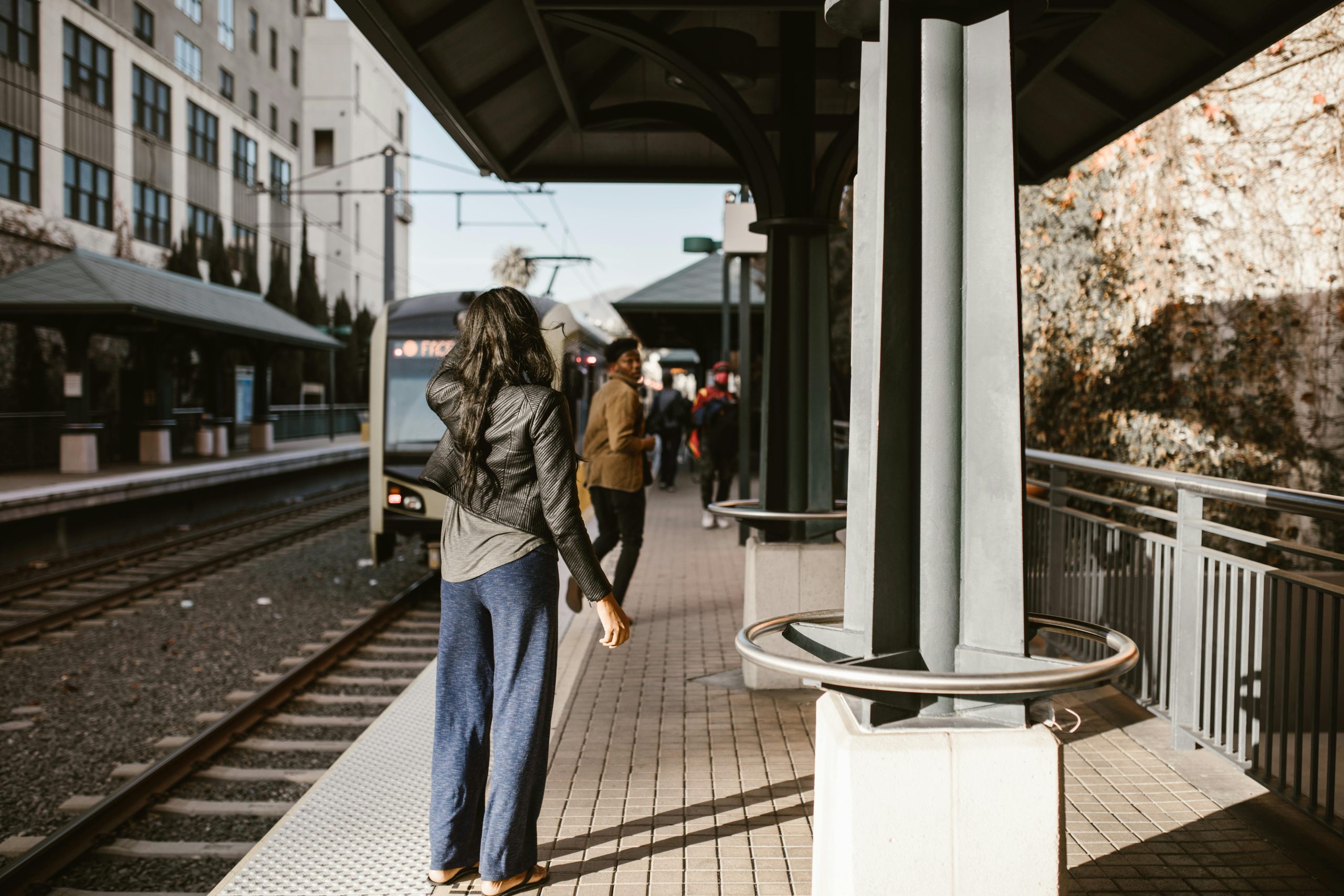
Arriving in Bratislava sets the tone for what follows. It isn’t dramatic in the way of Paris or Berlin, but the introductions are distinctive. By train, the first encounter is with a station that still feels like a lived-in corridor of history. You see tiled floors from decades past, a mix of modern kiosks, and travelers juggling paper tickets and smartphones. By bus, the story shifts. The new terminal, with its steel and glass, feels crisp and efficient. People line up at coffee stalls, scrolling through their screens while waiting for connections. Arriving by riverboat is slower and grander: the skyline builds gradually, and you feel the pull of the river as the current carries you toward the landing.
The city wastes no time in immersing you. Trams dart past with their signature orange flashes, threading narrow streets and wide avenues alike. Street signs hint at Bratislava’s shifting borders, with Hungarian and German echoes alongside Slovak. It’s compact, yes, but layered. Each corner brings a small reveal: a café tucked behind a courtyard, a mural splashed across a blank wall, a statue perched where you least expect it.
Old Town tends to be the first stop, and for good reason. The cobblestones twist into lanes that open into squares where fountains and facades feel both theatrical and lived-in. Locals actually shop at the grocery stores and sit on doorsteps with dogs, which keeps the stage set from becoming too polished. Cafés here serve not just tourists but students and workers, blending rhythms of old and new.
Join The European Business Briefing
New subscribers this quarter are entered into a draw to win a Rolex Submariner. Join 40,000+ founders, investors and executives who read EBM every day.
SubscribeWhere you choose to stay in Bratislava shapes your two-day frame. A guesthouse near the castle gives you quiet evenings and uphill walks with panoramic payoffs. A boutique spot in Old Town places you inside the hum of nightlife, footsteps from late-night wine bars. Across the Danube, glass hotels stand with sweeping views of the river and the bridges that stitch the city together. The beauty is that none of these choices put you far from anything; distances are short, trams are quick, and the city doesn’t punish you for exploring. That’s why even two days here can feel full without being rushed.
Green and Concrete: Parks, Bridges, and the Big Blocks
Bratislava’s geography is a stage with a river for a spine. The Danube divides not just water from land but also two contrasting faces of the city. On one side lies Sad Janka Kráľa, a park with roots deep in the 18th century. It is spacious but personal, full of shady avenues where joggers pass pensioners on benches and groups of teenagers gather under statues. Its design is deliberate—tree alleys, paths, and symmetrical layouts—but the use is entirely unpretentious. Here you see everyday life: picnics on checkered blankets, conversations stretched over hours, and strollers rolling smoothly along gravel paths.
Cross the river and you find Petržalka, Bratislava’s largest residential district. Tower blocks rise in repetition, stretching into the horizon, each a legacy of socialist-era urban planning. At first sight, it looks monolithic, but walking through reveals a pulse of detail: balconies painted in bright colors, playgrounds echoing with shouts, local bakeries tucked under the blocks. People shape these concrete giants into neighborhoods that function with their own character. It’s living proof that design and use rarely stay in the same lane.
The bridges are what bind these contrasts together. The SNP Bridge, known as the UFO Bridge, is dramatic with its saucer-like restaurant hanging above the river on a single pylon. Crossing it feels cinematic, as the Old Town skyline and Petržalka’s high-rises frame your view. The Old Bridge tells a different story. Its trusses are green steel, and its wide pedestrian path makes it a social crossing: cyclists zip past, couples stroll, families push prams. Other bridges follow suit, each with its own role—commuter artery, pedestrian shortcut, or scenic lookout.
Elsewhere, green and concrete intermingle in subtler ways. Courtyards offer hidden gardens, castle slopes double as picnic grounds, and tram routes cut past playgrounds and flowerbeds. Bratislava is, in many ways, a park city disguised as a capital. For visitors, this means that the city never feels heavy. Even when surrounded by concrete, a green escape is usually just a corner away.
Museums and Memory Without Dust
History in Bratislava isn’t presented as something distant. It arrives in layers, close together, easy to step between. The Bratislava City Museum gives a compact but rich look at medieval guilds, defenses, and daily life, with the tower climb rewarding you with a rooftop view that stretches across terracotta roofs. The Primate’s Palace, not far away, radiates with pastel walls and polished salons, carrying the weight of peace treaties once signed within its mirrored halls.
The Slovak National Gallery adds another voice. Recently renovated, it mixes classical collections with bold contemporary exhibitions. Its riverside terrace doubles as a café where students and tourists mingle, notebooks and coffee cups scattered across tables. The gallery feels both serious and social—an art space that doesn’t isolate itself from the city around it.
Then there are the quirkier stops that make museum-hopping less predictable. The Museum of Clocks is small, but every room ticks with craftsmanship: carved wooden housings, brass gears, ornate faces. The Pharmacy Museum, housed in a former apothecary, makes history tactile with jars, scales, and drawers that once held powders and herbs. These spaces tell stories through objects of daily use, not grand gestures.
The city’s history shows up in subtler ways too. Austro-Hungarian architecture sets the frame, communist-era fonts and designs appear on signage, and European Union funding plaques remind you of recent chapters. Nothing replaces what came before; it all overlaps. That overlapping texture is what makes Bratislava’s memory feel alive rather than archived.
Two days allow for a lot of exploration if you move smartly. A tram pass lets you glide from one part of the city to another without worrying about tickets every ride. Pair each museum with a café stop—a cappuccino in Štúr, a tea by the river, or a slice of cake in a quiet courtyard. This rhythm keeps the city digestible: learn, walk, pause, repeat. By the end, museums feel less like destinations and more like stepping stones across the city’s timeline.
Eating, Drinking, and Staying Out Too Late
Food in Bratislava is rooted in comfort but alive with reinvention. At lunchtime, halušky dominates menus, soft dumplings coated in tangy sheep cheese with bits of bacon that cling like punctuation. Garlic soup and bean stews make their rounds too, arriving with a warmth that carries you through the next walk. Daily lunch menus, written on chalkboards, keep meals approachable and unpretentious—fast, filling, and affordable.
Cafés provide the city’s rhythm. Some carry the spirit of old Vienna with wood-paneled walls, brass fixtures, and pastries stacked like edible architecture. Others lean into the minimalist look: concrete floors, potted plants, stripped-back menus that let espresso or filter coffee stand on their own. Both belong to the city’s identity, and sampling one of each gives you a sense of how Bratislava balances tradition with trend.
Dinner is where the city stretches out. Traditional Slovak flavors show up modernized: roasted duck paired with cabbage that’s been caramelized to a subtle sweetness, or river trout grilled with herbs and served beside seasonal vegetables. Some chefs bring in Mediterranean or Asian influences but stick to local ingredients. The Danube provides not just a backdrop but an atmosphere—restaurants along the riverbank feel theatrical when the sun drops and the water reflects the lights of bridges.
Wine culture runs deep, thanks to vineyards just outside the city. Cellars underneath Old Town serve local Riesling, Grüner Veltliner, and reds from the nearby Small Carpathians. These are places for slow evenings, candlelight, and conversations that spill into the next hour. Bars add another layer. Craft beer houses pour Czech and Slovak brews; cocktail dens hide in basements where bartenders take time to explain the mix; rooftop terraces lift the night into open air.
Nightlife here isn’t about overwhelming volume. It’s scaled to social connection, where groups of friends blend easily with visitors and conversations stretch until the first trams rattle to life again. Two days in Bratislava give you just enough time to catch both sides: a long dinner that turns into a cellar wine night, and a casual bar hop that keeps you out later than expected. It’s balance, not excess, and it leaves you with energy to keep exploring the next morning.
Sleep, Wander, Repeat
Accommodation in Bratislava is varied but always close to the heart of things. Boutique hotels in Old Town offer rooms where vaulted ceilings and antique wardrobes carry echoes of the past. Modern towers along the Danube provide floor-to-ceiling windows, blackout curtains, and fitness centers that overlook the river. Hostels trade in murals, communal kitchens, and the kind of atmosphere where meeting fellow travelers feels inevitable. Some small hotels balance charm and practicality, with fresh linens, thoughtful design, and the occasional touch of commercial furniture that makes a room feel functional without losing warmth.
Where you sleep shapes how you wake. Near the castle, mornings start with a downhill walk and views of the city stirring awake. In Old Town, you step directly into the noise of morning deliveries and early café openings. Across the river, you begin with bridges and breezes. None of these choices put you far from anything; Bratislava’s geography makes sure of that.
Breakfast sets the second day’s pace. Traditional cafés offer hearty spreads: eggs, bread, spreads, and coffee poured strong. Trendier spots serve lighter plates—granola, fruit, croissants baked on-site. A local market adds another option: cheese and rolls eaten on a bench in a nearby square. Trying more than one approach across two days gives a fuller sense of how the city eats its mornings.
The real reward comes from wandering without structure. Courtyards appear behind archways that seemed like dead ends. Staircases lead to sudden views over roofs. Murals brighten gray walls with bursts of color. Bridges open new angles on the skyline, and castle paths shift character depending on the light. You can’t plan these discoveries, which is why they stick.
When departure arrives, what stays with you are not only the big attractions but also the smaller notes: the clanging tram bell at a crossing, the way the river carries barges upstream, the hush of a museum room, the taste of a pastry, the conversations drifting across café tables. Two days, measured in small details, can stretch into a memory that lasts far longer.