































5 September 2026 | EBM Weekend Read By Nick Staunton, Editor-in-Chief,
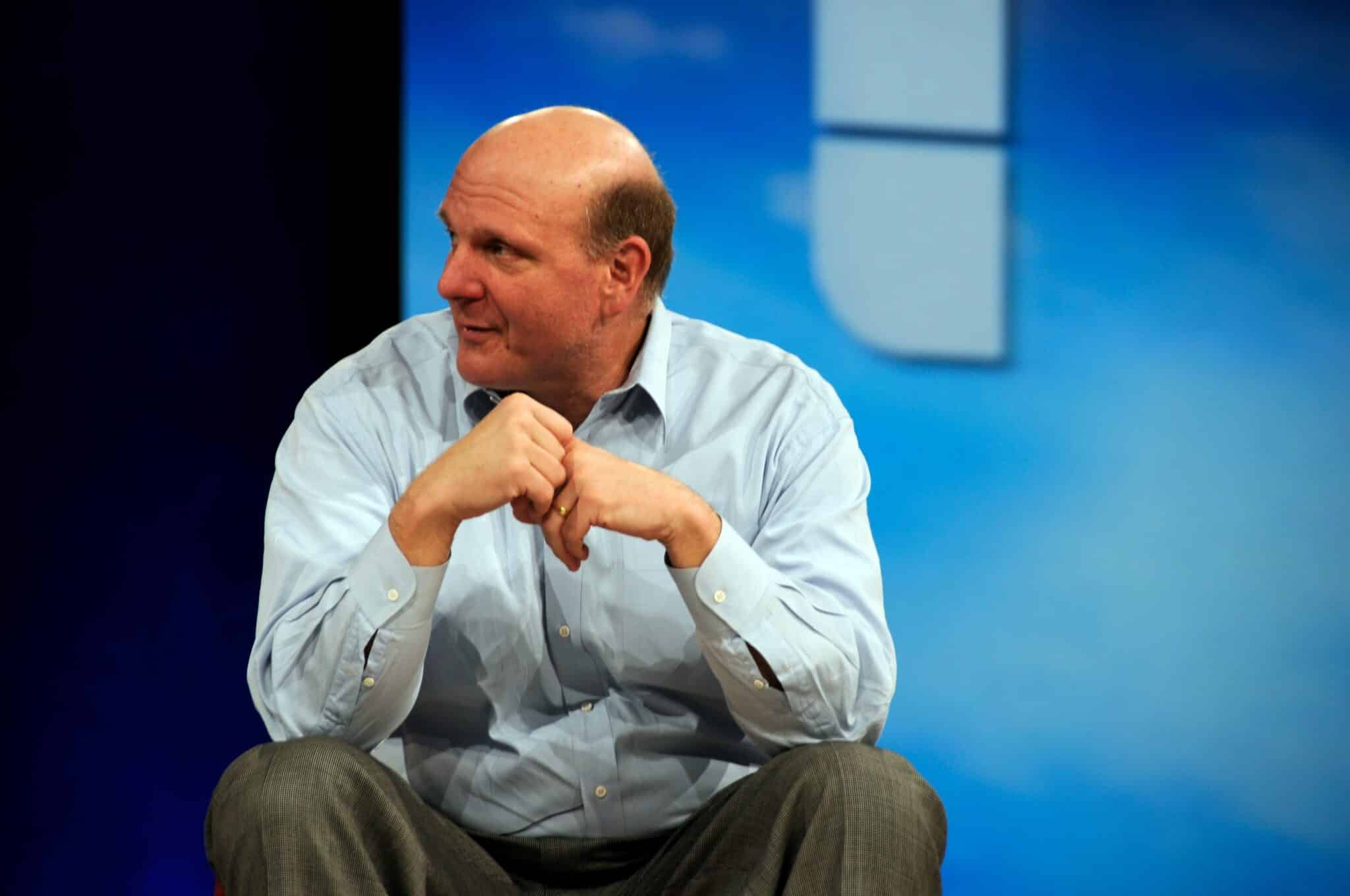
Steve Ballmer has spent much of his adult life demonstrating what happens when extraordinary wealth, competitive instinct and technology-sector confidence are combined at scale. The former Microsoft chief executive paid $2 billion for the Los Angeles Clippers in 2014, built one of American sport’s most expensive new arenas and turned a historically secondary NBA franchise into one of the league’s most valuable organisations. This week, however, the billionaire owner was reminded that even enormous private wealth has limits when it collides with the institutional rules governing professional sport. The NBA has suspended Ballmer from all league and team activities for one year, fined the Clippers $30 million and stripped the franchise of five future first-round draft picks after an investigation concluded that the organisation had violated salary-cap rules in connection with off-court income opportunities for Kawhi Leonard. The Clippers reject the league’s findings and say they intend to challenge them.
From Microsoft to the Clippers
Ballmer’s story is unusual even by the standards of billionaire sports ownership. He joined Microsoft in 1980 as its 30th employee, eventually succeeding Bill Gates as chief executive and helping turn the company into one of the world’s dominant technology businesses. When he left the CEO role in 2014, he had the resources to pursue something that technology executives increasingly regard as the ultimate trophy asset: professional sports ownership. His purchase of the Clippers for $2 billion looked aggressive at the time. It now looks almost conservative. The economics of major American sports franchises have exploded, driven by scarce supply, media rights, sponsorship, premium hospitality and the increasingly global nature of sports audiences. EBM has examined this transformation in our analysis of the billionaire investment boom in sport, where the same principle is visible across Formula One: investors are no longer buying sporting teams simply because they love sport; they are buying scarce entertainment assets with increasingly sophisticated commercial models.
Join The European Business Briefing
New subscribers this quarter are entered into a draw to win a Rolex Submariner. Join 40,000+ founders, investors and executives who read EBM every day.
SubscribeBallmer also wanted to build something tangible. The $2 billion Intuit Dome opened in 2024 as the Clippers’ new home, replacing their long-standing arrangement at Crypto.com Arena. The project was a statement of intent from an owner who had spent decades in technology and was accustomed to thinking in terms of infrastructure, scale and long-term competitive advantage. The arena was designed to improve the Clippers’ economics as much as their sporting environment, giving the organisation greater control over premium seating, hospitality, sponsorship and fan experience. In many respects, it was a textbook Ballmer project: expensive, ambitious and designed to change the underlying economics of the business rather than merely improve its appearance.
The NBA Has Drawn a Very Expensive Line
That makes the punishment particularly significant. The NBA’s investigation, conducted by the law firm Wachtell, Lipton, Rosen & Katz, concluded that the Clippers facilitated endorsement arrangements that gave Leonard off-court income opportunities connected to companies doing business with the team. The league found that Ballmer knowingly sought to help Leonard obtain additional income opportunities and approved a business arrangement that was a precondition for an endorsement agreement. The investigation extended beyond the much-publicised $28 million Aspiration endorsement arrangement to agreements involving Boingo Wireless, Daktronics and Lockton Insurance. The NBA says Leonard received $66 million in endorsement payments from four companies facilitated by Ballmer and Clippers executives.
The scale of the punishment tells us how seriously Adam Silver and the league regard the issue. The Clippers have been fined $30 million and stripped of first-round selections in the 2029, 2030, 2031, 2032 and 2033 drafts. Ballmer has been suspended for a year, while Clippers executives Gillian Zucker and Lawrence Frank have also received suspensions and Leonard has been fined $700,000. The organisation has also entered a five-year compliance programme. This is not the NBA issuing a modest regulatory penalty and moving on. It is the league making an institutional statement about the boundary between legitimate commercial activity and attempts to circumvent the mechanisms that keep player compensation and competitive balance under control.
The Clippers, however, are not accepting the verdict quietly. The organisation has disputed the findings, with Ballmer’s lawyer describing the investigation as fundamentally unfair and indicating that legal remedies will be pursued. That distinction matters. An EBM analysis should not turn a league finding into an assertion that every allegation has become uncontested fact. What is beyond dispute is the consequence: the NBA has concluded that the Clippers committed serious violations and has imposed one of the most severe packages of penalties in its modern history.
Why the Money Matters
There is a bigger business question underneath the scandal. Professional sport has become a peculiar combination of private wealth and collective regulation. Billionaires buy franchises for billions of dollars, invest hundreds of millions in arenas and facilities and assume responsibility for enormous commercial organisations. Yet they do not own the rules of the competition. The leagues do. That tension becomes more important as franchise valuations rise and owners become increasingly sophisticated financial operators.
Ballmer’s estimated fortune of more than $150 billion makes the $30 million fine almost irrelevant to his personal balance sheet. Five first-round picks, however, are something else entirely. Draft capital is one of the principal mechanisms through which an NBA franchise creates future competitive value, and losing five consecutive selections from 2029 through 2033 potentially affects the Clippers long after the current controversy has disappeared from the headlines. The real punishment is therefore not the cheque Ballmer has to write. It is the future flexibility the organisation has lost.
That is why this episode is more interesting than a billionaire being fined. Ballmer is wealthy enough to absorb almost any conventional financial penalty. What the NBA can take away from him is something money cannot simply replace: competitive opportunity. A billionaire can buy an arena. He cannot buy a first-round pick after the league has taken it away.
The Problem With Billionaire Sports Ownership
This is also where Ballmer’s background becomes relevant. Technology culture tends to reward disruption, aggressive investment and the assumption that sufficiently capable management can solve almost any problem. Sport operates differently. It is an ecosystem in which the value of an individual organisation depends on the behaviour of its competitors. If one owner can spend, structure contracts or create commercial relationships in ways that effectively circumvent agreed compensation rules, the entire competitive system is affected.
That is why salary caps matter. They are not simply accounting mechanisms. They are part of the product. Fans are buying into the idea that the competition has rules and that wealth alone cannot determine the result. The NBA’s punishment therefore protects something much larger than a technical clause in a collective bargaining agreement. It protects the credibility of the league’s economic model.
The irony is that Ballmer has generally represented the modernisation of sports ownership rather well. He has invested heavily in the Clippers, built a spectacular arena and embraced technology and fan experience. He is precisely the kind of owner leagues traditionally want: wealthy, committed and willing to invest. But the lesson from this episode is that the same entrepreneurial aggression that makes billionaire owners valuable can become dangerous when applied to rules designed to constrain competition.
Sport Is Becoming an Asset Class — But It Still Has Rules
That tension is spreading well beyond the NBA. EBM’s analysis of the athlete-as-investor looked at how Ronaldo, LeBron James and other sporting figures are increasingly treating sport as an investment ecosystem rather than simply a profession. The same thing is happening at ownership level. Billionaires, private-equity firms, technology entrepreneurs and sovereign investors increasingly regard sports franchises as scarce assets with long-term appreciation potential.
The attraction is obvious. There are only 30 NBA franchises. There are only 32 NFL teams. There are a limited number of Formula One teams and major European football clubs. Media rights are becoming more valuable, premium hospitality is expanding, global audiences can be monetised through digital platforms and stadium developments increasingly combine sport with property, entertainment and retail. The result is a form of scarcity economics that resembles the best characteristics of luxury real estate: finite supply, wealthy buyers and an asset that can generate cash flow while appreciating in value.
Ballmer understands that better than most. That is why the Clippers remain an extraordinary long-term investment despite this week’s setback. The penalty changes the franchise’s competitive position, but it does not destroy the underlying asset. The NBA remains one of the world’s strongest sports properties, the Clippers have a new arena and Los Angeles remains one of the world’s most commercially valuable cities. Indeed, the very fact that Ballmer can absorb the financial punishment without threatening the franchise demonstrates why billionaire ownership has become so attractive to professional leagues.
But it also demonstrates why governance matters more as the value of these assets increases.
The Real Test for Ballmer
The question now is whether Ballmer treats the NBA’s punishment as a temporary legal battle or as a governance lesson. His instinct will presumably be to fight the decision; that is consistent with the Clippers’ response. But the more important task is rebuilding institutional trust. Five lost draft picks cannot be recovered simply by writing another cheque, and an owner cannot build a genuinely elite organisation if the league office believes the franchise has developed a culture in which competitive rules can be bent.
That may be the hardest part of the next year. Ballmer will be absent from official team and league activities, but the Clippers will continue operating under the scrutiny of a five-year compliance programme. The organisation therefore faces a period in which its ability to demonstrate that the underlying culture has changed will matter almost as much as its performance on the court.
It is also a reminder that ownership is not simply about having the money to buy the asset. Michael Jordan’s journey from NBA superstar to billionaire owner, which EBM explored in how Jordan built his $3.8 billion empire, illustrates the positive side of the equation: buying a sports franchise can create extraordinary wealth when an owner understands the long-term economics of scarcity, media and brand value. Ballmer’s experience illustrates the other side. The owner is buying into a system, not merely buying the right to run a private company.
The Bigger Picture
Steve Ballmer is unlikely to be materially poorer because of the NBA’s decision. The Clippers are unlikely to cease being a valuable franchise. Intuit Dome will continue operating, Los Angeles will remain Los Angeles and the NBA will continue to generate enormous amounts of money.
But this episode exposes something important about the next era of sports ownership. The richer the owners become, the more sophisticated the financial structures around athletes become and the more valuable the underlying franchises become, the more important the rules will be. Billionaires can buy teams; they cannot simply buy competitive legitimacy.
Ballmer’s great achievement at Microsoft was understanding that scale creates power. His great opportunity with the Clippers was to apply the same thinking to sport. The danger is assuming that every problem can be solved by scale, money or commercial ingenuity.
The NBA has now drawn the boundary.
For Ballmer, the lesson is expensive but straightforward: in technology, disruption is often the point. In professional sport, sometimes the rules are the product.