



























5 September 2026 | EBM Weekend Read By Nick Staunton, Editor-in-Chief
Lionel Messi has retired from international football at 39, closing one of the greatest sporting careers in history and opening a rather more intriguing question: what happens to the business of Lionel Messi when the football eventually stops altogether? His decision, announced after Argentina’s defeat to Spain in the 2026 World Cup final, ends a 21-year international career in which he became Argentina’s record appearance-maker and leading scorer, with 207 caps and 125 goals. More importantly, it leaves behind a sporting résumé so formidable that the commercial value of the Messi name is no longer dependent on another trophy. He is a World Cup winner, two-time Copa América champion, eight-time Ballon d’Or winner and, after his extraordinary years at Barcelona, one of the most recognisable sporting figures on the planet. The interesting question is whether he now turns that cultural capital into the sort of business empire built by Cristiano Ronaldo and David Beckham — or whether Messi, whose personality has always been considerably quieter, chooses a different and potentially more sophisticated route.
Join The European Business Briefing
New subscribers this quarter are entered into a draw to win a Rolex Submariner. Join 40,000+ founders, investors and executives who read EBM every day.
Subscribe
Barcelona Built the Brand
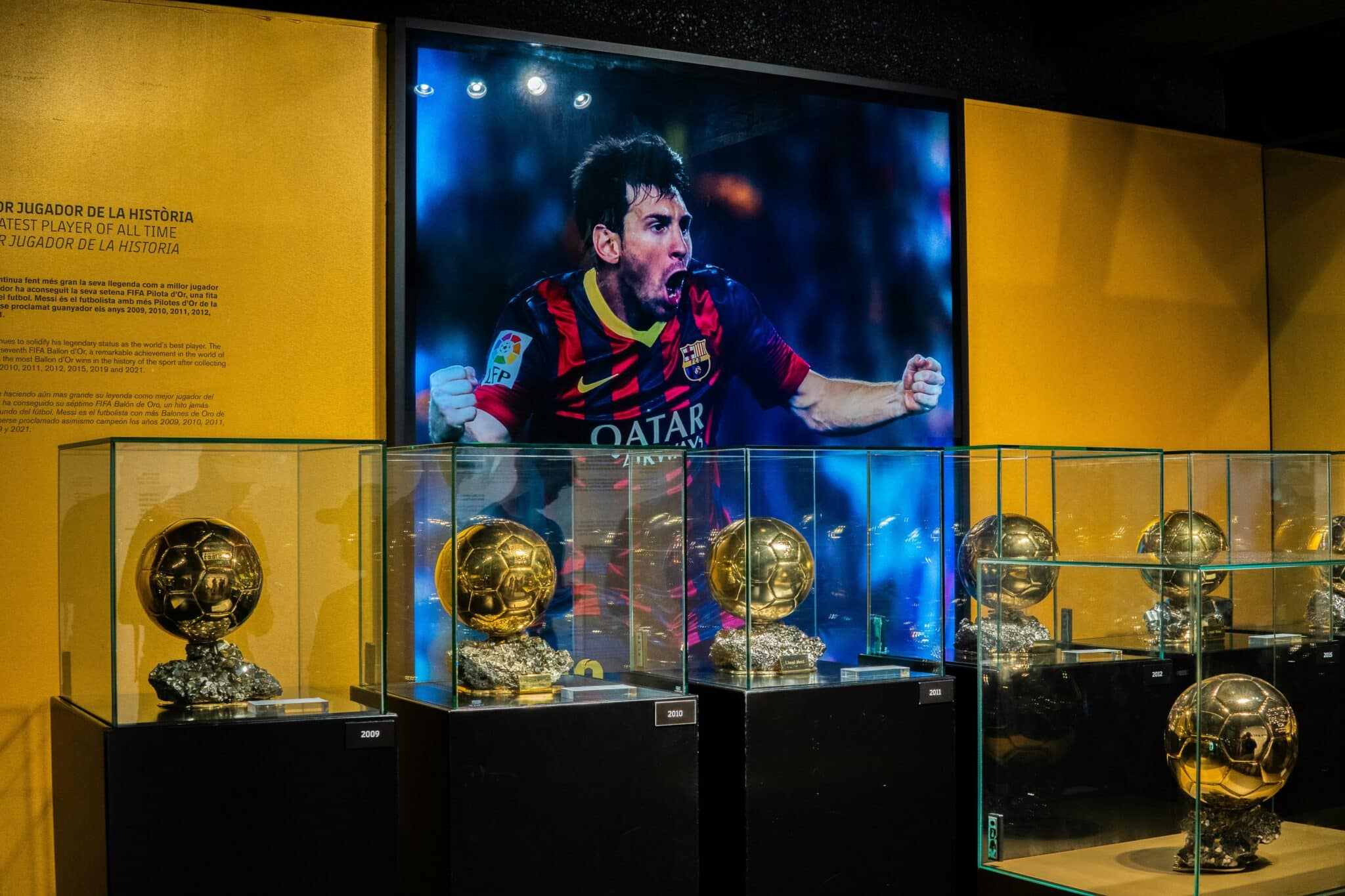
The foundations of the Messi commercial proposition were laid at Barcelona, and they are so substantial that it is easy to forget quite how extraordinary they are. Messi spent 17 seasons at Barça, making 778 appearances and scoring 672 goals, while winning 35 trophies: 10 La Liga titles, seven Copa del Reys, eight Spanish Super Cups, four Champions Leagues, three Club World Cups and three European Super Cups. He became the club’s all-time leading scorer, most decorated player and one of the central figures of its greatest modern era alongside Xavi, Andrés Iniesta, Sergio Busquets and Luis Suárez. Four Champions League titles, in particular, matter commercially because they place Messi not merely among famous footballers but among the small group of players who became synonymous with a winning institution at the very highest level. His individual record is equally extraordinary: eight Ballon d’Ors, six European Golden Shoes and a remarkable 91 goals in the 2012 calendar year.
That history is what makes Messi such a valuable brand even though he has never marketed himself with anything approaching Ronaldo’s intensity. A consumer buying Messi is not buying an aspirational lifestyle in quite the way a CR7 customer is. They are buying association with an almost impossibly successful sporting story. Messi’s endorsement relationships with Adidas, Mastercard, Lay’s and other major brands have therefore always had a different quality. There is less noise around them and, arguably, greater longevity. Forbes estimates Messi’s fortune at around $1.1 billion, but the more revealing point is how relatively little of that wealth has come from turning his initials into a mass-market product line. Ronaldo built a machine around CR7; Messi accumulated something closer to a portfolio. That distinction could become increasingly important now that the clock on his playing career is finally running down.
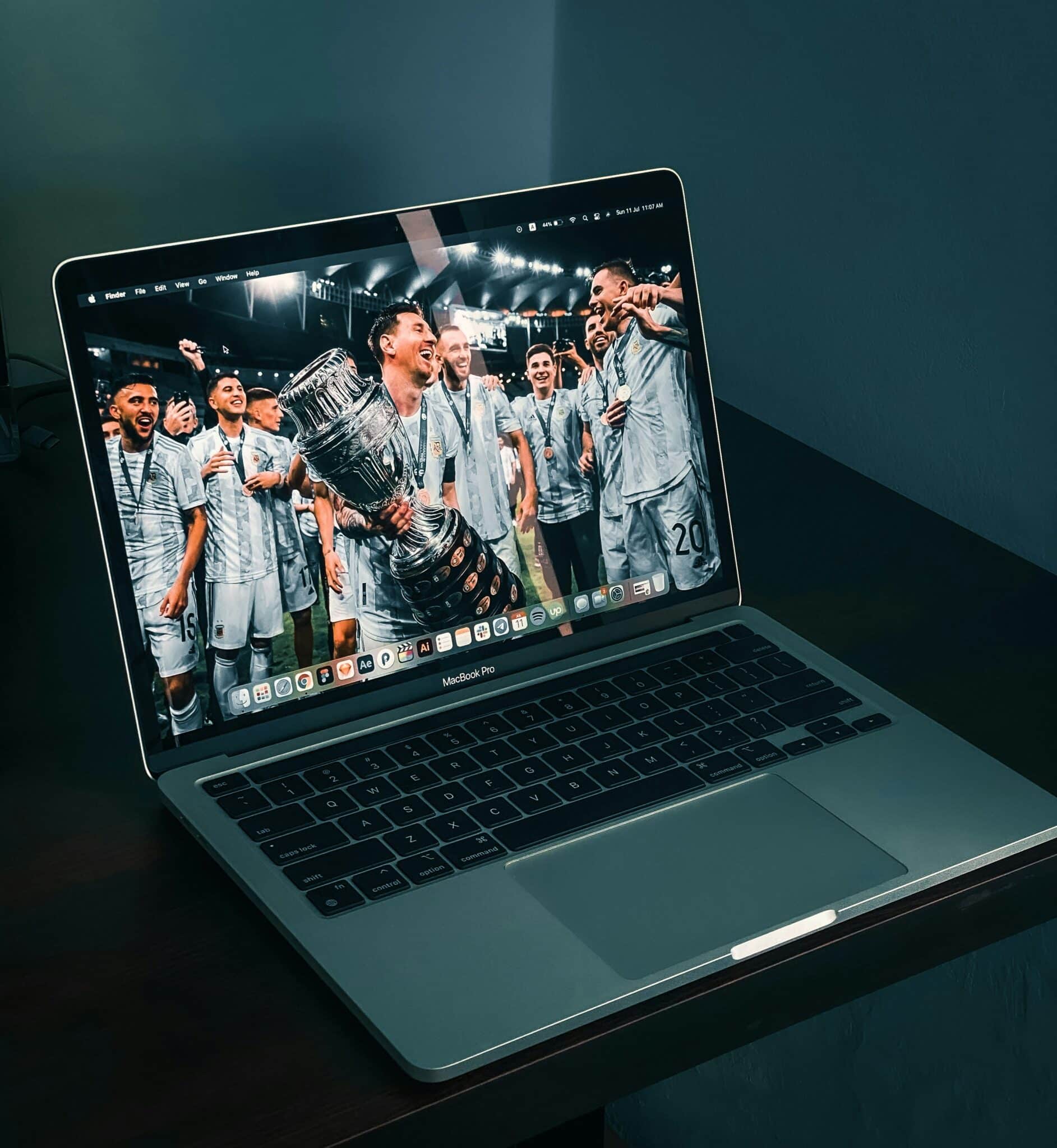
Ronaldo Built a Machine. Messi Has Built Scarcity
The obvious comparison is Cristiano Ronaldo, and EBM has already examined in detail how the Portuguese forward turned CR7 from a trademark filed as a 22-year-old into a sprawling commercial operation spanning hotels, fashion, fitness, healthcare, entertainment and technology. Behind Cristiano Ronaldo: How a Kid Who Begged for Burgers Became Football’s First Billionaire showed the essential difference: Ronaldo treats his enormous audience as a distribution network and his name as a consumer brand. Messi has never really done that. Ronaldo’s Instagram account alone has become a commercial asset of extraordinary scale, while his CR7 businesses are designed to keep generating revenue whether he scores another goal or not.
Messi’s approach has been almost the opposite. He has not attempted to become a lifestyle influencer, has avoided the relentless self-promotion that has characterised Ronaldo’s career and has generally allowed football to remain the centre of his public identity. There is a commercial advantage in that restraint. Scarcity can be more valuable than saturation. Messi does not need to sell consumers the idea that they should live like Messi; he simply needs to remain Messi. His greatest commercial asset may therefore be the distance between the man and the brand. The risk, of course, is that this model depends heavily on the continuing relevance of the footballer. Once there are no more Barcelona memories being refreshed, no more Argentina matches and eventually no more Inter Miami appearances, Messi will need to decide whether his existing brand can carry itself — or whether he has to become considerably more visible as a businessman.
Beckham Has Already Shown Him the Opportunity
If Ronaldo represents one possible future, David Beckham represents another, and Messi happens to be standing inside Beckham’s most important business decision. Beckham’s route after football was not to build the largest collection of products bearing his name. His masterstroke was recognising that sporting fame could ultimately be converted into ownership. As EBM explored in The £1.185 Billion Education: What David Beckham Understood About Money, the crucial decision was the option in his 2007 LA Galaxy contract to acquire an MLS expansion franchise for $25 million. That became Inter Miami, the very club Messi joined in 2023.
Messi has subsequently transformed the economics of that asset. Inter Miami is now valued at roughly $1.35 billion, while revenues have risen dramatically since his arrival, and Messi’s contract runs through the 2028 MLS season. Most interestingly, his arrangement gives him a route towards an equity stake in the club. That is a far more important development than another sponsorship deal. Messi could eventually own part of the organisation whose value he has helped create, while Miami Freedom Park gives the franchise an opportunity to develop beyond football into entertainment, hospitality and real estate. In other words, Beckham created the asset and Messi has become one of its principal engines of commercial growth. The possibility that Messi eventually becomes an owner is therefore not some fanciful retirement vanity project. It is the logical next step in a relationship that is already economically significant.
What Could Messi Actually Build?
The temptation would be to assume that Messi should now copy Ronaldo: launch more consumer products, put his initials on clothing, expand into fragrances, gyms and hotels and turn his social-media following into a permanent advertising platform. I doubt he will, and I am not convinced he should. Messi’s personality is poorly suited to the Ronaldo model, but his financial position means he does not need it. A better strategy would be to build an ownership-led portfolio around the areas where his credibility is strongest. Inter Miami is the obvious flagship, but football clubs more broadly could become part of the portfolio. Messi already has exposure to the sport beyond simply playing it, and the long-term economics of elite football continue to move towards media rights, sponsorship, hospitality, real estate and global consumer audiences. EBM’s analysis of the Champions League business model made the broader point: modern football is no longer simply a sporting competition but a sophisticated global commercial ecosystem involving broadcasters, sponsors, hospitality, technology and property. Messi has spent his entire adult life at the centre of that ecosystem.
Technology is another obvious opportunity. Messi’s investment vehicle, Play Time, has already backed companies across sports, media and technology, including businesses operating in artificial intelligence and digital technology. That is potentially more revealing than any hypothetical Messi-branded clothing line. The billionaire athlete of the future does not necessarily need to own the company selling the product; he can own equity in the company building the technology. Messi’s global reach gives him something most venture investors cannot buy, while his sporting credibility provides access to an enormous international audience. Sports technology, fan engagement, performance analytics, gaming and AI all sit naturally within the intersection between Messi’s experience and the sectors likely to attract capital over the next decade.
Then there is media. Messi has one of the most valuable personal archives in sport: Barcelona’s golden era, four Champions League victories, the rivalry with Ronaldo, Argentina’s years of failure and redemption, the 2022 World Cup, Copa América triumphs and now his final international campaign. A Messi-backed production company could turn that history into documentaries, premium football programming and youth-development content without requiring Messi to become a television celebrity. That would be much closer to his personality than becoming the face of another consumer product. There is a commercial opportunity in owning the storytelling around Messi without constantly putting Messi himself in front of the camera.
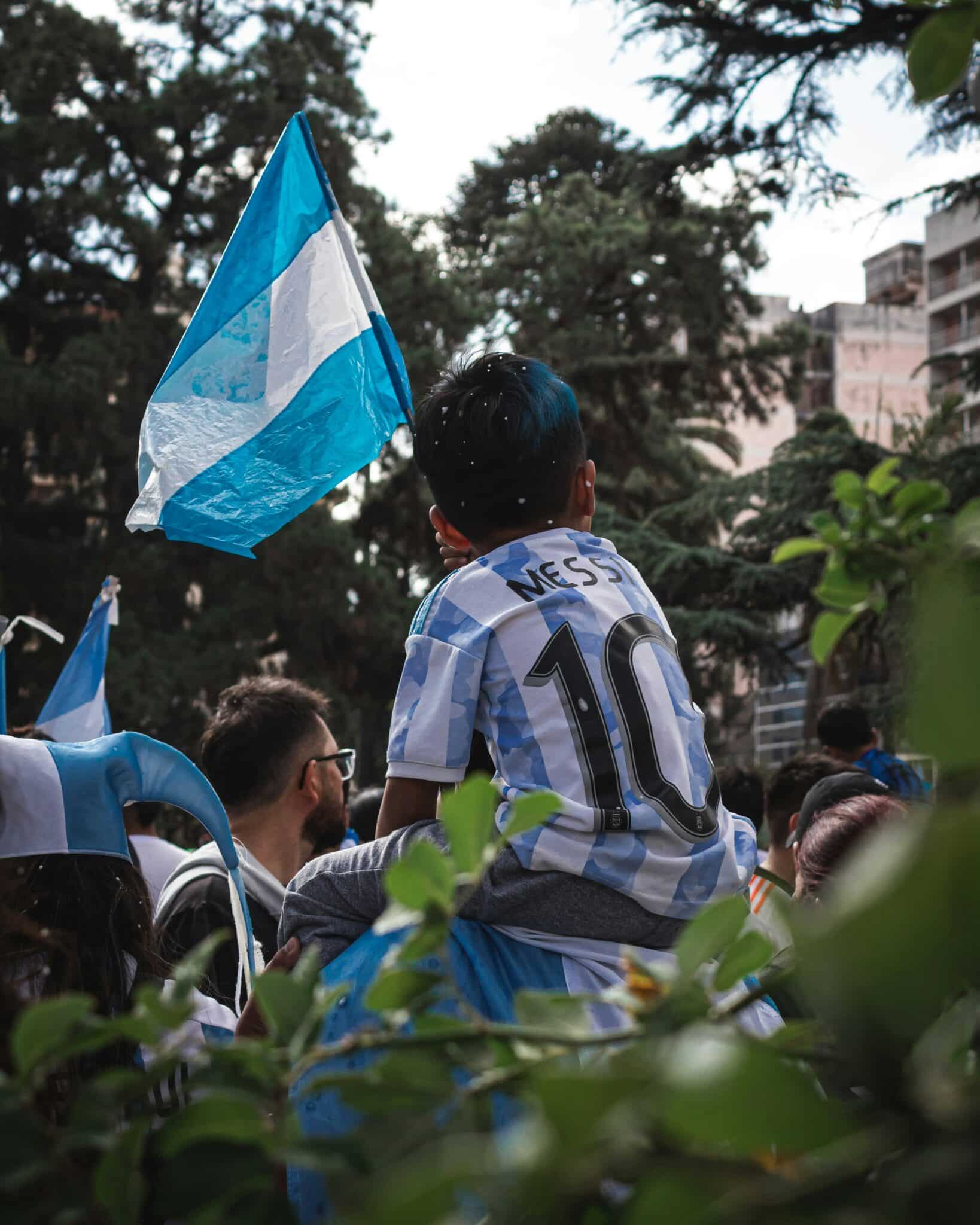
The Quiet Empire
Hospitality and property may ultimately prove even more suitable. Messi already has interests in the MiM Hotels business and real estate, and those businesses have one characteristic that suits him particularly well: they can compound quietly. Ronaldo’s commercial strategy is deliberately visible; Messi’s could be deliberately discreet. A portfolio of hotels, sports properties, football academies, technology investments and minority stakes in clubs would allow him to build wealth without turning himself into a full-time salesman. That would also distinguish his model from Beckham’s. Beckham’s brand became increasingly intertwined with fashion, media and global celebrity, whereas Messi could make ownership and investment the centre of his post-playing identity.
There is a broader business lesson here. EBM has previously looked at the rise of the athlete-as-investor, in which the playing career becomes the distribution mechanism for a much larger investment strategy. Ronaldo is the extreme example of vertical integration; LeBron James has built an extensive media and investment platform; Beckham converted celebrity into ownership. Messi has an opportunity to take the fourth route: turn extraordinary fame into a relatively quiet holding company. He does not need to monetise every follower if he can own the businesses that benefit from those followers.
The timing makes the question particularly compelling. Messi is not retiring from football altogether: he remains with Inter Miami, and his contract extends through 2028. But his Argentina retirement is a genuine inflection point. For the first time, part of Messi’s sporting identity has become historical rather than current. There will be no more World Cups, no more Copa América campaigns and no more opportunity to add to his extraordinary international record. His achievements are now fixed: 125 Argentina goals, a World Cup, two Copa América titles, Olympic gold and one of the most decorated club careers football has ever seen.
That actually gives Messi a remarkable commercial advantage. His story is finished, but his value does not have to be. The question is what he does with the years between now and the end of his club career. If he wants to emulate Ronaldo, there is plenty of money available in consumer branding. If he wants to emulate Beckham, there is an extraordinary ownership opportunity sitting in Miami. But the evidence so far suggests Messi may prefer something more understated: investing in technology, owning sports assets, developing hospitality and property, perhaps building a media business and eventually creating a football academy or development network carrying his name.
The irony is that the quieter route may ultimately be the more powerful one. Ronaldo has demonstrated how far a superstar can push personal branding; Beckham demonstrated how sporting fame can become ownership. Messi does not need to beat either model at its own game. His commercial advantage is different. He has spent 20 years accumulating something that cannot be manufactured after retirement: trust, sporting credibility and a body of achievement that has become part of global culture.
The next phase is about converting that legacy into assets.
Messi may never want to become the world’s most visible sports businessman. Indeed, his personality suggests quite the opposite. But if he gets the next decade right, he could become something arguably more interesting: the world’s most valuable sporting brand that barely behaves like a brand at all.