




























The kitchen is the heart of the home, but years of daily tea brews, family meals and general life can take their toll. Full kitchen refits in the UK are expensive, messy and can leave your home out of action for weeks. However, you do not always need to rip everything out to get a fresh, modern look. Sometimes, subtle signs can point to simple surface changes that can deliver maximum impact.
Cabinets Are Showing Their Age
Cabinets suffer from everyday damage that naturally occurs over time, such as delaminating foil wrap peeling away from the edges, chipped laminate, scratched paint around handles or water damage making the material swell. Natural sunlight can also discolour white and cream cabinets over time, giving them an aged yellow tint, and it can make darker woods look tired and flat. Your cabinets may look old through the giveaway signs of trends from previous decades, such as high-gloss orange-toned wood or ornate brass handles, that can instantly anchor the space in the 1990s or early 2000s.
Join The European Business Briefing
New subscribers this quarter are entered into a draw to win a Rolex Submariner. Join 40,000+ founders, investors and executives who read EBM every day.
SubscribeThe internal carcasses of kitchen cabinets are built from sturdy chipboard or MDF, so they rarely wear out. Unless there is severe, structural rot, the internal frames are often completely fine. Replacing the kitchen cabinet doors instead is the interior design equivalent of a high-impact facelift. By keeping the existing layout and carcasses, you only replace the parts that everyone sees, the doors, drawer fronts, side panels and plinths. This can cost a fraction of the cost of a full kitchen installation, and can often be completed in a single day or weekend with minimal mess, meaning your kitchen will remain functional throughout. It is also a much more sustainable choice that keeps usable wood out of landfill.
Walls And Backsplashes Look Tired Or Dated
There is an inescapable reality to having tiled walls in your kitchen, as it can discolour over time, absorb grease and water, harbour mould in damp spots and eventually crack or crumble. There are classic tile design giveaways that can drag down the look of your kitchen, including tiny mosaic borders, faded terracotta tiles, heavy floral motifs or discoloured subway tiles with yellowed grout. Splashes, steam and cooking oils can also leave stubborn stains, cause paint to peel or leave behind patchy marks that cannot be wiped away without stripping the paint off on the walls around the hob, sink and prep area.
Removing old tiles is a very messy, noisy DIY job, as it fills the room with fine dust, debris and potentially sharp ceramic waste. Tile removal almost always tears off chunks of plaster or plasterboard underneath, which can leave behind an uneven surface that needs to be replastered, skimmed or replaced before any new surface can be fitted. Decorative wall cladding panels and large-format splashbacks are the ultimate low-effort, high-reward alternative to traditional tiles. A continuous, smooth surface means zero grout lines, thus eliminating places where dirt, bacteria and mould could hide, and they are often 100% waterproof. These panels are also lightweight and slender, so they can be fitted directly over existing tiles or uneven walls with adhesive, skipping the messy demolition phase.
The Room Feels Dark, Cramped or Lacks Cohesion
Heavy, dark woods or matte black surfaces with muddy-toned tiles can swallow natural light, making a kitchen feel boxy and significantly smaller than it actually is. Dark upper cabinets paired with busy, heavily patterned walls can overwhelm the line of sight, creating visual noise instead of a clean environment. Homes that have had piecemeal updates over the years may have mismatching handles, differing wood tones or backsplashes that clash with the cabinets or overall style of the kitchen.
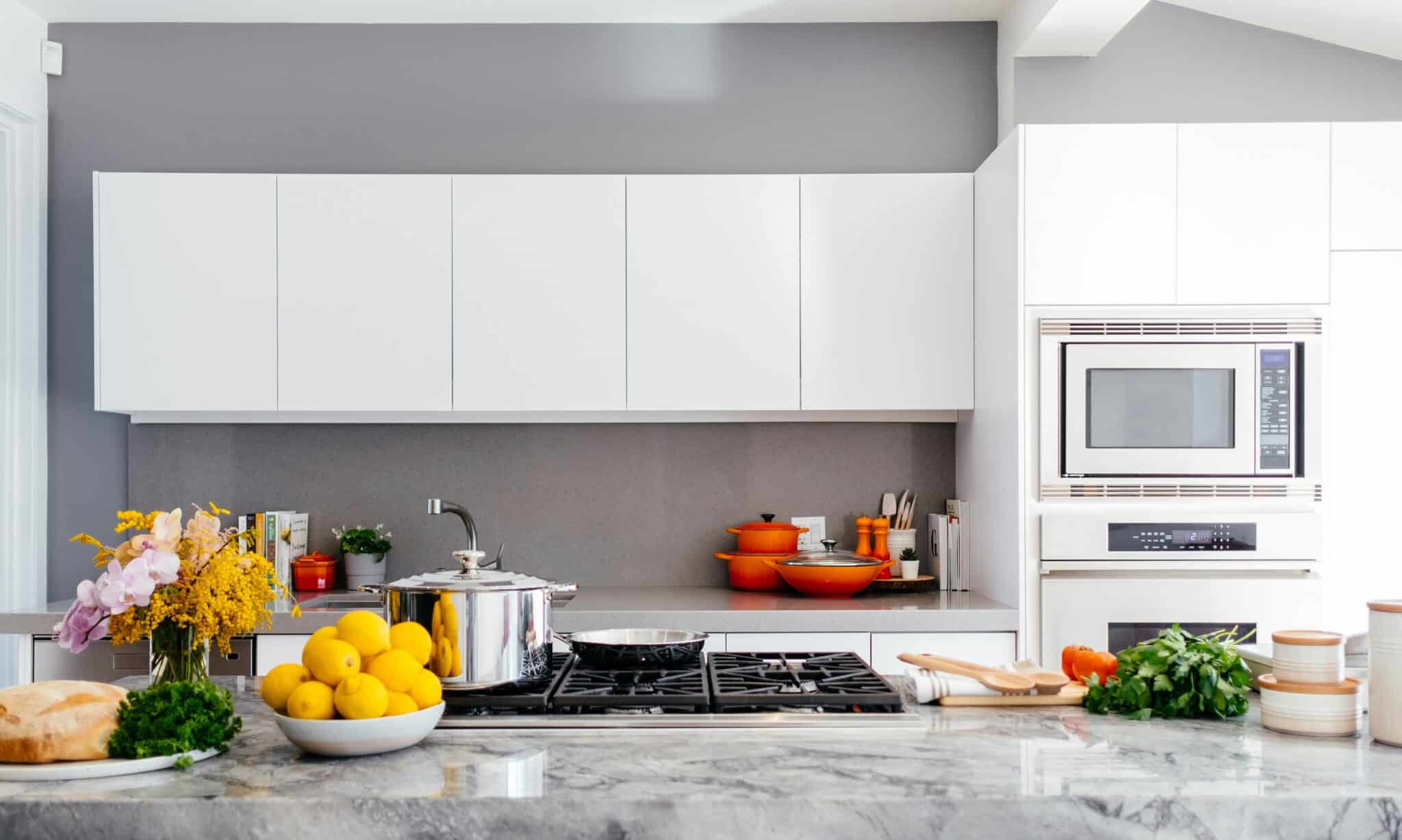
Homeowners often mistakenly assume that the only way to brighten or enlarge a kitchen is through major structural changes, like knocking through to the dining room or reconfiguring the layout. In reality, how light reflects off surface materials has a dramatic impact on space perception. You do not necessarily need more square footage, but smarter surfaces that bounce light around. This can be achieved through reflective door fronts, such as replacing dark cabinet doors with reflective, high-gloss finishes in neutral tones. Keeping upper cabinets light will also draw the eye upwards and make lower ceilings feel higher. Using large-format wall panels in subtle marble or quartz effects can create unbroken, sweeping visual lines can extend the sense of space, and you can add a feature wall behind a dining area or open shelving to define zones without adding visual clutter.
Cleaning Takes Longer Than It Used To
Old materials can lose their factory finish over time, with scrubbed away paint meaning cabinet doors absorb spills instead of repelling them, and aged wall materials may begin to soak up oil splatters, causing permanent discolouration. Cleaning a kitchen should not feel like a workout, as spending hours scrubbing surfaces can take away precious time from everyday life or family routines. Aging, porous surfaces can increase reliance on aggressive chemical cleaners, bleach or abrasive pads, which can actually accelerate surface damage, strip away protective coatings and make future cleaning harder. However, this can easily be resolved through replacement doors, as modern finishes mean they are more resistant to grease build-up. Similarly, wall cladding does not require grout lines, so spills will float on the surface instead of soaking in.
An outdated kitchen does not need a large price tag or weeks of disruption. Focusing on the high-visibility elements, such as doors and walls, can give a kitchen a luxury, brand-new feel on a realistic budget.