































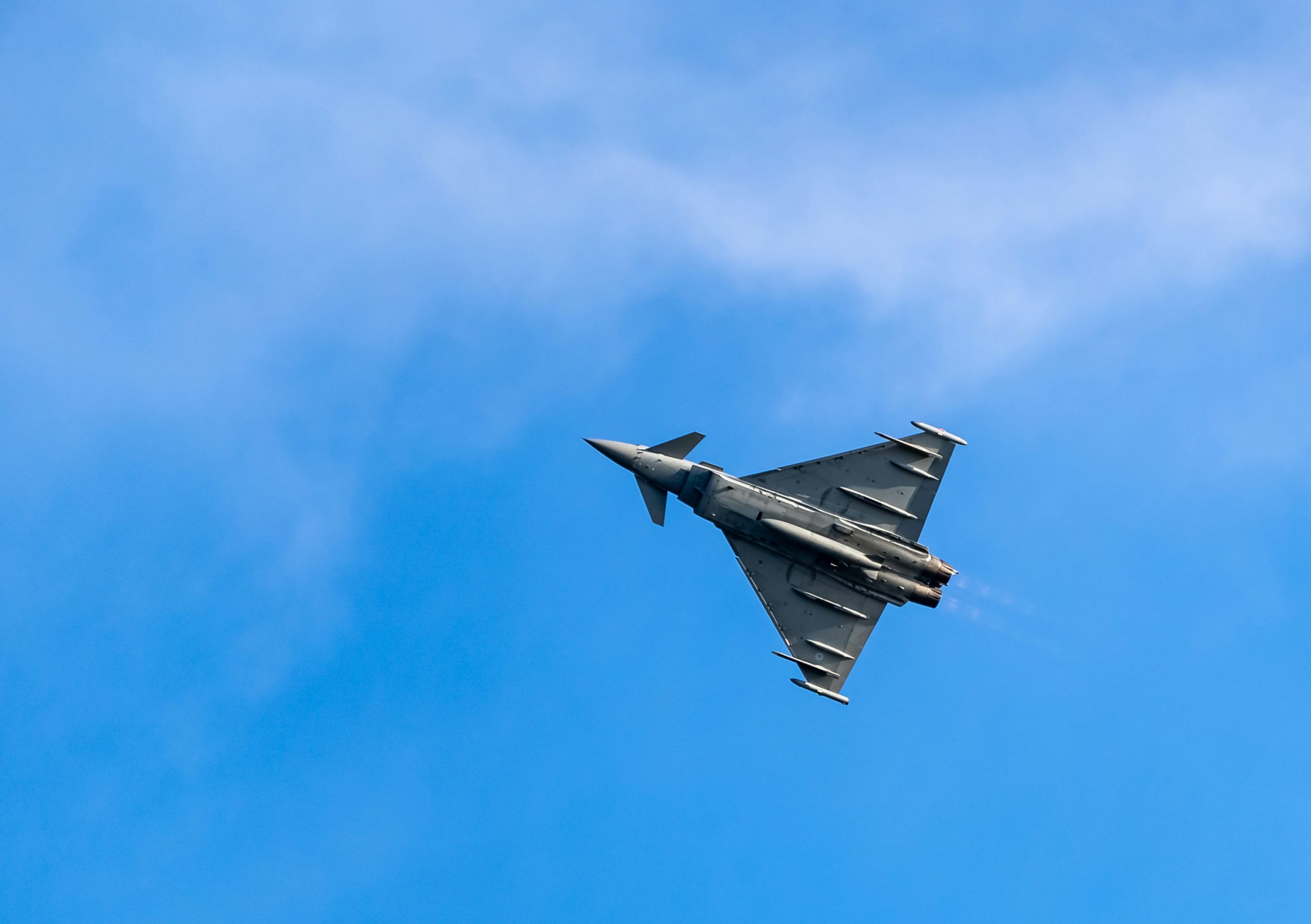
The summer was off to a rocky start for the European defence and technological base (EDTIB) with news that the German-French-Spanish FCAS programme had collapsed and that the Franco-German MGCS project had downgraded its common goals. Europe’s forces are rearming, but can industrials and politicians find the right formula for cooperation in time to meet such urgent needs as new-generation fighters, drones and deep strikes?
Over the past year, the Trump administration has made it clear that Europe’s security is no longer America’s problem and that European nations need to step up to ensure their defence. Trump’s decision not to station long-range missiles in Germany was the last straw for many, and as a result, there has been a push for pursuing sovereign solutions, but the road hasn’t been smooth.
Esteemed researchers explain in the May 2026 Sparta Paper how European defence autonomy can be achieved with an approximate investment of €500 billion over ten years. Given 2025 defence expenditures from European states were around €400 billion, this is financially achievable. Authors argue “This shows that the issue is not financial inputs, but spending the money correctly and building the corresponding capabilities quickly. This requires political-industrial coordination and new approaches to procurement of innovation and capacity expansion.”
Join The European Business Briefing
New subscribers this quarter are entered into a draw to win a Rolex Submariner. Join 40,000+ founders, investors and executives who read EBM every day.
SubscribeAuthors maintain that Europe’s habit of purchasing American products is one issue, but other obstacles also hurt pan-European defence projects: political leaders disagree on operational needs, countries face budget constraints and must make choices, some companies don’t want to cooperate, and fragmentation across the EU remains high as national champions are promoted/protected by politicians at the expense of procuring the best kit available.
EU Defence Commissioner Andrius Kubilius consistently warns of the effects fragmentation has on Europe’s defence industry saying, “Twenty-seven different armies also mean twenty-seven different defence industries and the absence of full European cooperation in this sector… To date, the EU has failed to overcome the lack of institutional and industrial coordination that undermines its ability to defend itself, but we are now doing a great deal to change that.”
Coordination and cooperation have increased, but to varying degrees of success. Surpassing obstacles will be crucial for filling Europe’s most urgent defence needs and require particular effort from Europe’s top defence companies and political alignment between leaders from Europe’s biggest defence spenders including Germany, France, the UK and Poland.
Preparing for Tomorrow’s Wars
Europe has various projects underway with 2035+ timelines to equip armies with tomorrow’s technology. European armies fell behind other global powers during the Cold War in terms of the sophistication and volume of kit produced and most are determined to end this, but this summer’s setbacks challenge ambitions.
Efforts to develop a sixth-generation fighter jet and “system of systems” under FCAS flopped as two main issues plagued the project from the offset. Political leaders did not agree on which operational needs the jets were supposed to meet and Dassault and Airbus couldn’t put intellectual property and workshare disagreements aside.
The MGCS programme was launched to design revolutionary, “system of systems” battle tanks. KNDS, a Franco-German joint venture, led the project until Germany insisted on including Rheinmetall, causing workshare disputes. Delays pushed the project back 10+ years and in July, Germany and France only committed to advancing “an approach for collaborative combat”.
These failures illustrate significant hurdles facing many pan-European defence projects and should be learned from. Whilst efforts to stay ahead or on par with global peers for developing future technologies is important, equipping European armies with kit they need for an imminent challenge from Russia is more urgent. UK MP Tan Dhesi, Defence Select Committee Chair, explained, “there is the distinct possibility of an attack by Russia on a fellow NATO nation by 2030. If we do not prepare now, we will be sorry in the long run.” If Europe is to achieve defence sovereignty in this preparation without falling behind peers, political and industrial egos must be reconciled to allow for better, faster cooperation.
Preparing for Today’s Conflicts
Regarding what armies need urgently, recent conflicts between the U.S./Israel and Iran, Pakistan and India, and Ukraine and Russia show that today’s battles require large stockpiles of long-range missiles as a tool for deterrence and for response. As Russia and Ukraine race to outproduce one another, the Ukrainian war has particularly highlighted the need for both low-cost, long-range effectors to saturate defences and deep precision strike missiles (DPS) of exceptional accuracy, equipped with a substantial payload, designed to destroy high-value targets located far from the battlefield.
Indeed, Sparta Paper authors rank ground-launched DPS capabilities as one of Europe’s top ten most pressing gaps that needs filling with ITAR-free options because “Land-based systems can be fielded in the necessary mass to hold enemy air defences, command posts, logistics nodes, airfields, ammunition depots and maritime infrastructure at risk. Europe is structurally under-resourced in this area.” They argue that with effective cooperation, this gap can be filled within 3-5 years with about €20-30 billion.
Denmark, Estonia, Finland, France, Germany, the Netherlands, Norway, Romania, Spain, Sweden, Türkiye and the UK committing €50 billion over ten years for DPS at the Ankara Summit was a good step. Two other announcements were steps backwards: on July 7th, the UK said it was joining the U.S. Army’s Precision Strike Missile programme with a £190 million investment and on July 9th, German Chancellor Merz said he reached a deal with Washington to buy American Tomahawk missiles.
Germany, the UK, and others justify purchases of American long-range missiles as necessary for rapidly filling urgent needs. This rationalisation becomes erroneous when European orders for U.S.-produced weaponry (including Tomahawks) face long delays as the Pentagon commands industrials to prioritise domestic orders. Plus, operational use and mobility require approval from Washington. Decisions to buy missiles and rockets from South Korea are also risky as shipping across far distances has shown limitations with the crisis in the Strait of Hormuz.
More importantly for Europe as a whole, such decisions hurt the EDTIB and industrials’ ability to ensure the development of capacities in the long term as they take orders and investments away from European projects. Europe’s about-faces and justifications about buying “off-the-shelf” exports are all the more incomprehensible given that Europe is rapidly advancing on alternative sovereign solutions. Among them is the Land Cruise Missile (LCM) showcased by MBDA at the June Eurosatory defence expo as a European Tomahawk. LCM should be available by 2029, but so far, no orders – not even from France. More broadly, the ELSA initiative (European Long-Range Strike Approach) is working on these capabilities, but under a longer timeframe, and showed little progress in June when it revealed eight ELSA Implementation Groups – including ones for ground-launched DPS of 500–2,000km and above 2,000km. Germany and the UK have moreover committed to developing a 2,000km stealth-cruise missile for the mid-2030s through the Trinity House Agreement. Europe has options, it just needs to choose them.
Previous grievances and competition must be put aside to prioritise cooperation, both political and industrial, to deliver military kit Europe’s armies urgently need. In June, René Obermann, outgoing Airbus chairman, urged European leaders to look beyond national interests for the good of Europe saying, “We must put an end to industrial nationalism in defence.” Following the demise of FCAS, Emil Archambault from DGAP echoed this arguing, “Rather than focusing on major projects and international super-champions, Europe must prioritize building industrial sectors that are prepared to cooperate.” Let’s see if their advice will be heeded in time for Europe’s armies to receive capabilities they need before Russia makes a move.