London, 16 November 2026 — EBM Newsdesk Analysis — By Katie Winearls
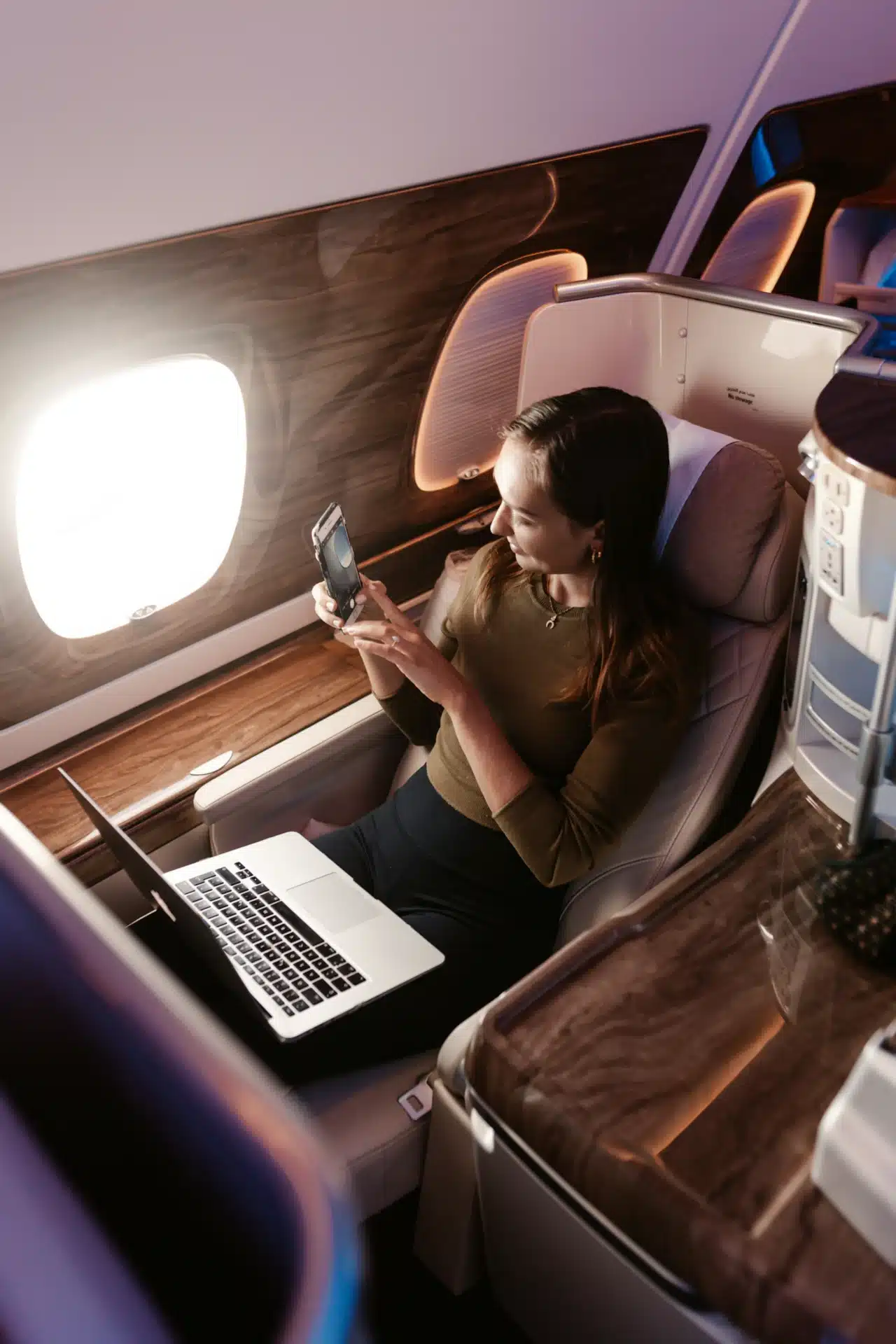
On 16 November, the Financial Times reported that airlines are adding more premium seats even as jet fuel costs soar. At American Airlines, premium products already earn roughly half of ticket revenue from about 30% of the seats. Delta says premium could soon fill as much as 70% of the seats on some flights. The obvious question is who loses the space.
The answer is the economy passenger. Since the Iran war began, jet fuel has risen 92% in the US. A fare-sensitive traveller cannot absorb a cost shock of that size, but a business-class traveller barely notices it. European carriers face the same fuel bill: IAG warned in May that the war would add €2bn to its fuel bill. The industry has decided that the front of the plane will pay for the crisis.
Why the Front of the Plane Pays
American’s numbers show the logic. Its premium revenue rose 18.5% last quarter, four points faster than the main cabin. Over the same quarter its fuel bill rose $1.9bn, or 67.5%, and it posted a net loss of $269m. Its answer is to raise the premium share of seats on its narrowbody jets to 40%.
Join The European Business Briefing
New subscribers this quarter are entered into a draw to win a Rolex Submariner. Join 40,000+ founders, investors and executives who read EBM every day.
SubscribeThe mechanism is simple. A premium seat takes up more floor space than an economy seat but sells for many times the price. More importantly, the people buying it rarely change their plans when fares rise. Delta’s chief executive, Ed Bastian, says the premium customer is becoming “more immune” to the headlines. In a fuel crisis, a customer who won’t flinch at a higher fare is worth more than a full cabin of bargain hunters.
The Squeeze in the Back
The rest of the market looks weaker. Global passenger traffic fell 0.5% year on year in September, IATA figures show, and high fuel prices continue to hold demand back. Spirit Airlines, America’s best-known no-frills carrier, shut down in May.
Economy passengers are getting fewer seats, less legroom and more fees. Airlines have also learned that tighter capacity keeps fares up. When fuel prices eased this summer, carriers held fares high anyway.
Europe Splits in Two
In Europe, the fuel shock has pushed airlines towards two different models. Low-cost carriers sell volume. EasyJet has already raised ticket prices, while Ryanair’s Michael O’Leary has promised no fuel surcharge and predicted that weak airlines will fail. Long-haul flag carriers sell margin, and they are copying the Americans.
The airlines most at risk are those in the middle. A legacy carrier’s short-haul network has neither Ryanair’s costs nor a lie-flat cabin full of bankers. Once fuel hedges roll off next year, those routes will be the first to shrink.
Where I Land
Going premium is a rational bet, but it concentrates risk. Airlines are tying their profits to the most cyclical customers they have. Premium travel was the first thing to collapse in 2009 and again in 2020, because companies cut travel budgets before families cancel holidays.
For now, wealthy travellers are paying for the fuel crisis and economy passengers are paying for the empty seats. Airlines are turning into luxury businesses with an oil problem. That works well until the luxury customers start to feel poorer.
Related Analysis