London, 16 November 2026 — EBM Weekend Read — By Brad Adams
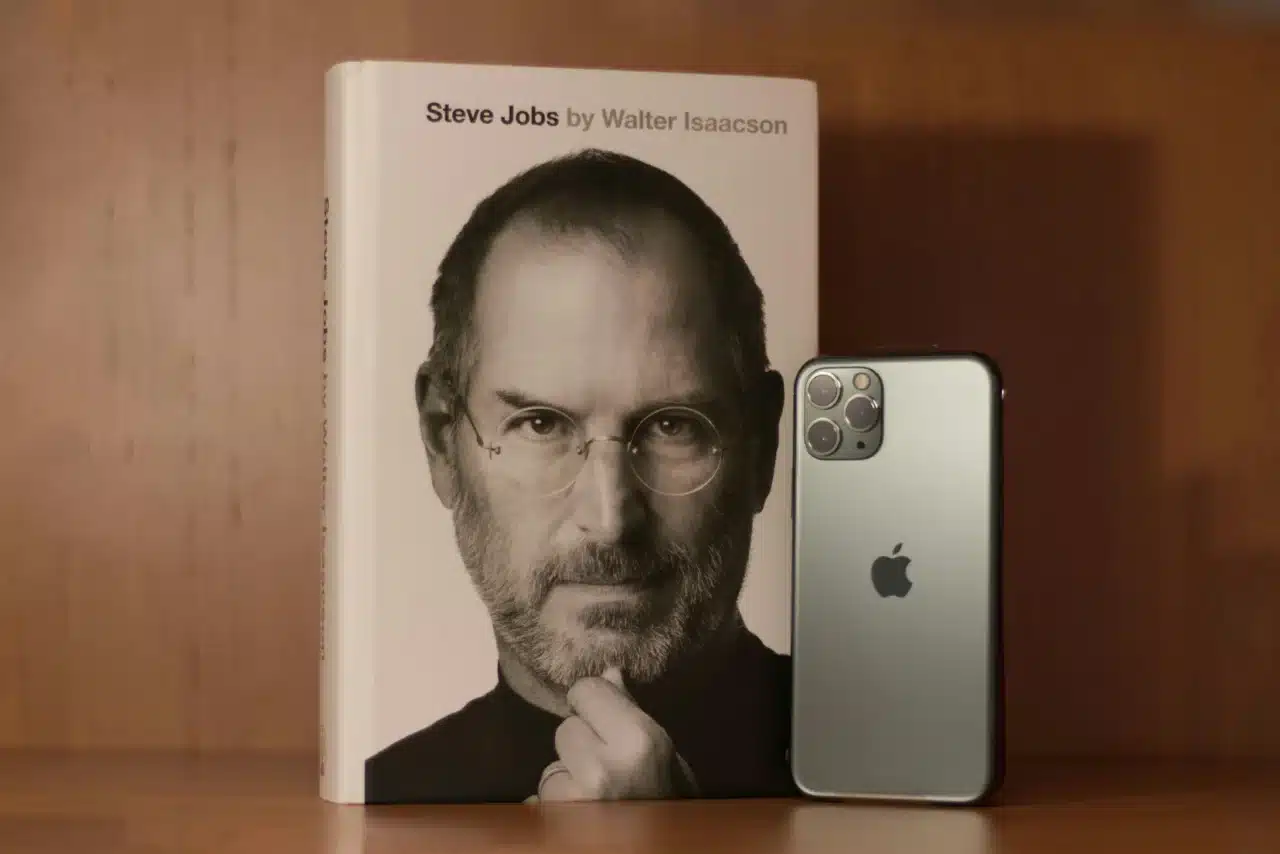
In 1997, Steve Jobs returned to an Apple that had just lost more than $1bn in a year and was, by his own account, 90 days from running out of cash. Four years earlier, Lou Gerstner had walked into an IBM whose own managers were preparing to break it into pieces. Neither company was too big to fail. Both came close, and today one of them is the most valuable company in the world, a story we told in full when Apple turned 50.
Corporate rescues are usually told as stories about cost-cutting. The five below all cut hard, but cutting is not what saved them. In each case, the new chief executive made one large bet that the previous management had been too cautious, too proud or too divided to make. For European boards facing their own crises, especially in cars and chips, that’s the lesson worth keeping.
Steve Jobs, Apple (1997)
Apple in 1997 sold dozens of computers that customers couldn’t tell apart. Its stock was at a 12-year low and its best engineers were leaving. Michael Dell was asked what he would do with the company and said he would shut it down and give the money back to shareholders.
Join The European Business Briefing
New subscribers this quarter are entered into a draw to win a Rolex Submariner. Join 40,000+ founders, investors and executives who read EBM every day.
SubscribeJobs did three things fast. First, he swallowed his pride and took $150m from Microsoft, which also committed to keep making Office for the Mac. That bought time and ended a cold war Apple was losing. Second, he cut the product range to a handful of machines a customer could understand. Third, he bet the company on design, with the translucent iMac in 1998.
The turnaround was quick. Apple went from a $1.04bn loss in 1997 to a $309m profit the following year. The iPod, iTunes and the iPhone came later, but none would have existed without that first year of triage.
His influence still shapes the company. When Apple named John Ternus as Tim Cook’s successor, the board deliberately chose a product person for the first time since Jobs.
Lou Gerstner, IBM (1993)
When Gerstner arrived from RJR Nabisco in April 1993, he was the first outsider ever to run IBM. The company posted an $8bn loss that year. Its shares, worth $43 in 1987, could be bought for $12.
The plan already in place was to split IBM into a set of independent “Baby Blues”. It looked sensible: mainframes were dying, and smaller units would be nimbler. Gerstner reversed it.
His reasoning came from his years as an IBM customer at American Express. Big companies didn’t want to buy boxes from a dozen vendors. They wanted one supplier that could make everything work together. Gerstner called keeping IBM whole “the most important decision I ever made”. He turned it into a services and integration business, and the company was back in profit the following year.
The numbers tell the rest. Between 1993 and his retirement in 2002, IBM’s market value rose from $29bn to $168bn. The company still has bad days, as its recent profit warning showed. But it’s still here, which in 1993 was not a safe bet.
Carlos Ghosn, Nissan (1999)
Nissan in 1999 was a proud Japanese carmaker that had lost money for most of the decade and was drowning in debt. Renault bought a stake that March and sent Ghosn to Tokyo as chief operating officer.
In October 1999 he announced the Nissan Revival Plan. It would close five factories and cut 21,000 jobs. It also broke the keiretsu, the web of cross-shareholdings that tied Nissan to suppliers it couldn’t afford to drop. He made three public promises: a return to profit within a year, a 4.5% operating margin and half the debt gone by 2002. He said he would resign if he missed any of them.
He missed none. Nissan reported a net loss of ¥684.4bn for the year to March 2000. A year later it posted a record net profit of ¥331.1bn. By 2003 its net automotive debt was gone.
The story didn’t end well. Ghosn was arrested in Tokyo in 2018 on financial misconduct charges, which he denies, and fled to Lebanon in 2019. Nissan has struggled since, most recently with its retreat from electric cars. But the 1999 rescue remains one of the fastest large-company turnarounds on record.
Sergio Marchionne, Fiat (2004)
When Marchionne became Fiat’s chief executive in June 2004, he was its fifth in two years. He had never worked a day in Italy. Fiat’s car division was losing money, and the Agnelli family’s industrial empire looked finished.
His first move wasn’t about cars at all. In 2000, Fiat had negotiated an option to force General Motors to buy its car business. GM by then had its own problems and didn’t want it. Marchionne played the option like a poker hand, and in February 2005 GM paid $2bn to make it go away. “With $2bn, you can make a lot of small cars,” he said later.
He then flattened Fiat’s management, fired executives who had been there for decades and relaunched the Fiat 500 in 2007. Fiat returned to profit in 2005. By 2007 its market value was higher than GM’s and Ford’s combined. He went on to rescue Chrysler in 2009 and spin off Ferrari, building the group that would later become Stellantis. He died in July 2018, aged 66.
The Agnelli family’s Exor still controls much of what he built. His successors haven’t had his luck: Stellantis’s recent €22bn write-off shows how quickly a rescued company can fall back into trouble.
Lisa Su, AMD (2014)
When Su became AMD’s chief executive in October 2014, the chipmaker’s shares were trading at around $2. It had laid off about a quarter of its staff, and analysts openly questioned whether it would survive. Its entire market value was about $2bn, less than a rounding error at Intel.
Su’s bet was on engineering, not finance. She protected spending on a new chip architecture, Zen, through the worst years. She stopped chasing every market and concentrated on high-performance processors for PCs and data centres. When Zen arrived in 2017, it was competitive with Intel for the first time in a decade. Intel then stumbled on its own manufacturing.
AMD’s stock rose nearly 30-fold in nine years. In 2022 it bought Xilinx for $49bn, and its market value passed Intel’s. Intel has spent the years since trying to mount its own comeback, while AMD has moved on to take on Nvidia, which has built the toll booth of the AI economy.
What They Had in Common
Each of the five arrived as an outsider, or as an insider who acted like one. Jobs had been fired from the company he founded. Gerstner had never worked in technology. Ghosn was a Brazilian-born Frenchman in Tokyo, Marchionne a Canadian-Italian accountant in Turin, and Su an engineer in a company run by salesmen.
Each moved fast. Jobs and Ghosn were profitable within about a year, and Marchionne within two.
And each made a bet the previous regime had refused to make. For Jobs it was taking Microsoft’s money, for Gerstner keeping IBM whole, and for Ghosn breaking the keiretsu. Marchionne called GM’s bluff, and Su went all-in on one chip design. Cost-cutting bought them time, and the bet is what saved the company.
That lesson matters now. Europe’s car industry faces Chinese competition, overcapacity and a stalled electric transition all at once. The temptation in boardrooms will be to cut and wait. History suggests that cutting alone doesn’t work.
What I Think
Turnarounds aren’t the same as founding stories. A founder like Jensen Huang, whose 33 years at Nvidia ended last week, builds something from nothing. A turnaround chief has a harder job in one respect: they inherit a company that has already failed, along with the people who made it fail.
The five above managed it because they combined two things that rarely go together, ruthlessness about costs and imagination about the future. Plenty of executives can do one or the other. Very few can do both in the same year. Of the five, I’d rank Gerstner’s the greatest turnaround. Jobs had genius and luck. Gerstner had a 300,000-person bureaucracy and still taught it to dance.
Related Analysis-