London, 18 November 2026 — EBM Weekend Read — By Brad Adams
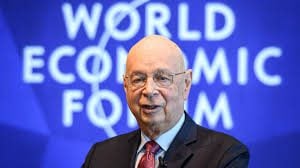 In January 1971, a 32-year-old German engineering professor called Klaus Schwab invited about 450 European executives to a ski resort in the Swiss Alps. His aim was modest: teach Europe’s bosses American management methods. Fifty-five years later, the meeting he started draws presidents, prime ministers and the chief executives of the world’s largest companies. In January 2026, it hosted a record number of world leaders. Schwab was not there to welcome them.
He resigned as chairman of the World Economic Forum in April 2025. He had already announced a gradual handover, due to finish in January 2027. Then the board received an anonymous letter, reportedly from current and former staff. It alleged that he had used Forum money for private hotel massages, asked junior employees to withdraw cash for him and manipulated one of the Forum’s flagship reports. It also alleged that his wife, Hilde, had arranged meetings to justify luxury travel. According to the Wall Street Journal, Schwab asked the board not to investigate. When it decided to anyway, he quit with immediate effect. The Schwabs denied every allegation, and an external investigation later found no material wrongdoing. Yet, according to the Wall Street Journal, the man who spent half a century building the world’s most exclusive room has since written to its trustees seeking a role back inside it. His story says a lot about how power works when nobody votes for it.
The Engineer From Ravensburg
Schwab was born in Ravensburg in southern Germany in March 1938. His father ran a subsidiary of the Swiss engineering firm Escher Wyss, and the young Schwab followed him into industry. He earned a doctorate in engineering from ETH Zurich and a second in economics from the University of Fribourg. He then took a master’s in public administration at Harvard, where he met Henry Kissinger, who became a mentor.
Join The European Business Briefing
New subscribers this quarter are entered into a draw to win a Rolex Submariner. Join 40,000+ founders, investors and executives who read EBM every day.
SubscribeThe idea he brought back from America was simple. A company, he argued, does not serve only its shareholders. It also owes something to its employees, customers, suppliers and the communities it operates in. He called this “stakeholder” management. It sounds ordinary now. In 1971 it was a radical pitch, and a version of it later returned as conscious capitalism.
From Management Seminar to World Stage
The first European Management Symposium was a business school seminar in a pretty location. Schwab’s genius was to see that the people in the room mattered more than the lectures.
Within a few years he had started inviting politicians. The oil shock, the end of fixed exchange rates and the Arab-Israeli war gave executives reasons to want to talk to governments, and Davos became somewhere they could. In 1987 the European Management Forum renamed itself the World Economic Forum. Its ambitions were now global.
Davos then began to make history as well as host it:
- 1988: Greece and Turkey signed the “Davos Declaration”, stepping back from the brink of war.
- 1992: Nelson Mandela and South Africa’s president, FW de Klerk, appeared together on the Davos stage for the first time outside South Africa.
- 1994: Israel’s foreign minister Shimon Peres and the Palestinian leader Yasser Arafat reached a draft agreement on Gaza and Jericho at the meeting.
None of these deals was signed because of Schwab. They happened because he had built a place where enemies could meet without either side appearing to ask for the meeting.
The Business Model
The WEF is a Swiss not-for-profit foundation based in Geneva. It is funded mainly by around 1,000 member companies, which pay annual fees. The biggest “strategic partners” pay the most and get the best access. That model is the source of both its power and the criticism it attracts.
Companies pay because Davos delivers something money usually cannot buy: a few days in which a chief executive can meet a finance minister, a central banker and three rival bosses before lunch. Governments attend because the investors are there. Each side comes because the other does.
Around the January meeting, the Forum built a year-round machine. It publishes influential reports, including the Global Risks Report, the Global Competitiveness Report and the Global Gender Gap Report. Its most recent, a blueprint for global growth, surveyed more than 11,000 executives. It runs regional summits from China to the Middle East. And it runs the Young Global Leaders programme, whose alumni have included Angela Merkel, Emmanuel Macron and Jacinda Ardern.
The “Unelected World Leader”
This is where critics take aim. Schwab has been accused of becoming an unelected world leader: a man who never stood for office, yet built an organisation that helps set the agenda elected leaders follow. The WEF cannot pass a law, sign a treaty or spend public money. Its critics argue it doesn’t need to.
They point to three sources of influence. It convenes: whoever controls the guest list, they say, decides who gets to talk to whom. It frames: its reports and themes are accused of shaping what politicians and boards believe the big problems are. And it cultivates: critics argue that the Young Global Leaders network has placed Forum alumni in governments around the world. They often quote a 2017 conversation at Harvard’s Kennedy School, in which Schwab said that alumni of the programme, among them Canada’s Justin Trudeau, showed how “we penetrate the cabinet”. Supporters say he was describing a leadership network, not a plan to influence governments.
The criticism reached its peak in 2020, when Schwab launched the “Great Reset”, a plan to rebuild economies after Covid on stakeholder lines. To supporters, it was a reasonable call for greener, fairer growth. To critics, it was proof of a global elite planning the world over ordinary people’s heads. It also became the subject of wild conspiracy theories, many of them based on things the WEF never said. A widely shared line, “you’ll own nothing and be happy”, came from a 2016 essay by a Danish politician, not from Schwab.
The fairer verdict lies in between. The WEF has no formal power. But informal power, held by people nobody elected, gathered in a room most people cannot enter, is still power. That tension is the reason Davos is both indispensable and resented.
The Fall and the Fallout
The Schwabs filed a criminal complaint in Geneva against the anonymous letter writers. The board’s external investigation, by the Zurich law firm Homburger, concluded in August 2025 and found no material wrongdoing. Earlier reports of its preliminary findings had pointed to questionable expenses, which Schwab disputed. BlackRock’s Larry Fink and Roche vice-chairman André Hoffmann took over as interim co-chairs. In February 2026, chief executive Børge Brende stepped down, and Alois Zwinggi became interim president.
The story has not ended quietly. In July 2026, Schwab’s spokesperson said a security sweep had found a hidden listening device in his Geneva home office, and he filed a criminal complaint against persons unknown. The same month, the Wall Street Journal reported that he had written to trustees seeking an advisory role with a say in choosing the Forum’s next leaders, and had threatened legal action.
Davos Without Schwab
The meeting itself has not missed him. Davos 2026 ran from 19 to 23 January under the theme “A Spirit of Dialogue”. It drew close to 3,000 participants, including around 400 political leaders and nearly 850 top chief executives. Fink’s contacts helped bring Donald Trump, and Elon Musk attended for the first time. The meeting covered everything from trade wars to AI governance. Ursula von der Leyen used it to launch EU Inc, Europe’s plan to let start-ups register anywhere in the bloc within 48 hours.
The 57th Annual Meeting is due to take place in Davos from 18 to 22 January 2027. It runs on the same formula Schwab built: a congress centre, a small town, a closed guest list and the world’s most powerful people within walking distance of each other.
Where This Goes
Schwab’s achievement is real. He saw before anyone else that in a global economy, access is a product, and he built the world’s best market for it. Few business founders have created anything that outlasted them so completely.
That is also his problem. The institution no longer needs him, and its new leadership, led by a man who runs the world’s largest asset manager, has shown no public sign of wanting him back. The founder of the world’s most exclusive room is learning how its other members have always felt: the invitation is never permanent. My view is that Davos will carry on much as before, and the question of who chooses the guest list, never voted on, will remain the most important one in global business.
Related Analysis