































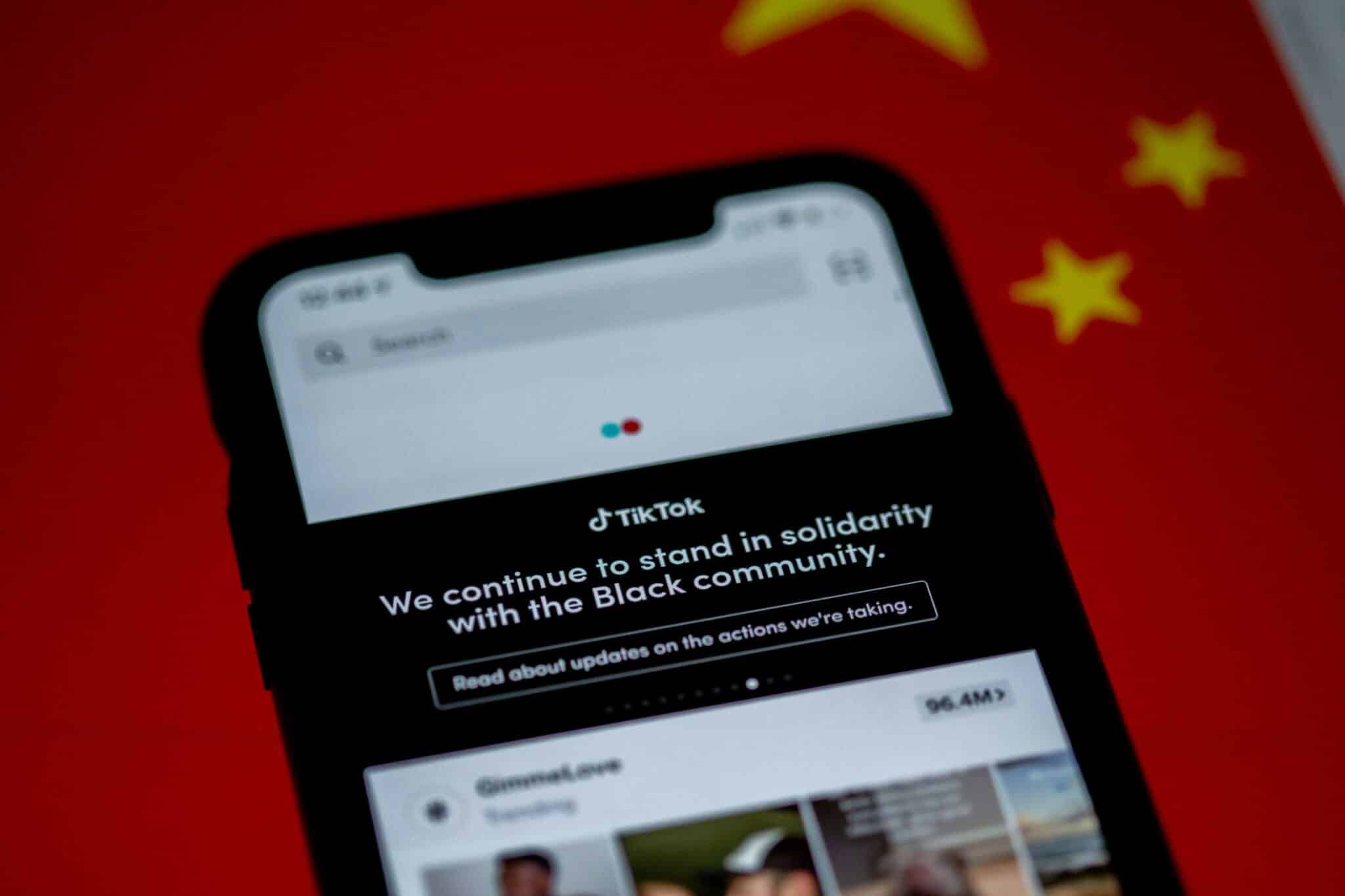
A generation that will control an increasing share of investable assets over the next decade is forming its financial beliefs on a platform where accuracy is not what gets rewarded. For European banks, wealth managers, and fintechs, the implications are direct. This is a compliance problem, a trust problem, and a client acquisition problem arriving simultaneously.
Getting ahead of it requires understanding what is actually happening, and what the data now shows.
Why Gen Z Has Replaced Regulated Advice With TikTok
The shift did not happen overnight. Data from Nationwide shows that nearly half (43%) of young Britons now trust financial tips from social media and group chats more than traditional financial websites. This is not a fringe behaviour. It reflects a structural change in where younger people go when they want to learn about money.
Join The European Business Briefing
New subscribers this quarter are entered into a draw to win a Rolex Submariner. Join 40,000+ founders, investors and executives who read EBM every day.
SubscribeTikTok’s algorithm rewards clarity, confidence, and entertainment. Regulated financial content is built around disclosure, nuance, and compliance sign-off. None of those last three qualities performs well in a short-form video format where attention is measured in seconds.
According to the World Economic Forum’s 2024 Global Retail Investor Outlook, Gen Z is more likely to invest in complex products such as crypto and alternative asset classes than other generations, and nearly 20% of those who do not invest cite distrust of financial institutions as the reason. The information environment shaping those decisions is doing nothing to close that gap.
What 70% Misleading Content Means for Firms Trying to Reach These Clients
The scale of the problem became measurable with the DayTrading.com Finance TikTok Report Card, which analysed the most-watched finance and investing videos on the platform. These were not obscure corners of the internet. Collectively receiving over 256,000 views, they represent what Gen Z was actually watching.
The findings are stark. Seventy per cent of viral finance TikToks failed to achieve a B grade or higher. Thirty per cent received an F for risk disclosure. Videos on leverage trading and crypto scored as low as F across multiple categories, while only 20% of all videos earned an A for accuracy.
Paul Holmes, lead author of the report at DayTrading.com, said: “Our report makes clear that 70% of the top videos contained misleading, incomplete, or oversimplified information. The overwhelming trend is toward content that prioritises virality over accuracy, entertainment over education.”
For European financial services firms, Fintok misinformation at this scale creates a direct commercial problem. Gen Z clients are not arriving as blank slates. They bring pre-formed beliefs about leverage, crypto, and returns shaped by content with no regulatory oversight and no obligation to be accurate.
Where European Regulators Are Already Drawing the Line
This is no longer a future risk. Regulators have moved, and the compliance implications for firms are already live.
The FCA published finalised guidance on financial promotions on social media in March 2024, acknowledging that poor-quality financial promotions on social media can lead to significant consumer harm. Firms remain responsible for the compliance of every promotion they make or cause to be made, including through influencer partnerships. That obligation does not disappear because a creator, rather than the firm, posted the content.
Enforcement followed quickly. In June 2025, a coordinated action involving nine international regulators saw the FCA make three arrests, authorise criminal proceedings against three individuals, issue 50 warning alerts, and trigger over 650 social media takedown requests.
The compliance exposure for European financial services firms is clear: any firm using influencer partnerships or creator content to reach younger audiences without adequate oversight of what is being communicated is carrying risk it may not have formally assessed. Fintok misinformation has moved into active enforcement territory.
The Trust Gap This Creates for European Banks and Wealth Managers
Regulated firms face a structural imbalance that makes this harder than it looks. Finfluencers face no compliance constraints on how confidently they speak, what risks they omit, or how certain they sound about uncertain outcomes. Regulated firms face all of those constraints. Reaching a generation whose attention has been shaped by the unconstrained version is a genuinely difficult commercial challenge.
Paul Holmes framed the underlying issue clearly: “This isn’t just about TikTok. It’s about how a generation learns to handle money and invest in an environment where the loudest voice is rewarded, not the most accurate one.”
For European banks and wealth managers, the practical question is what Gen Z clients believe when they arrive. If they have spent years watching content that frames leverage as a wealth accelerator and crypto as a certainty, the onboarding conversation starts in a different place. Managing those expectations affects risk profiling, product suitability assessments, and complaints exposure in ways that are worth mapping before they become issues.
What the Study Reveals About the Content That Actually Earns Trust
Not all of the Report Card made for difficult reading. The data also showed what good content looks like, and that matters for any firm building an engagement strategy aimed at younger clients.
The highest-scoring videos shared consistent characteristics. Salary breakdowns in finance jobs earned an A-, described as fact-based, transparent, and educational without making promises. Content explaining how compounding works earned a B+, praised for encouraging long-term thinking. ETFs versus stocks earned a B for good accuracy despite some simplification on portfolio construction.
These videos worked because they prioritised education over entertainment. Paul Holmes noted: “If you’re watching Finance TikTok, hype beats accuracy in the algorithm. Treat bold claims with caution, and tune in to creators who focus on education over engagement.”
The report also identified a clear paradox: these high-scoring videos consistently received lower engagement than sensational content. For financial services firms, that is the problem to solve. Fintok misinformation gets the clicks. Accuracy does not, unless it is packaged in a way that competes for attention without compromising on substance.
What a Compliant Gen Z Engagement Strategy Looks Like in Practice
European financial services firms broadly have three options: produce content internally, work with compliant creators, or position the firm as the trusted alternative to what Gen Z has already consumed. Each carries different compliance requirements and different commercial trade-offs.
For firms producing their own social content, the FCA’s March 2024 guidance sets clear expectations. Every promotion must communicate information in a balanced way consistent with Consumer Duty principles. Risk disclosures are required. Sign-off processes must be documented. The guidance applies regardless of format, including short-form video.
Firms working with external creators carry direct responsibility for those creators’ output. Reviewing content before publication, maintaining records of approvals, and building compliance requirements into creator contracts are all steps the FCA expects to be in place.
The gap between Fintok misinformation and what a regulated firm can credibly offer is large. Firms that close it with content that is both compliant and genuinely useful are doing more than meeting a regulatory obligation. They are building credibility that an uncredentialed creator cannot replicate.
The Compliance Problem Is Not Going Away. Here Is How to Get Ahead of It
Inaction on this is a choice with consequences. Gen Z’s relationship with financial services is being formed now, and the content shaping it is largely outside regulated firms’ control at present.
Three steps are worth prioritising. First, audit current influencer partnerships and any associated creator content against FCA guidance requirements. Second, assess what Gen Z clients already believe when they arrive, and build onboarding processes that account for where they have come from. Third, develop a content strategy that operates fully within regulatory requirements without abandoning the goal of reaching younger audiences at scale.
The window to shape how this generation thinks about financial services is narrowing.