




























London, 30 July 2026 — EBM Newsdesk Analysis — Katie Winearls
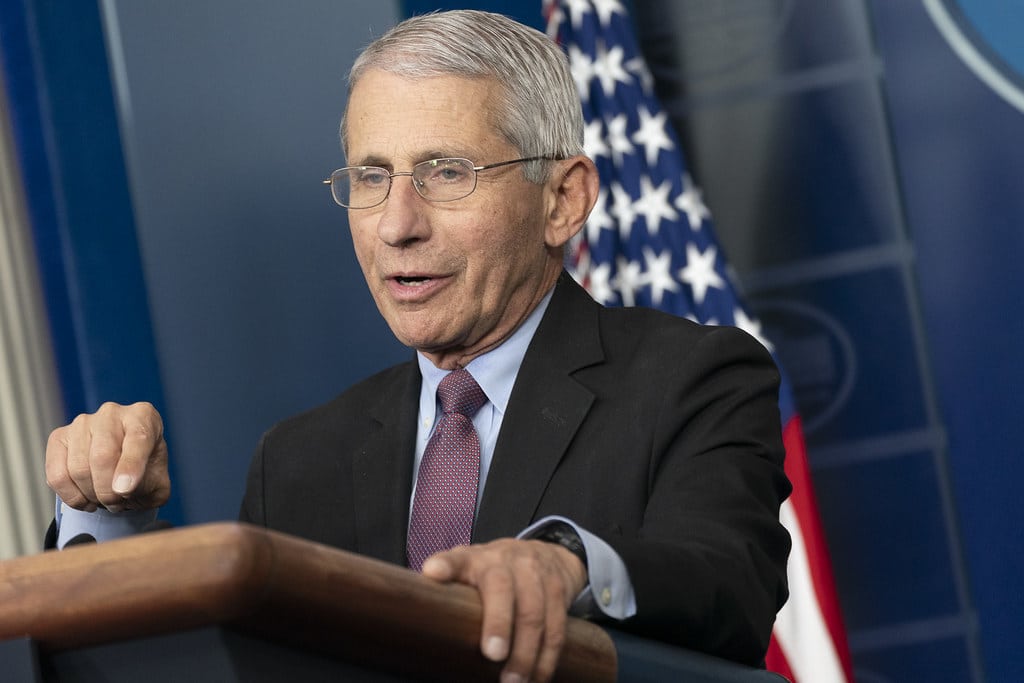
Anthony Fauci appeared before the Senate Homeland Security and Governmental Affairs Committee on 29 July and declined to answer more than 100 questions, repeatedly invoking his Fifth Amendment right against self-incrimination.
Chairman Rand Paul ordered one of Fauci’s lawyers removed from the room after refusing to recognise his attempts to intervene. Paul also said the committee would vote the following week on whether to hold the former public-health official in contempt of Congress.
Join The European Business Briefing
New subscribers this quarter are entered into a draw to win a Rolex Submariner. Join 40,000+ founders, investors and executives who read EBM every day.
SubscribeThe legal dispute now centres on an unusual question: whether Joe Biden’s sweeping 2025 pardon removed Fauci’s ability to refuse questions about conduct covered by it, while leaving him exposed over statements or actions outside its terms.
For European readers, this matters less as American political theatre than as a governance problem Brussels has its own version of.
Who owns an official’s notes, what a regulator must disclose about decisions taken during an emergency and how visible public money should be as it moves through state research institutions are all live questions in Europe. The EU’s General Court annulled the European Commission’s refusal to release text messages exchanged between Ursula von der Leyen and Pfizer’s chief executive, finding that the Commission had not provided a credible explanation for failing to locate them. It was another example of how Europe’s regulatory instincts can become self-inflicted wounds.
Different jurisdiction, identical reflex.
What Fauci Actually Did
Fauci ran the National Institute of Allergy and Infectious Diseases from 1984 until his retirement in 2022, making him one of the longest-serving senior officials in the American government.
He took over as the AIDS epidemic was killing thousands and the federal response remained painfully inadequate. Activists initially treated him as part of the problem. Larry Kramer publicly attacked him, and campaigners accused the scientific establishment of moving too slowly while patients died.
Fauci’s response was unusual for a senior bureaucrat: he invited his critics into the process.
Activists gained representation on research committees, while a parallel-track system allowed some patients who could not enter formal trials to receive experimental treatments. Fauci later helped develop PEPFAR, the George W. Bush administration’s global AIDS programme, which has been credited with saving millions of lives.
That is the career.
Covid has become the coda, and it now threatens to swallow everything before it.
What He Is Accused Of
The allegations against Fauci fall into three broad categories, and they are not equally strong.
The first is that NIAID indirectly funded gain-of-function research at the Wuhan Institute of Virology through EcoHealth Alliance and that Fauci later misled Congress when he denied it.
The difficulty is that “gain of function” can be used as a broad scientific description or as a narrower regulatory category. Paul argues that the experiments plainly enhanced viral characteristics. Fauci maintains that the work did not meet the US government’s formal definition of the prohibited research.
The second allegation is that Fauci publicly dismissed the laboratory-leak hypothesis while privately treating it as plausible, partly to protect scientific institutions and research funding.
The third is less legal than political: that he presented contested judgements about masks, school closures and transmission with greater certainty than the evidence justified, contributing to the collapse in public trust when guidance later changed.
None of those allegations has been proved in court. Fauci has not been charged, has consistently denied wrongdoing and maintains that he testified truthfully before Congress.
Why He Is Not in Court
Biden’s pardon, issued on 19 January 2025, was exceptionally broad.
It granted Fauci a “full and unconditional pardon” for any federal offences he may have committed from 1 January 2014 through the date of the pardon arising from his service at NIAID, on the White House Coronavirus Task Force or Covid-19 Response Team, or as chief medical adviser.
Biden said the measure was intended to protect Fauci from politically motivated prosecution, not to imply that he had committed a crime.
The pardon nevertheless created the problem now being tested.
Paul’s argument is that Fauci cannot claim that truthful answers about pardoned federal conduct would expose him to prosecution because the pardon has already removed that danger.
There is legal authority behind the general principle. In Brown v Walker, the Supreme Court held that testimony could be compelled when sufficiently broad immunity removed the realistic danger of prosecution. The decision concerned statutory immunity rather than a presidential pardon, but it established that the Fifth Amendment does not provide a right to silence where criminal exposure has been fully eliminated.
The complication is that Fauci’s pardon does not cover everything.
It does not protect conduct after 19 January 2025. A knowingly false material statement to Congress during this week’s hearing could therefore amount to a new federal offence. Nor can a presidential pardon protect against state prosecution. The privilege must be considered question by question, based on whether an answer could create a realistic path to criminal exposure beyond the pardon’s scope.
Republicans also cite Burdick v United States, a 1915 case involving a journalist who refused a presidential pardon and continued to invoke the Fifth Amendment. The Supreme Court held that an unaccepted pardon could not be forced upon him to eliminate the privilege.
Fauci’s position is different because his pardon was not rejected in the manner at issue in Burdick. But the case does not establish that the existence of a pardon removes the privilege against every question a committee may choose to ask.
That is why contempt proceedings matter.
Paul cannot personally prosecute Fauci. A contempt referral creates a route through which the scope of the pardon, the questions asked and the claimed privilege could eventually be examined by a court.
The pardon intended to close the controversy has instead supplied the legal mechanism for extending it.
The Diaries
Paul released 1,141 pages of Fauci’s diary entries covering the pandemic years from late 2019 through 2022.
Robert F. Kennedy Jr, now US health secretary, said the records had been extracted from government computers and supplied to the Republican-led committee. Paul presented selected entries as evidence that Fauci’s private understanding differed from what he told the public.
The documents are less conclusive than either side suggests.
In January 2020, Fauci recorded that the Wuhan market appeared to have amplified transmission rather than necessarily being the original source of the outbreak. Yet he used almost identical language publicly only weeks later, saying the market was probably an amplifier of transmission already under way.
Other entries show scientists raising the possibility that the virus had unusual features and discussing whether a laboratory origin required investigation. That proves the possibility was considered privately. It does not prove that Fauci knew the virus came from a laboratory or deliberately concealed such knowledge.
Read charitably, the diaries show a scientist recording uncertainty during the first weeks of an unprecedented emergency.
Read more critically, they show how much uncertainty was compressed when public-health officials addressed the public. That may have been intended to avoid confusion, but paternalistic communication carries a long-term cost. Once the public discovers that the private debate was wider than the official message, reassurance begins to look like concealment.
The intelligence picture remains unresolved. The FBI has favoured a laboratory incident. The CIA shifted in January 2025 towards judging a research-related origin more likely, but only with low confidence. Four other US intelligence agencies and the National Intelligence Council have favoured natural transmission. Many virologists continue to regard animal-to-human spillover as the stronger explanation.
There is still no definitive answer.
The Money
The commercial allegations are the most frequently distorted, so the distinctions matter.
OpenTheBooks reported that Fauci earned approximately $456,000 in 2021 and around $480,000 in his final year in government, placing him among the highest-paid federal employees.
That is public-sector remuneration, not evidence of wrongdoing.
The more contentious numbers concern third-party royalty payments made when private companies license inventions developed in federal laboratories.
OpenTheBooks says NIH received about $710mn in such payments during 2022 and 2023, of which approximately $690mn was attributed to NIAID. The group obtained the records after two transparency lawsuits and contrasted the amount with $23.9mn received by NIAID across the previous 12 years.
Those figures do not mean Fauci personally received $690mn, or anything remotely close to it.
Most of the money went to the institute and other government researchers. Earlier records showed Fauci receiving a relatively small number of personal royalty payments, with the individual amounts redacted. Fauci has said that he donated royalties he personally received to charity.
Nobody has established that he materially profited from a pandemic decision.
The legitimate criticism is institutional opacity. NIH resisted disclosure of the royalty system, making it difficult for outsiders to see which companies were paying, which inventions were involved and how much individual scientists received.
That may not establish corruption. It does establish why public institutions need stronger audit trails and why transparency cannot be treated as an optional administrative burden.
The Verdict
My view is that the substantive criminal case against Fauci remains unproved, while the procedural case against the institutions around him is considerably stronger.
He has not been charged. The diaries do not provide a simple confession or demonstrate that he knew the pandemic began in a laboratory. The royalty figures describe a state research and licensing system, not personal enrichment on the scale repeatedly suggested online.
But the pattern is damaging.
Private diaries remained on government systems before suddenly appearing in a partisan congressional investigation. A royalty ledger required litigation to expose. Pandemic guidance was often communicated with greater confidence than the underlying debate justified. A pardon was drawn so widely that it created precisely the suspicion it was intended to contain.
Each decision may be defensible in isolation.
Together, they produced an institution that looked as though it had something to hide, whether or not it did.
That lesson extends well beyond American public health. Europe is simultaneously attempting to build a more interventionist state around pharmaceuticals, artificial intelligence and strategic technology sovereignty. Those ambitions require regulators, public laboratories and private companies to exchange information and money on an unprecedented scale.
Trust cannot survive if the public sees only the final instruction and none of the evidence, uncertainty or financial architecture behind it.
This is why record-keeping must be treated as a governance discipline rather than a compliance chore, and why the crisis-preparedness argument made by Britain’s former national security leadership applies as much to institutional transparency as it does to operational resilience.
Fauci’s greatest legal risk may not come from anything he did before the pardon. It may come from the attempt to make him explain it afterwards.
His greatest reputational problem is simpler.
Institutions rarely lose public trust because every accusation against them is proved. They lose it by resisting disclosure until a court, committee or political opponent forces the documents into daylight.