





























EBM WEEKEND READ✍️ By Nick Staunton
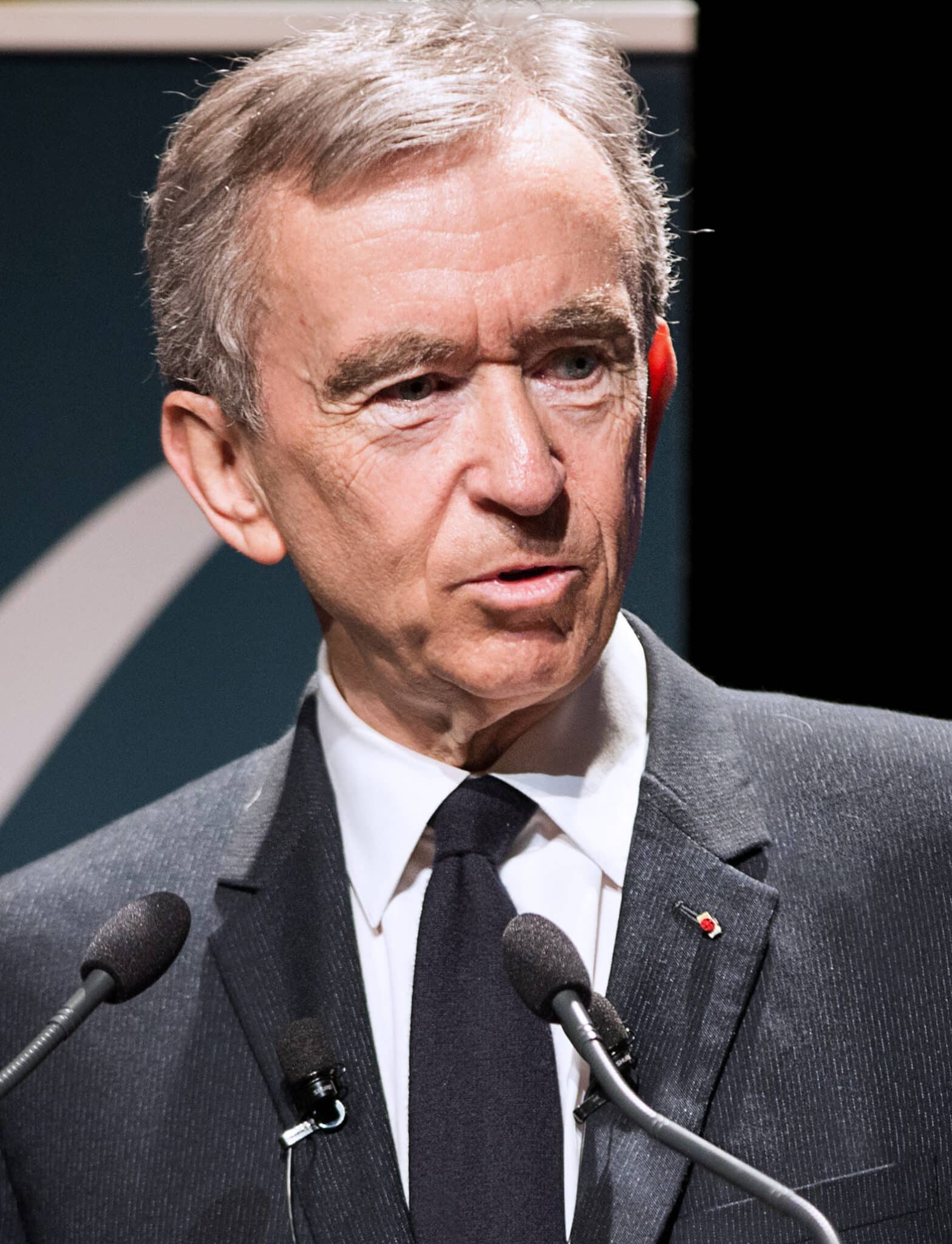
Five days ago, a Paris court handed Bernard Arnault a tax bill for €22.5 million. For most people that would be the story of the decade. For the chairman of LVMH, it is a rounding error — roughly the value of a single 0.02% move in the shares he controls. It is worth pausing on that scale. Arnault is worth somewhere between $145 billion and $190 billion, depending on the day and the estimator, and almost all of it sits in one company: the largest and most valuable business Europe has produced in a generation.
He is, by Forbes’ count, the only non-American in the world’s top ten, and the only one there who did not make his money from technology. In a global rich list dominated by software, chips and cloud computing, Arnault built his fortune selling handbags, champagne, watches and perfume. That alone makes him worth understanding. But the more interesting story now is not how he made the money. It is who gets it next.
The wolf in cashmere
Arnault did not inherit a luxury empire. He built one, and the manner of the building earned him a nickname that has followed him for forty years: “the wolf in cashmere.”
Join The European Business Briefing
New subscribers this quarter are entered into a draw to win a Rolex Submariner. Join 40,000+ founders, investors and executives who read EBM every day.
SubscribeHe was born in Roubaix, in the industrial north of France, in 1949, and trained as an engineer at the École Polytechnique. His father ran a construction business, which the young Arnault persuaded him to pivot into real estate. The move that made him, though, came in 1984. The French textile group Boussac Saint-Frères had gone bankrupt. Buried inside it was one asset Arnault wanted above all others: the fashion house Christian Dior.
He bought the whole failing group, using family money and borrowed funds, then sold off almost everything except Dior and a department store. It was ruthless and it was brilliant. Dior became the foundation of everything that followed.
The reputation for ruthlessness hardened in the years after. In the late 1980s Arnault manoeuvred his way into control of LVMH — the group formed by the merger of Louis Vuitton and Moët Hennessy — by playing the company’s feuding founders against one another, buying shares aggressively and outflanking the people who had invited him in. By 1989 he controlled it. Those he displaced never forgave him. The market, watching, learned to take him seriously.
The empire he built
What Arnault understood before almost anyone was that luxury could be run as a portfolio. Individually, heritage brands were vulnerable — dependent on one designer, one market, one generation of taste. Gathered under a single group, they could share retail muscle, marketing power and financial backing while keeping the appearance of independence that their prestige required. His other instinct was for creative talent: Arnault has repeatedly bet on young designers and given them the resources of a global group, refreshing old houses without cheapening them.
Over three decades he assembled the largest such collection in the world. LVMH today owns more than 75 houses: Louis Vuitton and Dior at its core, then Tiffany, Bulgari, Fendi, Givenchy, Celine, Loewe, TAG Heuer, Hennessy, Moët & Chandon, Dom Pérignon and the retailer Sephora, among many others. The 2021 purchase of Tiffany for $15.8 billion was the largest luxury acquisition in history.
Arnault’s reach extends beyond the fashion houses. His family office backs Aglaé Ventures, an early investor in Netflix and in ByteDance, the Chinese parent of TikTok. LVMH and Arnault together own around 40% of the private-equity firm L Catterton, which holds stakes in businesses from Birkenstock to Equinox. In 2024 his holding company bought a majority of the football club Paris FC. He owns wineries, a stake in the supermarket group Carrefour, and one of the most valuable private art collections in the world, with works by Picasso and Warhol.
The scale is hard to overstate. LVMH generated revenue of around €85 billion in 2024. It is one of the most heavily weighted stocks in European indices, which means that when Arnault’s company moves, a large slice of European equity performance moves with it. His family’s control is near-total: through Christian Dior SE and the family holding company, the Arnaults crossed 50.01% ownership of LVMH in early 2026 and command roughly 66% of the voting rights. Few public companies of this size are held so tightly by one family.
The wobble
For all its dominance, LVMH is not having an easy time, and neither is its owner’s fortune. At his peak in March 2024, Arnault was worth more than $230 billion and had, at various points, been the richest person on Earth. Since then his wealth has fallen sharply, at one stage dropping below $150 billion.
The cause is not mismanagement. It is that the market has stopped pricing luxury as a machine that grows every year. The long Chinese demand boom that powered the sector through the last decade has faded, held back by a property slump that dented household wealth and a shift in younger Chinese consumers toward domestic brands — the same correction that has split the Swiss watch industry into rival survival strategies. Then came Donald Trump’s tariff wall, which struck precisely as the United States had become European luxury’s most important growth market. And in early 2026 the Iran war delivered a third blow, hammering the Gulf consumer that drives the sector’s most profitable sales.
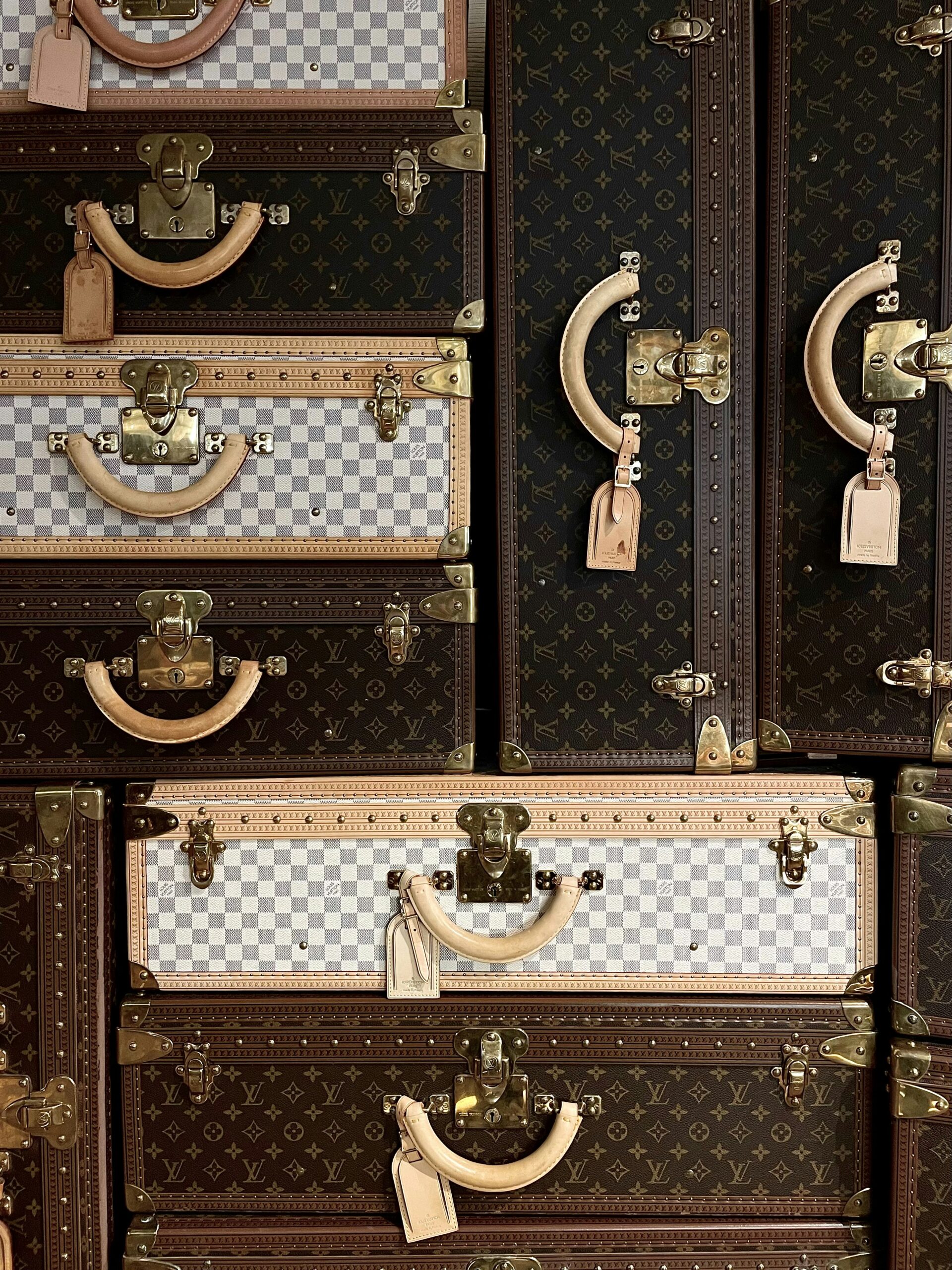 The result has been a broad de-rating. LVMH shares fell 27% across the early part of 2026, and the combined market value lost by LVMH and its rival Kering since the 2022 peak now exceeds €100 billion. Kering, weighed down by a stalling Gucci turnaround, has fared worse still. The empire is still enormously profitable. But investors no longer treat luxury growth as inevitable, and Arnault’s fortune rises and falls with that shifting mood. As EBM has argued in examining why Ferrari’s rationed-desire model has proved so much more durable, the strongest luxury businesses are the ones that never chase volume — a discipline even LVMH finds hard to hold across 75 brands.
The succession
This is where the real drama sits. Arnault is 77. He has spent the last few years engineering not just his companies but his family, positioning all five of his children across the group in a slow, deliberate contest for the top.
The arrangement is remarkable in its openness. Delphine, the eldest, is chief executive of Dior — the crown jewel and the original foundation of the empire. Antoine oversees communications, image and sustainability, and chairs the family holding company, whose investment arm has been pushing LVMH money into sport and fitness as a new marketing frontier. Alexandre is an executive at Tiffany. Frédéric runs LVMH’s watches division. Jean, the youngest, heads watchmaking at Louis Vuitton. Each has been given a real business to run and, in effect, an audition to pass.
Arnault has built the legal structure to match. In 2022 he reorganised the family holding company into a form designed to keep the empire intact and in family hands for decades, making it far harder for any single heir — or any outsider — to break it apart or sell out. He has also floated the idea of raising the age limit for LVMH’s chairman, a move that would let him stay in command well into his eighties.
The effect is a company run as a dynasty. That is unusual for a business of this scale, and it cuts two ways. Supporters argue it gives LVMH something its quarterly-driven rivals lack: the ability to think in decades, to protect brand value over short-term profit, to hold a long view. Critics see a founder unwilling to let go, five siblings quietly competing, and a governance structure built around one family’s control rather than the interests of outside shareholders. Both readings are fair. The truth is that nobody yet knows which child will inherit the throne, and Arnault appears in no hurry to say.
Why he is controversial
Arnault attracts a particular kind of French criticism, and it has sharpened lately. He is a lightning rod in the country’s long argument about wealth and tax. In 2012 he sought Belgian nationality, a move widely read as a tax manoeuvre, which he denied and which drew a famous newspaper front page telling him to “get lost.” Last September he publicly attacked the economist behind a proposed French wealth tax, angering the left. Then came this month’s court ruling that he and his wife owe €22.5 million in back taxes and contributions, which his spokesman says will be appealed.
There is also the matter of power. A single family that controls Europe’s most valuable company, its most important cluster of cultural brands, and — through the family investment vehicles — stakes in football, media and technology, holds a concentration of influence that makes some uneasy. None of it is unlawful. Arnault has been a generous patron, funding the restoration of Notre-Dame and endowing museums and research. But the scale of the empire, and the tightness of the grip, invites the scrutiny that always follows great fortunes.
Why Europe should watch
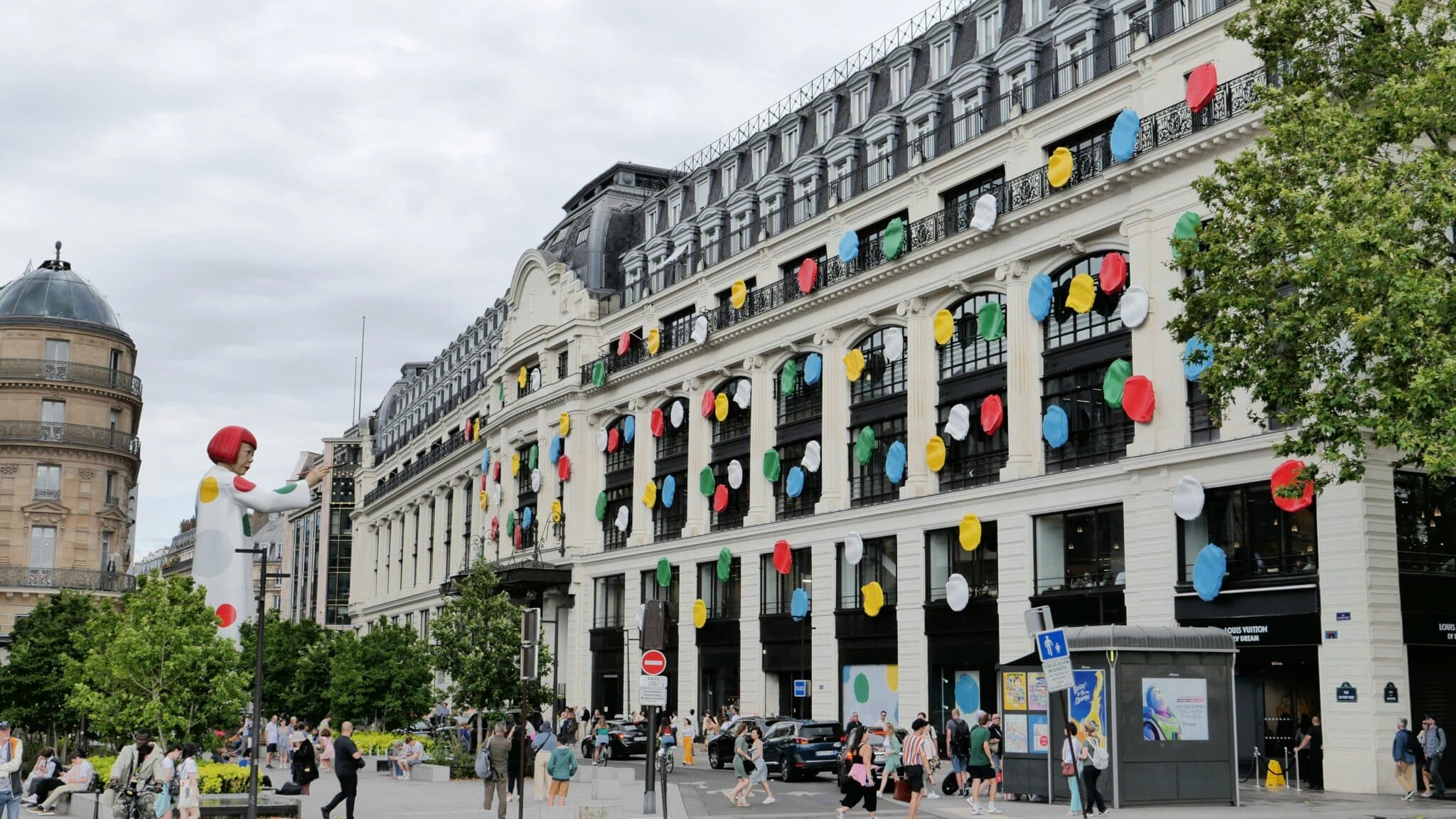
That makes him a test case for a larger question. Can a European family business of this scale survive the transition from its founder without being broken up, sold off, or slowly diminished? Arnault has spent years trying to guarantee that it can. Whether he succeeds will say a great deal about whether Europe can keep the champions it has, at a moment when the gap between American and European wealth creation keeps widening and much of the continent’s corporate crown is quietly passing into foreign hands.
The wolf in cashmere built an empire few thought possible. His last and hardest acquisition is time — enough of it to hand the empire on intact. That is the one deal even Bernard Arnault cannot simply buy.
Related Analysis