































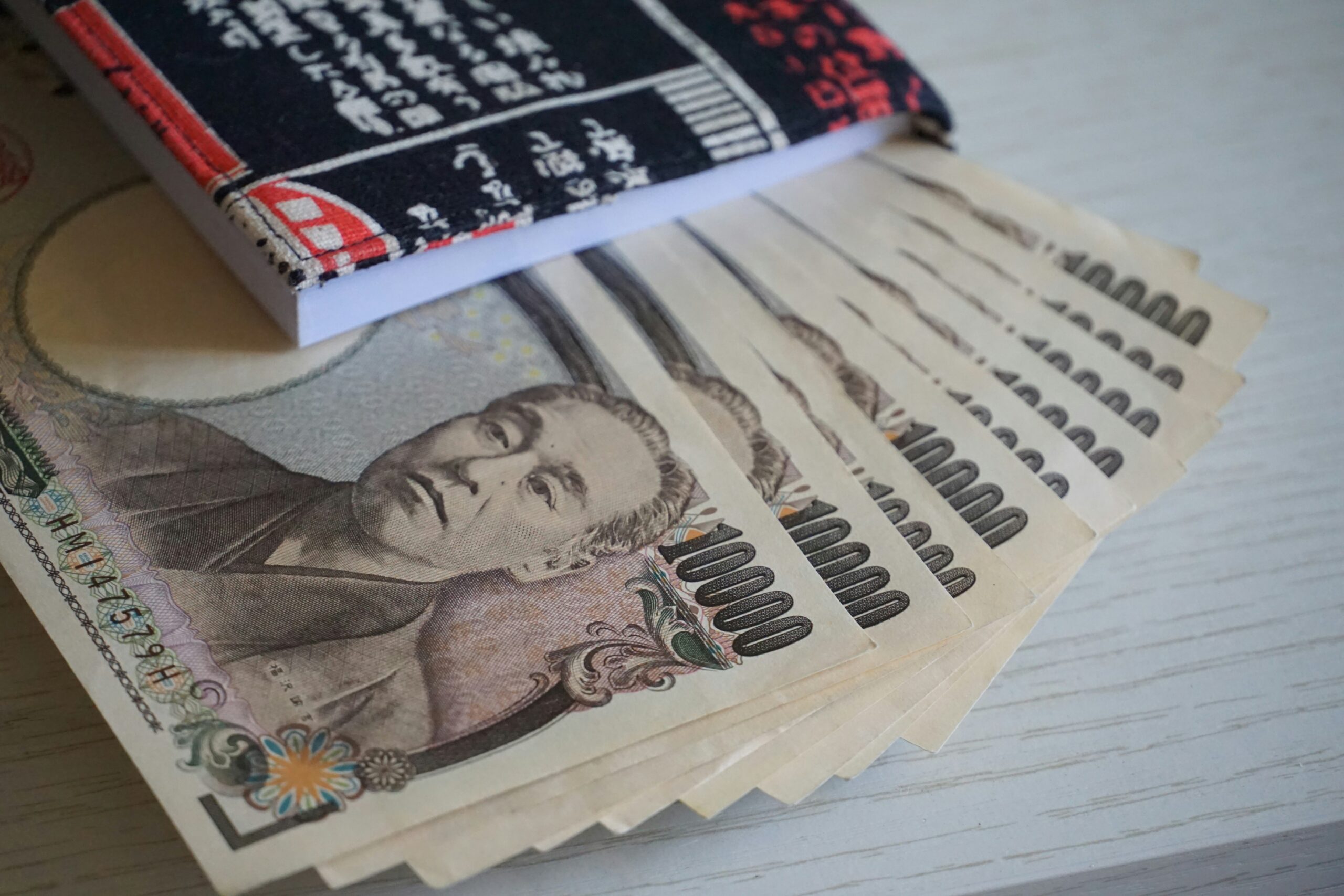
London, 17 August 2026 — EBM Newsdesk Analysis —Nick Staunton
Japan’s bond market is approaching a level that would have been almost unimaginable during the country’s long era of near-zero interest rates.
The yield on the benchmark 10-year Japanese government bond rose as high as 2.93 per cent on Monday, its highest level since 1996, putting the psychologically important 3 per cent mark within reach. Investors are increasingly betting that persistent weakness in the yen, higher energy costs and renewed inflationary pressure will force the Bank of Japan to raise interest rates again as early as September.
Join The European Business Briefing
New subscribers this quarter are entered into a draw to win a Rolex Submariner. Join 40,000+ founders, investors and executives who read EBM every day.
SubscribeThe move matters far beyond Tokyo. For decades Japan provided the global financial system with extraordinarily cheap money, while Japanese investors became some of the largest buyers of overseas bonds. A sustained rise in domestic yields changes that calculation — potentially making Japanese assets more attractive relative to US Treasuries and European government debt.
The Yen Is Driving the Problem
The immediate pressure is coming from the currency.
The yen has weakened back towards ¥159 against the dollar, despite an unusual intervention involving both Japan and the United States earlier this month. That operation initially pushed the currency from around ¥164 to approximately ¥155, but much of the gain has since disappeared.
A weaker yen makes imported goods more expensive, a particularly important issue for an economy heavily dependent on imported energy. Higher oil prices are adding another layer of pressure, raising the possibility that inflation remains persistent even while domestic economic growth struggles.
That leaves the Bank of Japan facing an increasingly uncomfortable choice. Raising rates could support the yen and contain inflation expectations, but tighter policy also risks weakening consumption, investment and an economy that is not expanding particularly quickly.
Markets nevertheless appear increasingly convinced that another move is coming. The BoJ’s next monetary policy meeting is scheduled for 17-18 September, providing policymakers with an obvious opportunity to tighten again if inflation and currency pressures persist.
Why 3% Matters
The significance of a 3 per cent 10-year yield goes beyond round-number psychology.
Japan has the largest government debt burden among major developed economies, meaning even relatively small increases in borrowing costs eventually feed into a significantly larger interest bill.
For years this was manageable because the government could borrow at extraordinarily low rates. That assumption is now being rewritten.
Japan’s Ministry of Finance offered approximately ¥2.6tn of 10-year government bonds in its August issuance, part of a vast sovereign funding programme that must increasingly operate in a market where investors are demanding higher returns.
If 10-year yields establish themselves above 3 per cent, questions about fiscal sustainability are likely to become more prominent. Higher yields would not immediately reprice the entire stock of Japanese government debt, because existing bonds mature gradually, but the direction of travel matters.
Every new bond issued at substantially higher rates raises future debt-servicing costs.
Japan’s Monetary Experiment Is Ending
The broader story is the disappearance of one of the defining features of global finance.
For much of the past quarter-century, Japan operated with exceptionally low or negative interest rates while the Bank of Japan purchased enormous quantities of government bonds. Japanese institutions responded by investing capital overseas, helping support everything from US Treasuries to European sovereign debt.
That world is changing.
Earlier this year, EBM highlighted how Japan’s longer-dated bond market was already experiencing a historic repricing, with the 40-year yield moving above 4 per cent and the 10-year climbing through levels unseen for decades. The latest move suggests that was not a temporary shock but part of a much deeper normalisation of Japanese interest rates.
For investors, the consequences could spread across currencies, sovereign bonds and equity markets.
If Japanese investors can earn close to 3 per cent on domestic government debt without taking foreign-exchange risk, the incentive to move money overseas becomes less compelling. That could eventually reduce Japanese demand for foreign bonds precisely as governments in Europe and the United States are issuing enormous quantities of debt.
The Bigger Question
Japan spent decades trying to create inflation. It may now be discovering how difficult inflation is to control once it has returned.
The BoJ must prevent the yen from feeding another cycle of imported inflation without tightening so aggressively that it damages an already fragile economy. Meanwhile, the government must refinance an enormous debt stock in a world where borrowing is no longer virtually free.
A 3 per cent Japanese 10-year yield would therefore represent more than another milestone for traders.
It would be another sign that Japan’s era of ultra-cheap money — one of the great constants of global finance for a generation — is finally coming to an end