






























London, 8 July 2026 (EBM Newsdesk Analysis) —By Katie Winearls
President Donald Trump has declared the ceasefire and interim agreement with Iran “over,” telling reporters that continuing to negotiate with Tehran is “just a waste of time.” Oil prices extended their gains immediately on the remarks. I think the market’s reaction tells you something the diplomatic language obscures: traders are once again pricing in the possibility that the world’s most important oil chokepoint stays shut for longer than anyone hoped.
What Triggered the Collapse
The immediate cause was a fresh exchange of strikes. Iran launched attacks on American bases in the Gulf, retaliating for a new wave of US military action ordered after Washington accused Tehran of hitting three commercial ships in the Strait of Hormuz. Speaking to reporters in Ankara alongside NATO Secretary General Mark Rutte, Trump was unusually blunt even by his standards, calling Iran’s leadership “scum” and “vicious, violent people” and adding that “as far as I’m concerned, it’s over.”
Join The European Business Briefing
New subscribers this quarter are entered into a draw to win a Rolex Submariner. Join 40,000+ founders, investors and executives who read EBM every day.
SubscribeHe left a narrow door open, saying US negotiators could keep talking, but immediately undercut it. Asked whether talks would resume, he said he didn’t care whether they continued: “They can talk, but I think they’re wasting their time.” Tehran had already said that US and Israeli actions “rendered key and fundamental elements of the agreement to end the war ineffective.” When both sides are briefing that the deal is functionally dead, the market has little reason to hold out hope.
Why a Single Soundbite Moves Crude
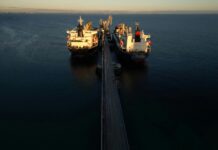
The reason a presidential remark can move oil is geography. In 2024, roughly 20 million barrels a day flowed through the Strait of Hormuz — about a fifth of global petroleum consumption — through a channel between Iran and Oman that has almost no alternative capacity, according to the US Energy Information Administration. Only Saudi Arabia and the UAE operate pipelines able to bypass it, and the International Energy Agency estimates those routes offer just 3.5 to 5.5 million barrels a day of spare capacity — nowhere near enough to replace the strait if it closes entirely.
That vulnerability is not theoretical this time. Since the war began in late February, tanker traffic through Hormuz has fallen to a trickle, Gulf producers have cut output by more than 10 million barrels a day, and the IEA has described the resulting disruption as the largest in the history of the global oil market. Brent has already traded within a whisker of $120 a barrel at the war’s worst moments and now sits elevated, with the EIA forecasting an average around $105 through the summer on the assumption the strait stays largely closed.
The Risk Premium That Keeps Reappearing
The equally striking part is how quickly optimism can drain that premium away, and how quickly it returns. Brent plunged almost 19% in a single month back in May — its worst month since the pandemic — as the two sides moved toward a 60-day memorandum of understanding to extend the ceasefire. That collapse is exactly what now reverses when the deal unravels. My read is that oil has become less a barometer of supply and demand than a live referendum on whether anyone still believes in the agreement, and this week the answer turned decisively negative.
The Uncomfortable Market Truth
There’s a genuinely awkward dynamic underneath all of this. The market’s own appetite for a deal may be part of what keeps preventing one. As US energy envoy Amos Hochstein observed during an earlier round of talks, Wall Street wants the war to end so badly that it repeatedly pushes oil down on optimism — and that very optimism removes the price pressure that might otherwise force a genuine settlement. Every time markets rally on the promise of peace, they hand Washington and Tehran room to keep haggling rather than concluding. It is a feedback loop that rewards brinkmanship, and Trump’s “waste of time” framing is brinkmanship in its purest form.
The substance behind the impasse remains stubborn. The US wants Iran to abandon its nuclear ambitions and surrender its enriched uranium stockpile; Iran wants joint control of the Strait of Hormuz and the unfreezing of billions in frozen assets. Those positions have not meaningfully converged in months, which is why each apparent breakthrough keeps dissolving back into strikes.
The Bottom Line
Trump calling the ceasefire “over” is not yet the same as war resuming. He has left negotiators nominally free to continue, and both sides have an obvious economic interest in avoiding a full closure of Hormuz. But the market has heard this rhythm before: optimism, collapse, strikes, and a fresh spike in crude. Until there is a durable agreement on the strait specifically, every escalation will move oil and every de-escalation will unwind it, and the global economy will keep paying the volatility premium for a peace nobody quite believes in. On this week’s evidence, that premium just got more expensive.
Related Reads:
- The Business of War: Who Profits From the Iran Conflict
- Why Gold Stopped Being a Safe Haven
- European Stocks Hit Records, Bond Markets Aren’t Convinced