































Most developers reach the presale phase with a folder of architectural renders and a one-page splash site. The renders explain the building. The splash site collects an email. Neither one moves a buyer to sign, and neither one gives a lender the presale evidence it needs before releasing the construction loan.
The timing rewards developers who close that gap. Real estate leaders gave 2026 a buy rating of 3.74, the highest reading in the PwC and Urban Land Institute Emerging Trends Barometer in two decades. Capital is moving toward new projects. The developers who convert early interest into signed reservations are the ones with the sales infrastructure to do it. Here are five marketing ideas that fill a presale pipeline before the building exists.
1. Treat Your Renders as Sales Assets, Not Brochure Pictures
A render’s job in presale is not to look good. It is to make an unbuilt unit feel real enough that a buyer will commit money to it. Photorealistic CGI lets a developer launch sales months before ground breaks, which pulls deposits forward and shortens the gap between spend and revenue.
Join The European Business Briefing
New subscribers this quarter are entered into a draw to win a Rolex Submariner. Join 40,000+ founders, investors and executives who read EBM every day.
SubscribeBuyers respond to what they can picture, and nearly all of them start on a screen. 97% of home buyers use the internet during their home search, so the render is often the first thing they see and the most persuasive. Produce visuals that show the view from a specific floor, the finish level, and the life around the building, then reuse them across every sales tool so the project reads as one story.
2. Build a Presale Website That Captures Demand, Not Just Traffic
A presale website is the hub every campaign points to, and its job is to qualify buyers and feed a pipeline, not to sit idle until launch. A generic listing template cannot do that work, because it is built to display finished homes, not to sell a project that is still in design.
Purpose-built real estate website development for pre-construction is a different animal: buyer inquiry flows, floor-plan and pricing gates, waitlist capture, and broker registration, all wired to a CRM from day one. Some studios now deliver this alongside the renders and the digital sales gallery as one engagement in about 5 weeks, with the CGI produced in-house. That lets one team replace three vendors: the render studio, the web agency, and the branding designer. The consolidation matters most when the financing clock is running, because every week saved on production is a week earlier you can show the bank real reservations.
3. Let Buyers Explore a Digital Sales Gallery on the First Visit
The window between a buyer’s first contact and the decision to hold a unit is short, so the goal is immersion on visit one. A digital sales gallery is an interactive space, reachable through one link, where a buyer picks a floor, chooses a view, and sees the exact unit in photorealistic 3D.
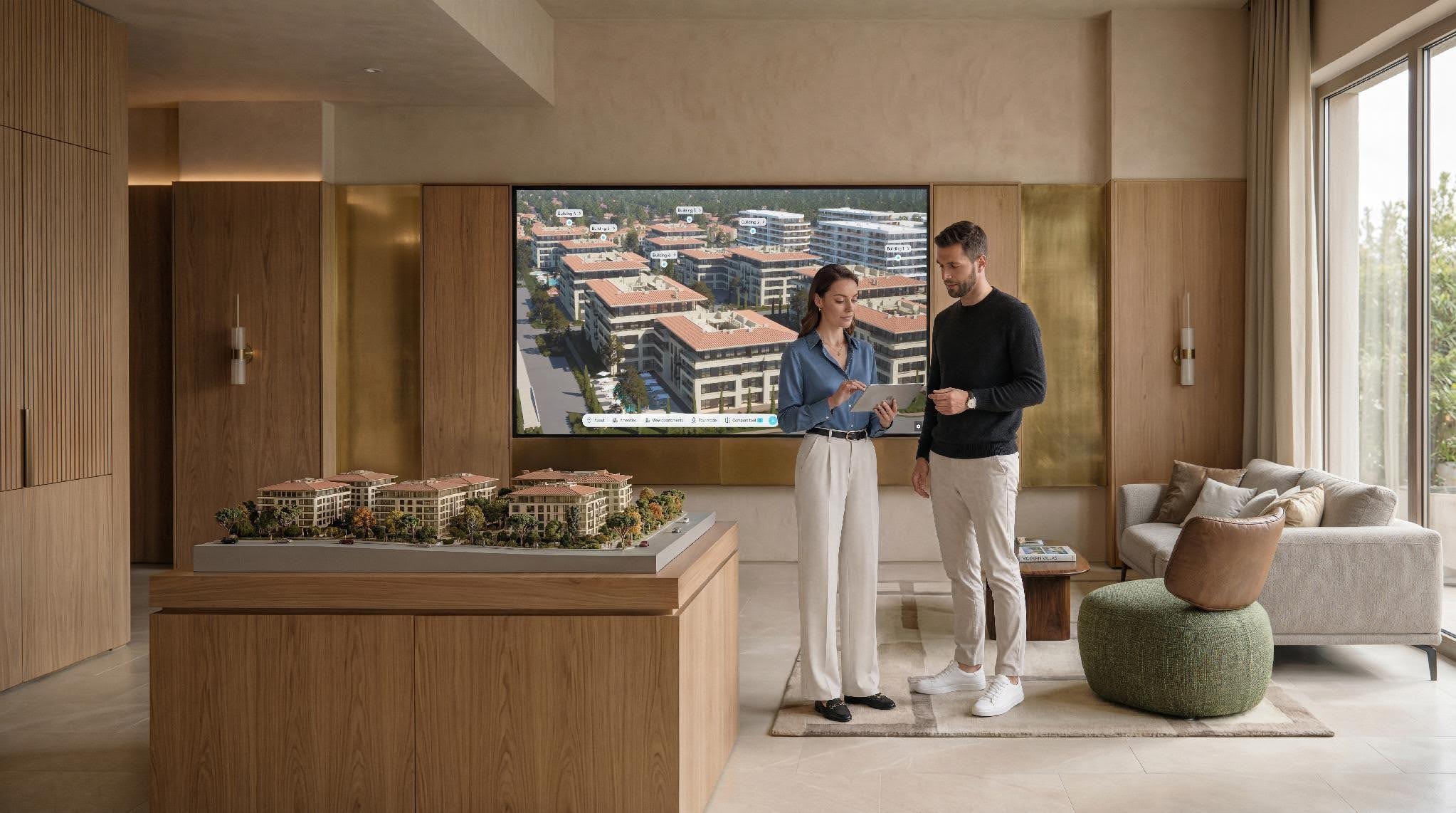
This turns a passive brochure into an experience the buyer drives. When someone configures their own unit and sees their own view, ownership starts to feel real, and a reservation becomes the natural next step. Put the same tool on a screen in the sales center so every conversation runs on identical visuals, and no buyer leaves with a vaguer picture than the one before.
4. Turn Your Brokers Into a Distributed Sales Force
Brokers still close the majority of buyers, so equip them like partners rather than afterthoughts. In the most recent data, 88% of buyers purchased their home through an agent or broker, which means your presale velocity depends on how well those partners can present the project.
Give brokers their own access to the sales gallery, co-branded landing pages, a registration portal, and a competitive co-op commission during the presale phase. The easier you make it for a broker to walk a client through your unbuilt units, the faster your absorption rate climbs. Treat broker enablement as a product you ship, not a PDF you attach.
5. Sequence the Whole Stack to Your Construction-Loan Deadline
Presale marketing is not a launch event. It is evidence production for the bank. Most construction loans release only after a project clears a presale threshold, so every marketing asset should be built and sequenced backward from that date.
Start while the project is still in design, several months before the sales center opens, and build in the order buyers move: renders first, then the website and gallery, then the broker rollout and paid campaigns. Demand is on your side for the right product. Senior housing ranks second for 2026 investment and development prospects as the first baby boomers turn 80. A tailwind like that only helps developers who have the sales infrastructure ready to catch it.
Frequently Asked Questions
When should a developer start presale marketing?
Begin while the project is still in design, typically several months before the sales center opens. The renders, website, and gallery need production lead time, and the campaign needs a runway to compound buyer recognition before the financing window closes.
What makes a developer website different from a normal real estate website?
A normal real estate website displays finished, for-sale listings. A developer website sells a project that does not exist yet: it captures and qualifies buyers, gates floor plans and pricing, registers brokers, and produces the reservation evidence a lender wants before it funds construction.
Do renders need to come before the gallery and website?
Yes. The digital sales gallery and the website are both built from the CGI renders, so producing the renders first keeps the visuals consistent across every sales tool and avoids paying for a second round of revisions later.
Build the Pipeline Before You Build the Tower
A presale pipeline is not built by the longest list of tactics. It is built by the few assets that turn early interest into signed reservations: renders that sell, a website that qualifies, a gallery that immerses, brokers who are equipped, and a schedule tied to the bank’s deadline. Get those five working together, and the building sells before it exists.