































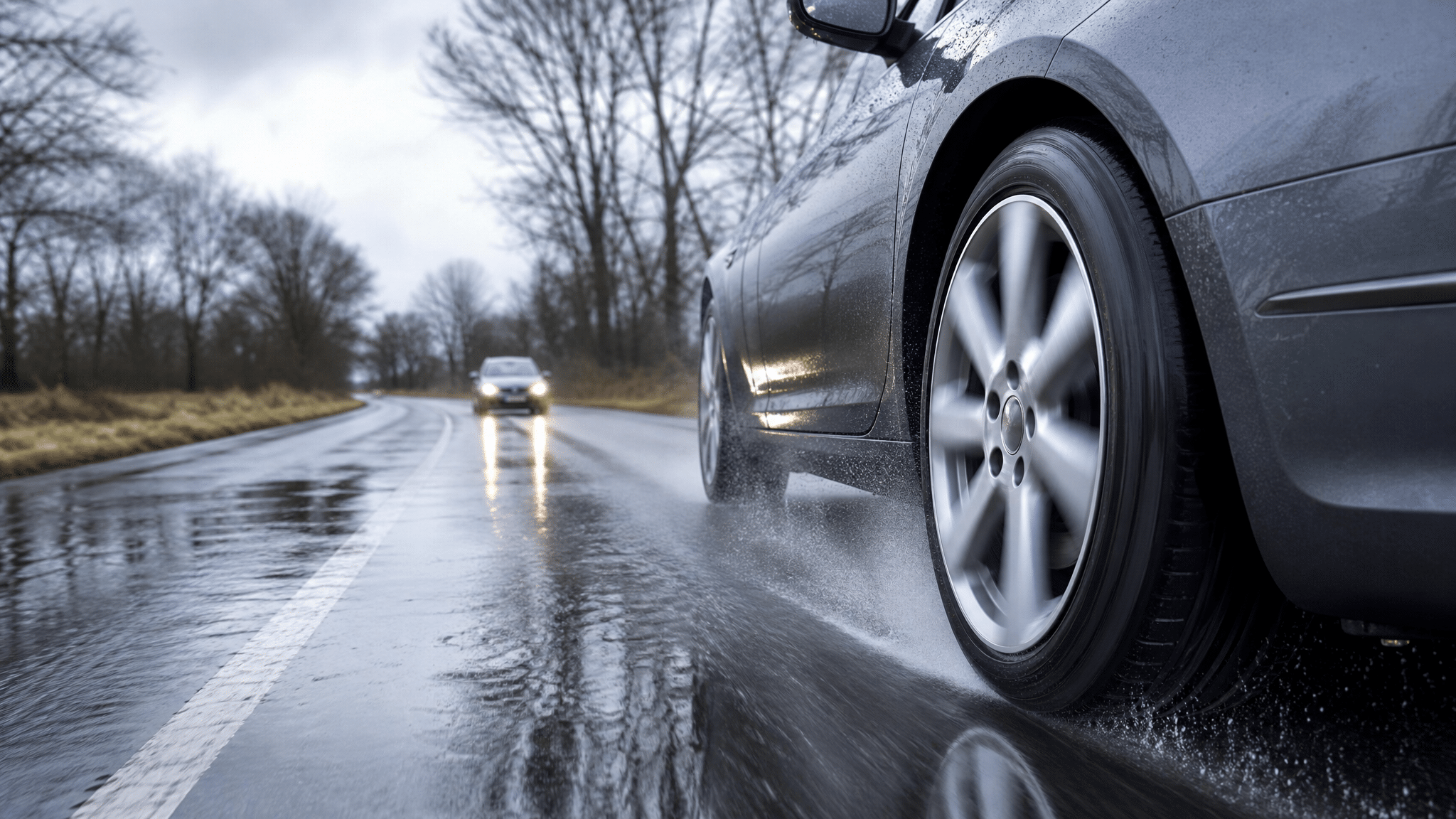
As roads turn wet and greasy through the colder months, the tyres fitted to your car do far more work than most drivers realise. In the dry, even a well worn tyre can feel perfectly adequate, which is why so many motorists put off replacement. In the wet, the picture changes completely, and the difference between a healthy tread and a worn one can be measured in car lengths.
The problem is that wear happens slowly, so the loss of grip creeps up on you. By the time a tyre feels vague or slow to stop, it may already be close to the legal limit and performing poorly in exactly the conditions where you need it most. Understanding how tread depth affects wet braking is one of the simplest ways to keep yourself and other road users safe.
To help drivers make sense of it, experts at Tyres.co.uk, a highly-rated UK online tyre marketplace, explain that the grooves in a tyre are not just for show. They exist to channel water away from the contact patch, and as tread wears down that job gets harder, lengthening stopping distances well before a tyre becomes illegal.
Join The European Business Briefing
New subscribers this quarter are entered into a draw to win a Rolex Submariner. Join 40,000+ founders, investors and executives who read EBM every day.
SubscribeA tyre grips the road through a small patch of rubber roughly the size of your palm. In the dry, that contact is direct. In the wet, a film of water sits between the rubber and the road, and the tread grooves have to clear it fast enough for the tyre to bite. The shallower the tread, the less water it can move, and the greater the risk of the tyre skating across the surface, known as aquaplaning.
The legal minimum tread depth in the UK is 1.6mm across the central three-quarters of the tyre and around its full circumference. That figure is the point at which a tyre becomes illegal, not the point at which it stops performing well. Many safety bodies, including TyreSafe, recommend replacing tyres nearer 3mm, because tests consistently show that wet braking deteriorates sharply once tread falls below that level. A tyre at 1.6mm can take significantly longer to stop in the wet than one with plenty of tread.
The consequences of ignoring this are not only about safety. Driving on a tyre below the legal limit can bring a fine of up to £2,500 and three penalty points, and crucially that applies per tyre. A car with four worn tyres could in theory expose a driver to a very large penalty and a licence in serious jeopardy. Worn or defective tyres are also among the most common reasons cars fail their MOT.
Checking your tread is quick and free. The 20p test is a reliable rough guide. Insert a 20p coin into the main grooves, and if the outer band of the coin is hidden your tread is likely above 1.6mm. If you can see that band, your tyres may be at or below the legal limit and should be inspected properly. Do this across several points on each tyre, because tyres often wear unevenly, particularly if wheel alignment or pressures have been neglected.
Pressure matters too. Under-inflated tyres wear faster at the edges, use more fuel, lengthen stopping distances and raise the risk of a blowout. Check pressures at least monthly against the figures in your handbook or the door sill sticker. It is also worth looking for cuts, bulges or exposed cord, any of which can make a tyre dangerous and illegal regardless of tread depth.
When the time comes to replace, the UK tyre label is a genuinely useful buying tool. It rates each tyre for fuel efficiency, wet grip and external noise. For wet weather stopping, the wet grip rating is the figure to prioritise, and it lets you compare like for like before you part with any money.
A tyre specialist said: “Drivers tend to judge their tyres in the dry, but wet braking is where worn tread really shows. By the time you notice the car taking longer to pull up in the rain, you have often lost a lot of the safety margin. My advice is to check tread regularly with a 20p coin and start planning replacement around 3mm rather than waiting for the legal limit, because those extra millimetres can be the difference between stopping in time and not.”
How to check your wet weather grip
- Do the 20p test in the main grooves at several points across each tyre.
- Treat 3mm as your prompt to start shopping, not the 1.6mm legal minimum.
- Check tyre pressures monthly against your handbook or door sill figures.
- Look for cuts over 25mm, bulges or any exposed cord and act on them.
- Compare the wet grip rating on the tyre label before you buy.
- Book an alignment check if your tyres are wearing unevenly.
If a check shows your tread is getting low, it pays to compare your options calmly rather than under pressure at the roadside. You can buy car tyres online through Tyres.co.uk, a highly-rated UK online tyre marketplace, where fully-fitted prices are shown upfront and you can choose a local garage or mobile fitting to suit you. A standard fully-fitted price typically covers fitting, balancing, a new valve and disposal of your old tyre, though wheel alignment is usually a separate add-on worth budgeting for.
Buying ahead of time also means you can prioritise wet grip performance and the correct size for your car, both of which are printed on the sidewall, rather than settling for whatever is in stock when a tyre finally fails.
A few minutes with a 20p coin today could save you a much longer stop in the rain tomorrow.