
































When you walk into a client meeting, a presentation, or even a job interview, something happens before a single word is spoken.
People form impressions.
Your expertise, experience, and ideas matter most. But appearance often influences how quickly others can see those qualities. That’s one reason more professionals are treating grooming and self-care as career investments rather than personal luxury.
Join The European Business Briefing
New subscribers this quarter are entered into a draw to win a Rolex Submariner. Join 40,000+ founders, investors and executives who read EBM every day.
SubscribeProfessionals are investing in better skincare routines and services such as laser underarm hair removal in order to shape that first impression. Leaders have long understood the value of presentation. Companies invest heavily in branding because perception influences decisions. They are beginning to apply the same principle to themselves.
According to INFORMS Information Systems Research, attractive individuals are 52.4% more likely to hold prestigious job positions 15 years after graduating than their less attractive colleagues.
They also found that over 15 years, attractive MBA graduates earn a 2.4% ‘beauty premium’, which equates to an average annual salary increase of $2,508. For the 10% most attractive professionals, the salary increase goes up to $5,528.
The Business Case for Looking Professional
Psychologists call this the ‘halo effect.’ When people notice one positive characteristic, they often assume the presence of other positive traits.
Research suggests that appearance can influence professional outcomes more than many people realize. In his book Beauty Pays: Why Attractive People Are More Successful, economist Daniel Hamermesh analyzed years of research and found that workers who are perceived as more attractive tend to earn higher incomes over the course of their careers than their less attractive peers. The effect became widely known as the ‘beauty premium.’
He also found that good-looking workers earn a total of $230,000 more than those whose looks are considered below average.
The lesson is not that appearance outweighs skill. It doesn’t. The research shows that first impressions often shape how quickly people attribute positive qualities such as competence, confidence, and credibility to others.
Grooming as a Time Investment
One of the biggest changes in recent years is how professionals think about grooming expenses.
Many no longer see self-care as a cost. They see it as a business decision.
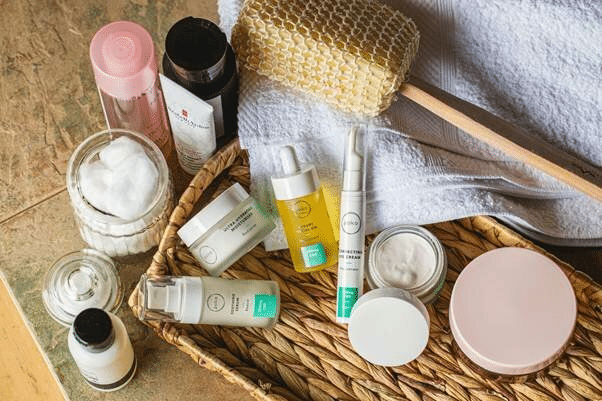
A good haircut reduces the time you need to style it every day. Finding the right, simple skincare routine can help you look put together with less effort. Long-term treatments can eliminate the need for repetitive maintenance tasks.
Viewed this way, grooming becomes similar to investing in quality technology or professional training. The goal is not indulgence or vanity. The goal is to influence perception.
That is one reason services that once felt optional are becoming more mainstream among working professionals. The focus is not just on appearance, but also on convenience. A few trips to a successful beauty salon can make you feel good and make your daily routine much easier.
Executive Presence Starts Before You Speak
Many leadership experts use the term ‘executive presence.’
People often assume it refers to communication skills. In reality, appearance plays a role too.
Executive presence is a combination of confidence, credibility, and professionalism. Appearance alone cannot create it, but poor presentation can undermine it.
Studies suggest people form first impressions surprisingly quickly. Research conducted by Princeton psychologists found that it takes a tenth of a second to form a first impression about someone.
In business, those snap judgments can influence everything from networking conversations to hiring decisions. A polished appearance cannot create expertise, but it can help ensure that expertise gets a fair hearing.
Think about the leaders you remember most.
They usually share several traits:
- Consistent personal presentation
- Attention to detail
- Professional body language
- Calm confidence
- Strong communication
Notice that appearance is only one piece of the puzzle. Still, it is often the first piece that people notice.
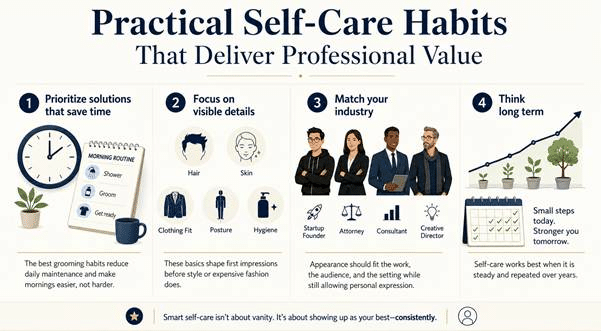
Practical Self-Care Habits That Deliver Professional Value
The strongest grooming routines are surprisingly simple. They focus on consistency.
Prioritize solutions that help you save time
Look for services that reduce the need for daily maintenance. The best routines make your mornings easier, not more complicated.
Focus on visible details
Your hair, skin, fit, posture, and hygiene have the biggest impact on first impressions. Before you work on developing your personal style or buy that expensive suit, you can start with taking care of the basics.
Match your industry
A startup founder, attorney, consultant, and creative director may all present themselves differently. Professional appearance should fit the audience you serve and the work you do. That doesn’t take away from your personal expression. It just makes sure that you are presenting yourself the right way.
Think long term
Treat self-care like professional development. Small improvements maintained over the years often create the best results.
What This Means for Businesses
The opportunity extends beyond individual professionals.
The global beauty and personal care market is projected to hit around $698.38bn in revenue in 2026 (Statista).
This means that customers are willing to spend a lot of money on their appearance. The beauty market is growing, and with good reason.
The Bottom Line
Professional grooming is no longer viewed as a purely personal choice. For many professionals, it has become part of career management.
The truth is that appearance can influence how people perceive you. And in a business setting, perception is extremely important.
Still, no amount of self-care can replace your expertise and experience. But when you combine the two, you can gain a real advantage.