






























EBM NEWSDESK ANALYSIS- By Anthony Gill
At WWDC 2026, Apple unveiled the most significant overhaul of Siri in 15 years — built on Google Gemini, wrapped in a privacy architecture, and arriving after a $250 million lawsuit over features that never shipped.
The Admission That Set the Tone
Tim Cook’s final WWDC keynote as Apple CEO began with a rare public concession. Apple Intelligence had “not yet delivered on everything we promised,” Cook told the audience at Apple Park on Monday — an acknowledgement that carries particular weight from a company that has built its entire brand on the premise that it only ships things when they are ready.
In this case, they were not ready. The personalised Siri capabilities originally announced at WWDC 2024 were delayed indefinitely in March 2025. Last month, Apple settled a $250 million consumer class action over marketing those features on the iPhone 16 before they existed. Cook’s admission was not just candour — it was the legal and commercial context for everything that followed.
Join The European Business Briefing
New subscribers this quarter are entered into a draw to win a Rolex Submariner. Join 40,000+ founders, investors and executives who read EBM every day.
SubscribeWhat followed was Siri AI — a ground-up rebuild of Apple’s voice assistant, the most significant update to the product since it launched in 2011, and Apple’s clearest statement yet that it intends to compete directly with ChatGPT, Claude and Google’s Gemini rather than occupy a different category entirely.
What Siri AI Actually Does
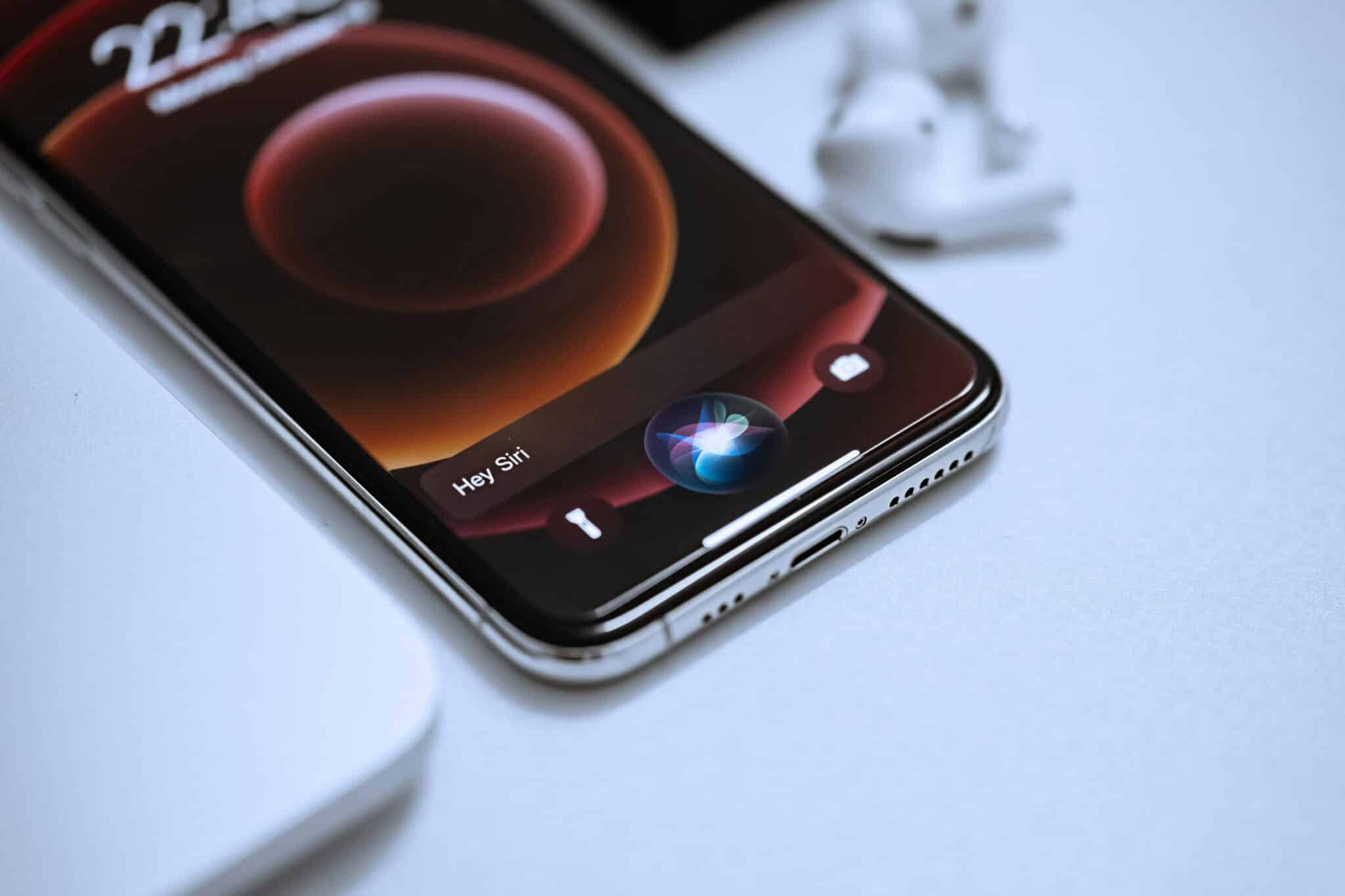
The rebuilt assistant arrives as a standalone app on iPhone, iPad and Mac, functioning as a full conversational chatbot alongside its existing system-wide presence. It can draw on personal context — searching across messages, emails and photos — execute multi-step commands across apps, answer questions about what is on screen and go to the web for real-time information. A dedicated Siri app uses iCloud to sync conversation history privately across devices.
“The new Siri AI will be able to access and interact with all the apps and data on a user’s iPhone, but with strong privacy controls,” Craig Federighi, Apple’s senior vice president of Software Engineering, told the WWDC audience. “We believe privacy in AI is non-negotiable. Data is only used to execute your request, and outside experts can continue to verify this promise at any time.”
The privacy architecture is three-tiered — on-device processing for the most sensitive tasks, Private Cloud Compute for heavier workloads that never store data, and third-party model access for tasks requiring external capability. That third tier is now powered by a custom Google Gemini model rather than OpenAI’s GPT, in a partnership Apple confirmed in January and built its WWDC narrative around. The shift from OpenAI to Google as Apple’s primary external AI partner is commercially significant — it redraws the alliance map in the AI industry at precisely the moment that OpenAI is preparing its own trillion-dollar IPO.
As we examined in our coverage of OpenAI’s confidential S-1 filing and the loss ratio that Wall Street will need to price, the competitive dynamics at the frontier model level are shifting faster than the public market narrative has caught up with. Apple choosing Google Gemini over OpenAI for its 1.5 billion daily Siri requests is a data point that belongs in any serious analysis of where AI revenue actually accrues.
The Privacy Bet
Apple’s strategic positioning around privacy in AI is deliberate and commercially calculated. The company is not simply making an ethical argument — it is making a market differentiation argument against competitors whose business models are built on data aggregation.
“AI is incredibly powerful technology,” Federighi said. The implicit completion of that sentence — and therefore requires our specific approach to privacy — is the entire Apple pitch. It is a bet that a meaningful segment of the consumer market, particularly in Europe, will pay a premium for AI that demonstrably cannot monetise their personal information.
That bet has a geographic wrinkle. Siri AI will not initially be available in the European Union, as Apple works through regulatory compliance with the region’s privacy and AI frameworks. It is also unavailable in China pending regulatory clearance. For a company that generates approximately 25% of its revenue from Europe and faces increasing scrutiny from Brussels over its App Store practices, launching its most privacy-forward product while simultaneously excluding European users is a tension that Apple’s PR team will be managing carefully.
For European businesses and consumers watching from the sidelines, the EU exclusion is more than a footnote. It places Apple’s most significant AI product launch outside the continent’s reach at precisely the moment that, as we explored in our analysis of Europe’s tech sovereignty push and the regulatory landscape shaping AI access on the continent, European institutions are attempting to assert control over which AI systems operate within their jurisdiction and on what terms.
The Hardware Constraint
The most powerful version of Siri AI requires iPhone Air, iPhone 17 Pro or iPhone 17 Pro Max, plus iPad or Mac with M3 chip or later and at least 12GB of unified memory. That hardware gate is not incidental — it is Apple’s mechanism for managing compute costs, protecting premium device positioning and creating a clear upgrade incentive for the 600 million iPhone users still running older hardware.
Apple stock rose approximately 2% at the open on Monday before sliding during the keynote to turn negative by mid-afternoon — a market reaction that captures the ambivalence investors feel about Apple’s AI position. The partnership with Google is seen positively. The two-year delay, the $250 million settlement and the EU exclusion are less easily dismissed. Apple’s share price has neared record highs in recent weeks on the strength of iPhone 17 sales momentum and positive analyst reaction to the Google partnership. Monday’s keynote was the moment that narrative had to translate into product reality.
For context on how the broader AI investment landscape is processing these competitive shifts, our analysis of how the KOSPI meltdown exposed the fragility of AI-linked valuations captures the market sensitivity to any gap between AI ambition and AI delivery — a sensitivity Apple has just spent two years testing to its limits.
The Verdict
Apple’s Siri AI is a serious product — rebuilt from the ground up, backed by Google’s model infrastructure, wrapped in a privacy architecture that genuinely differentiates it from competitors and integrated deeply enough into Apple’s device ecosystem to create switching costs that ChatGPT and Claude cannot easily replicate.
It is also two years late, arrives after a quarter-billion-dollar legal settlement, remains unavailable in the EU and China, and requires hardware that the majority of Apple’s installed base does not yet own. Cook’s farewell keynote was characteristically polished. The product beneath it is genuinely compelling. The gap between the two — between Apple’s narrative control and the messier reality of its AI journey — is the story investors will be tracking from here.
As we noted in our coverage of the agent economy reshaping AI’s commercial applications across financial services, the competitive advantage in AI will ultimately belong to whoever builds the most embedded, most trusted, most personally contextual assistant. Apple has the distribution, the hardware integration and the privacy credentials to win that race. Monday confirmed it is finally, seriously, in it.
“Apple settled a $250 million lawsuit last month over Siri AI features marketed before they existed. Tim Cook’s WWDC admission that Apple Intelligence had ‘not yet delivered on everything we promised’ was not just candour — it was the legal context for everything that followed.”
RELATED READS:
- OpenAI Files for a $1 Trillion IPO. It Loses Money on Every Dollar. — Apple just handed Google its most significant AI distribution deal. OpenAI heads to Wall Street with 1.5 billion fewer daily Siri requests behind it.
- South Korea’s KOSPI Crashes. The AI Rally Just Got Its Reality Check. — The gap between AI ambition and AI delivery is the market’s most sensitive pressure point right now. Apple just spent two years testing it.
- Europe’s Tech Sovereignty Gamble: Can the EU Break Free From Silicon Valley? — Apple is launching its most privacy-forward AI product while excluding European users. The regulatory logic behind that decision runs deeper than most coverage suggests.






