






























London, 11 August 2026 — EBM WEEKEND READ-Brad Adams
A restaurant sells dinner. A hotel sells a room. A gym sells exercise. The modern private members’ club has discovered that it can bundle all three together, add a carefully selected group of people, restrict access — and charge thousands of pounds simply for the privilege of walking through the door.
It is proving to be an increasingly attractive business. London is experiencing one of the biggest expansions of private clubs in its history, with Knight Frank estimating that more opened in the four years to 2024 than in the three decades following the launch of the Groucho Club in 1985. The model has spread well beyond the traditional Mayfair institutions of old: new clubs combine restaurants, workspaces, gyms, spas, hotels, medical diagnostics and networking under a single membership.
Join The European Business Briefing
New subscribers this quarter are entered into a draw to win a Rolex Submariner. Join 40,000+ founders, investors and executives who read EBM every day.
SubscribeThe attraction is not really the swimming pool or the cocktail bar. Wealthy consumers can already afford those things elsewhere. What they are increasingly paying for is something harder to manufacture: access to other people who have also been selected to be there.
That makes the private club one of the more unusual businesses in luxury. Its greatest asset is not the building. It is the guest list.

The Business of Being Allowed In
Consider the economics.
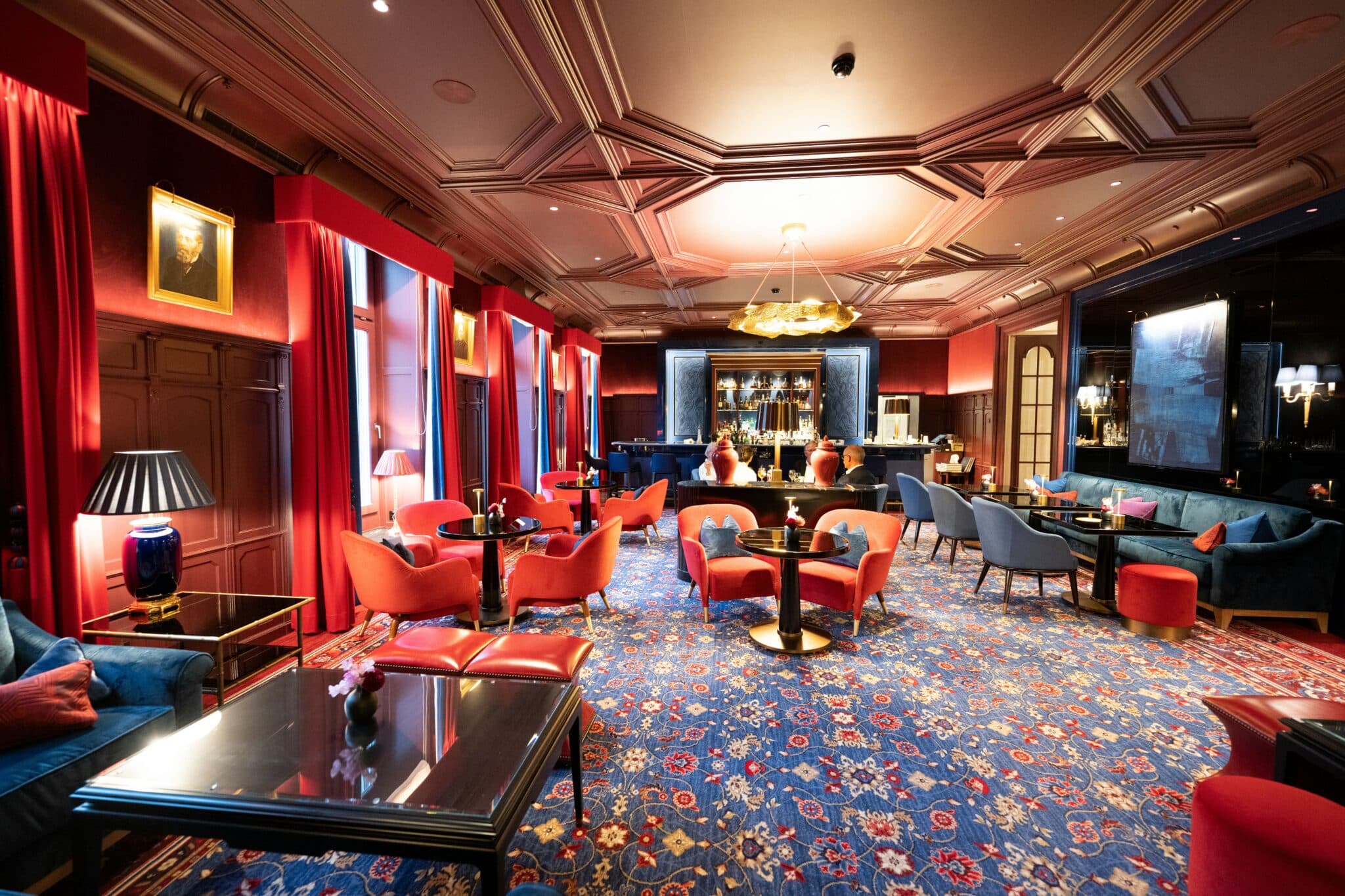
The Arts Club in Mayfair currently charges £3,200 a year for full membership, plus a £1,600 assessment fee for a new member. Its under-33 membership costs £1,500 annually.
Those figures are no longer exceptional. London’s latest generation of wellness-focused clubs pushes considerably higher. Surrenne at The Emory has been marketed at £10,000 a year plus a £5,000 joining fee, while memberships linked to Six Senses London can range as high as £37,000 annually depending on the package. What was once a leather armchair and a discreet bar can now include cryotherapy, medical testing, Pilates, longevity programmes and cold plunges.
The underlying luxury principle is familiar. As EBM explored in its profile of Bernard Arnault and the economics of the LVMH empire, the most valuable luxury products are rarely priced according to what they cost to manufacture. Their economics depend on scarcity, identity and the customer’s willingness to pay for membership of a particular world.
Private clubs take that logic one stage further. Instead of selling an object that signals status, they sell access to the environment in which status is recognised.
The trick is maintaining scarcity while generating enough members to support expensive real estate, staff and amenities.
Soho House Discovered the Scale Problem
No company illustrates both the opportunity and the danger better than Soho House.
Founded in London in 1995 as a club for people working in creative industries, it expanded into one of the world’s best-known membership businesses. By September 2025 it had almost 214,000 Soho House members and roughly 270,000 members across its wider membership platform. Its regulatory filings put the annual global Every House membership at approximately $5,400 before local taxes.
Membership fees are particularly attractive because they recur annually and carry relatively few direct costs compared with running restaurants and hotel rooms. Soho House itself described membership revenue in its filings as a reliable and predictable source of cash flow.
But expansion created a contradiction.
A successful club wants more members. An exclusive club must convince existing members that not everybody can join.
Soho House listed in New York in 2021, but the public-market experiment proved difficult. Investors wanted growth; members wanted exclusivity. The company was taken private again in January 2026 in a $2.7bn transaction after four turbulent years as a listed business.
There is a useful business lesson in that tension. A conventional subscription company becomes stronger as the number of customers increases. A private club can become weaker if growth makes membership feel commonplace.
Exclusivity is therefore both the product and the constraint on growth.
What Members Are Really Buying
Ask why someone would spend £5,000, £10,000 or considerably more each year to enter somewhere when London already has exceptional hotels, restaurants and bars, and the answer becomes more interesting.
Convenience matters. A good club can operate simultaneously as office, restaurant, meeting room, gym, bar and social network. It provides what commercial-property advisers increasingly describe as a “third place”: somewhere between home and the traditional workplace where members can spend large parts of the day. CBRE argues that these venues can also enhance surrounding real-estate value and has begun using the term “clubonomics” to describe the intersection of hospitality, community and property.
That convergence is visible far beyond London. EBM has previously covered The Collective’s attempt to turn luxury coworking into a hospitality product in Tokyo, where offices, private suites, hospitality and social spaces are deliberately blurred.
But convenience alone does not justify the price.
The more valuable commodity is curation.
A wealthy investor can book a table at an expensive restaurant. What the restaurant cannot promise is that the person at the next table will be a founder, film producer, fund manager or potential client. A members’ club tries to manufacture that probability.
That creates network effects. The more desirable the membership becomes, the more desirable the applicants become, which in turn makes membership more valuable.
The best clubs are therefore effectively human marketplaces — except the participants are the product as well as the customer.
Why Billionaires Still Want a Club
The resurgence also reflects the extraordinary expansion of private wealth.
The fortunes controlled by the world’s wealthiest entrepreneurs have reached levels that would have been almost unimaginable a generation ago. As EBM examined in its 2026 ranking of the world’s richest people, enormous concentrations of wealth are now being created around technology, private companies and global investment platforms.
That population does not simply consume more luxury goods. It creates demand for an entire infrastructure around wealth: family offices, private aviation, concierge businesses, high-end health services, exclusive resorts and membership clubs.
Other industries have noticed. The duPont REGISTRY Luxury Car Club is based on essentially the same proposition: affluent customers pay for privileged access to an ecosystem rather than simply purchasing one product.
Hotels are moving in a similar direction. Small Luxury Hotels of the World has expanded its membership offering, reflecting a broader shift from selling individual stays towards maintaining a continuing relationship with high-value customers.
The private club sits at the centre of all these trends because membership transforms an occasional luxury purchase into recurring revenue.
The Property Owners Have Noticed
There is another reason clubs are proliferating: landlords increasingly like them.
Luxury clubs can occupy unusual buildings that are difficult to use as conventional offices or shops. They invest heavily in interiors, generate footfall among wealthy customers and can transform the perception of an address.
Mayfair provides perhaps the clearest example. The district has experienced an influx of private wealth, hedge funds, luxury restaurants and members’ clubs alongside the redevelopment of major properties. New clubs are becoming part of the infrastructure designed to serve the capital concentrated within a few streets of central London.
The relationship can become circular. Wealthy people attract clubs; clubs make a neighbourhood more desirable to wealthy people; higher-value businesses and residents then increase the attractiveness of the property around them.
CBRE argues that this can create tangible value for landlords, particularly when the club becomes an anchor amenity within a larger development.
This is why the modern club business increasingly resembles a hybrid between hospitality company and real-estate strategy.
The model can also travel. In Lisbon, for example, the JNcQUOI concept combines restaurants, retail, hospitality and private membership — an approach EBM previously explored in its guide to Lisbon’s business and luxury hospitality scene.
From Champagne to Blood Tests
Perhaps the strangest development is the speed with which wellness is replacing nightlife as a core attraction.
The private club used to sell somewhere to drink after everybody else had gone home. Increasingly it sells somewhere to recover the next morning.
London clubs are installing medical diagnostics, longevity treatments, high-performance gyms, saunas and recovery facilities. Tramp, one of the capital’s most famous nightclubs, has opened Tramp Health alongside the Chancery Rosewood hotel, combining the social-club model with fitness and wellness. The Arts Club has worked with medical-wellness operator Lanserhof, while other venues are making health screening part of membership.
There is commercial logic behind the shift. A restaurant may persuade somebody to visit twice a month. A serious gym or wellness programme can bring them through the door several times a week.
Frequency matters because a club that becomes part of a member’s daily routine is far harder to cancel.
It also broadens the customer proposition. A £5,000 fee looks extravagant for access to a bar. It can look more defensible when positioned as the combined cost of workspace, gym, spa, networking events, restaurants and social life.
Private Equity Wants In
The economics are now attracting institutional capital as well.
Private-club M&A reached its highest level in at least a decade in 2026, according to data compiled by Reuters. In the US, KSL Capital Partners agreed to acquire Invited Clubs — an operator of more than 150 private country clubs — from Apollo in a transaction worth roughly $3bn including debt. Bain Capital separately acquired Concert Golf for more than $1.3bn.
The scale may look surprising until the customer base is considered. Invited’s memberships have an estimated average net worth of around $3mn, according to Reuters. Such customers tend to be less exposed to economic downturns than mass-market consumers, making recurring club fees unusually resilient.
For private equity, that creates an appealing combination: recurring revenue, valuable property relationships, affluent customers and opportunities to increase spending through food, wellness, events and hospitality.
The difficulty is that financial optimisation can collide with the very thing members are buying. Increase membership too aggressively, cut service or overcrowd facilities and the perceived exclusivity disappears.
A luxury club cannot be run entirely like a gym chain.
The Economics of Exclusion
The revival of the private members’ club says something wider about modern wealth.
Technology has made almost everything more accessible. Anybody can stream the same music, watch the same films, buy many of the same luxury brands and work from virtually anywhere. Digital abundance has made access cheap.
That makes controlled scarcity more valuable.
A members’ club creates scarcity not by limiting the number of handbags or hotel rooms but by limiting people. The velvet rope is the business model.
For some customers, the attraction is status. For others it is privacy, familiarity, safety or the ability to conduct business without booking a meeting room every time. For many it is probably a combination of all of them.
But the strongest clubs understand something fundamental: wealthy customers are not paying thousands of pounds simply because the room is beautiful.
They are paying because of who else has been allowed into it — and, just as importantly, who has not.