






























Dark Factories: Leading the Automation Wave in Sustainable Manufacturing
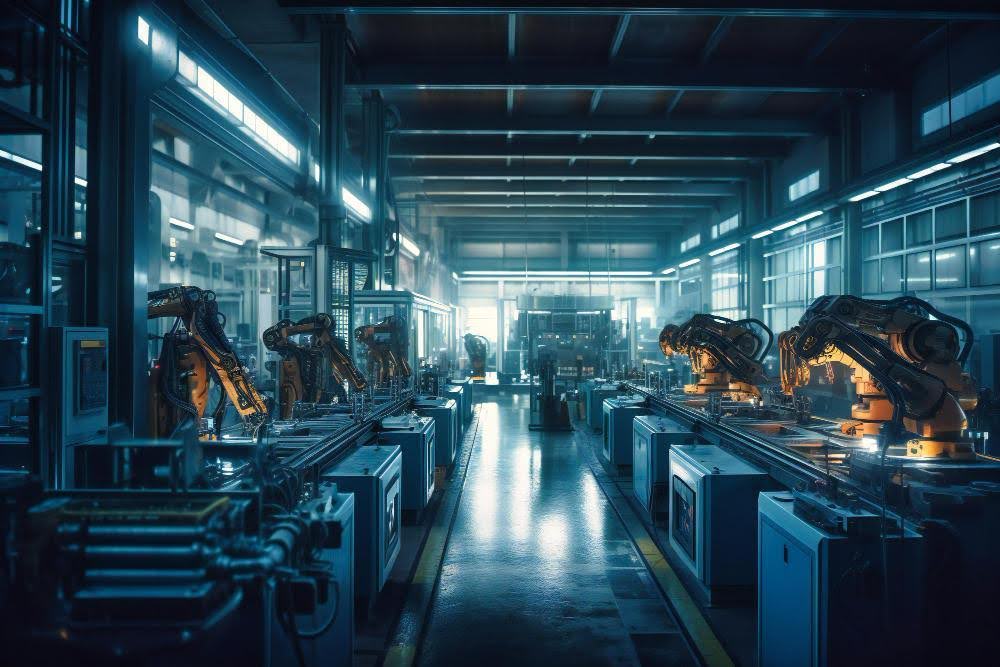
Fully autonomous production facilities, also known as “Dark factories or lights-out factories,” operate without any human intervention and are redefining the space of sustainable
manufacturing through the use of AI, robotics, and IIoT. These facilitate the eradication of the need for an HVAC system, thereby alleviating energy usage or maximizing energy efficiency. The global dark market factory is estimated to achieve growth at a CAGR of around 7.1% through 2032, with an approximate estimation of around $47.28 billion in 2025, which clearly reflects its role and implications in decarbonization and sustainable manufacturing. It also aligns with the EU carbon strategy that fortifies automation to drive carbon neutrality.
This blog highlights how the dark factories align with the carbon management strategy of the EU in ensuring industrial decarbonization, with in-depth coverage of related challenges, opportunities, and use cases.
Join The European Business Briefing
New subscribers this quarter are entered into a draw to win a Rolex Submariner. Join 40,000+ founders, investors and executives who read EBM every day.
SubscribeHow Dark Factories are Fulfilling the EU’s Sustainability Ambitions Concerning Carbon Strategy?
EU manufacturers are facing immense pressure to achieve carbon-neutral targets by 2050, laid out under the EU Carbon Strategy. The strategy aims to reduce GHG emissions by 55% under the Fit-for-55 packages and Europe’s Climate Law by 2030, and by 90% by 2040. The growing urgency to meet these challenging goals is driving manufacturers to adopt innovative solutions like automation and dark factories to maintain business excellence and resilience. They are assisting manufacturers in several ways, including:
Improving energy efficacy by alleviating the requirement for HVAC and lighting. The International Energy Agency (IEA) estimates that this automation lowers energy usage by 15%-20%.
The Industrial Carbon Management Strategy (ICMS) promotes the seamless integration of Carbon Capture and Utilization (CCU) and Carbon Capture and Storage (CCS) technologies into dark factories. It supports optimal carbon management and eliminates the need for worker accommodations.
Use of ML and advanced robotics in dark factories leads to waste reduction, better recycling, and precision manufacturing that ultimately support the transition towards a circular economy.
Such low-emission, highly automated factories incorporating circular economy procedures meet the EU Taxonomy’s sustainability criteria, making them appealing for green investments.
Use Cases/Examples
Siemens’ Amberg Electronics Plant, Germany: It serves as an automation benchmark with more than 75% production automated, where AI systems manage machinery with utmost consistency and precision.
Schneider Electric, France: This plant deployed advanced smart manufacturing technologies such as IIoT, digital twins, and AI that resulted in 81% reduced carbon emission, 36% reduced power consumption, and 27% reduction in material waste with 10% improved manufacturing efficacy.
Wootzano, UK: The company utilized robotic systems that reduced human intervention by up to 80%.
Challenges and Opportunities Concerning Dark Factories Usage
Challenges
High investment: Establishing fully autonomous factories with robotics, AI, IIoT, and secure infrastructure requires significant capital, along with ensuring system reliability to prevent cascading failures.
Operational Risks: Automated systems, though efficient, can malfunction, leading to disruptions and delays. Cybersecurity threats also pose potential risks.
Environmental Concerns: Despite being highly praised for energy efficiency benefits, dark factories could still contribute to water or air pollution if not properly managed, posing long-term ecological threats.
Regulatory Complexities: Adhering to carbon strategy and energy laws, along with CRCF, adds operational complexity.
Opportunities
Green Positioning: Dark factory outputs support achieving sustainability goals under the EU carbon strategy, enabling carbon-removal certifications through CRCF, which can lead to market differentiation.
Future-proof Manufacturing: Automated, decarbonized facilities that align with EU standards ensure sustainable growth for the future, helping to pave the way for corporate green funding.
Stellarix, through its expert manufacturing consultants, is laying a strategic roadmap for forward-looking manufacturers. Also, via its business strategy consulting services, it aids in adopting automation and aligning green operations with regulatory measures to achieve market differentiation and long-term business resilience.
Final Words
Dark Factories have revolutionized automation by enhancing energy efficiency, reducing the carbon footprint, and boosting precision. In conjunction with the EU carbon strategy, it is shaping the future of manufacturing with a low-carbon, traceable production system that aligns with decarbonization standards. However, challenges such as regulatory complexities, operational risks, and high investments hinder businesses from leveraging their advantages.






