






























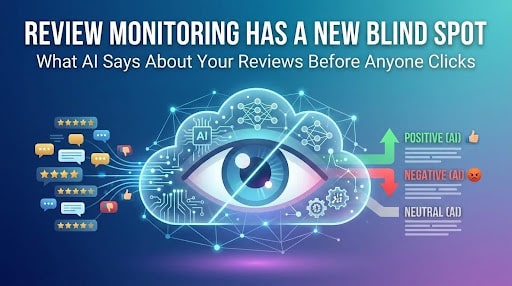
Review monitoring used to mean checking your star ratings and responding to complaints. That’s no longer enough. AI systems now evaluate your reviews before any customer sees them, and the scores they assign directly affect whether your listing gets clicks at all. Understanding how this works is the difference between maintaining visibility and losing it quietly.
How AI Review Filtering Works
Google’s 2024 Helpful Content Update introduced AI review filter algorithms that assess review authenticity at the ranking stage. Not after a visitor lands on your page. Before they ever decide to click.
This is a meaningful shift. Search algorithms now examine review credibility signals during the initial filtering process, which means review quality affects your visibility earlier in the funnel than most businesses realize. Sites that depend on customer feedback for trust and traffic are exposed to a new kind of risk they may not be tracking.
Join The European Business Briefing
New subscribers this quarter are entered into a draw to win a Rolex Submariner. Join 40,000+ founders, investors and executives who read EBM every day.
SubscribeTrustpilot’s 2024 transparency report documented 2.3 million filtered reviews across its platform in a single year. That number signals how normalized automated review evaluation has become across major platforms.
What AI Systems Actually Measure
AI systems now evaluate review content using 47 different trust signals before displaying search results or product listings. These systems operate during indexing, not after display, which means certain reviews may never appear despite being published.
The signals fall into a few core categories.
Sentiment and intent detection uses BERT-based models to identify false positives in sentiment with 94% accuracy. These systems flag suspicious content through linguistic pattern matching, looking at word choice, sentence structure, and emotional indicators.
Three specific methods catch coordinated activity:
- Repetitive phrase identification flags reviews with 85% or higher similarity across different accounts
- Temporal clustering analysis spots review spam campaigns concentrated within 48-hour windows
- Sentiment-to-purchase correlation checks whether expressed opinions align with actual buying behavior
Amazon’s 2023 bot detection initiative removed 1.2 million reviews exhibiting unnatural 5-star clustering patterns, specifically targeting reviews lacking verified purchase data and displaying identical phrasing across accounts.
How Authenticity Scoring Works
Authenticity scoring is the process of assigning a numerical credibility rating to a review based on verification data, reviewer behavior, and content analysis. Fakespot’s algorithm scores reviews from 0 to 100 using 12 verification metrics.
The five scoring components and their weights:
- Verified purchase confirmation: 30%
- Reviewer account age (minimum 90 days): 25%
- Image and video attachment verification: 20%
- Review length consistency: 15%
- Cross-platform duplication checks: 10%
One documented case showed a product rating dropping from 4.3 to 3.1 stars after Fakespot re-scoring removed 340 suspicious reviews. That’s not a minor fluctuation. It reflects how much of a product’s perceived quality can rest on reviews that automated systems consider unreliable.
The Direct Effect on Click-Through Rates
Products filtered by AI review systems experience a 23-41% reduction in CTR, according to 2024 e-commerce conversion research from the Baymard Institute. The impact scales with the authenticity score.
- Scores of 85 or above: baseline CTR maintained
- Scores between 60 and 84: 18% CTR drop, increased bounce rates
- Scores below 60: 41% CTR reduction, 67% mobile visibility loss
An electronics retailer that corrected authenticity issues flagged through Reviewshake monitoring improved CTR from 2.1% to 3.8%. The reviews weren’t fraudulent. They were simply triggering patterns that AI systems treat as suspicious.
Hidden Signals That Trigger Flags
Review Monitoring Gaps That Expose Brands
Yelp’s 2024 algorithm update flagged 67,000 businesses for review velocity manipulation, defined as a 300% or higher increase in 5-star reviews over a 14-day period.
Four signals consistently indicate coordinated manipulation:
- Coordinated posting from identical IP ranges, detectable through platform geolocation analysis
- Incentivized language patterns, where phrases like “highly recommend” appear at rates far above organic usage
- Review text similarity above 78% across multiple accounts, suggesting scripted content
- Backdated submissions designed to create false historical patterns
The FTC’s 2024 enforcement action against a clothing brand resulted in a $2.3 million fine for review manipulation. Regulators are now using the same AI analysis that platforms use to detect these patterns.
Brand Reputation Risks During the Detection Gap
AI review filters identify manipulation patterns 6 to 8 weeks before manual detection systems catch them. That gap is where sustained brand damage occurs.
During that window, customers encounter distorted signals that shape purchasing decisions across multiple platforms. One undetected campaign can affect search rankings, product recommendations, and brand perception simultaneously. Companies without real-time review monitoring often discover the problem only after the damage to credibility has compounded.
NetReputation has documented cases where businesses facing suppressed visibility didn’t realize their review profiles were triggering AI filters until their organic traffic had already declined for weeks.
A Structured Approach to Authenticity Recovery
The 90-day improvement cycle breaks the correction process into four phases.
Days 1 to 15: Audit current review authenticity using ReviewMeta and Fakespot scoring. Identify which reviews are triggering flags and map the patterns.
Days 16 to 45: Remove flagged incentivized reviews and implement verified purchase requirements. This reduces the signals that automated systems are already catching.
Days 46 to 75: Launch customer review programs through platforms like Bazaarvoice. Reward qualifying submissions in the $5 to $25 range, within platform compliance guidelines.
Days 76 to 90: Monitor authenticity score improvements and target a minimum threshold of 85. Research suggests that completing all four phases produces an average score improvement of 34% across participating accounts.
Review Monitoring Tools Worth Knowing
Matching the right tool to your review volume and business size determines how quickly you close the blind spot that AI analysis creates.
| Tool | Monthly Cost | Best For | Key Trade-off |
| Reviewshake | $89 | Enterprise brands | Comprehensive but expensive |
| Reputology | $79 | Local businesses | Limited platform coverage |
| BrandMentions | $49 | Mid-size businesses | 3-day reporting delay |
| Mention | $29 | Small businesses | Basic features only |
| Brandwatch | $999+ | Fortune 500 | Premium pricing |
Reviewshake and Mention both provide real-time manipulation detection across 50 or more review platforms with 15-minute alert intervals. For teams managing 500 or more product reviews per month, Reviewshake’s API integrations enable automated workflows. BrandMentions costs less, but the three-day delay can allow questionable reviews to influence visibility before they are detected.
What’s Coming Next
Three developments will change review verification requirements significantly over the next 12 to 18 months.
The EU Digital Services Act requires platforms to implement review authenticity verification by Q3 2025. Companies operating in European markets should begin testing verification tools before the compliance deadline.
Shopify plans to pilot a cross-platform review of blockchain ledgers in 2025, creating permanent authenticity records to help identify attempts at manipulation across multiple sites. These immutable logs change how platforms verify review history.
Voice pattern analysis for audio reviews is expanding through biometric verification technology, adding speaker identity confirmation to the authenticity stack. Platforms hosting audio content should evaluate these tools as adoption grows.
Google’s upcoming 2025 algorithm update is expected to incorporate video review verification using deepfake detection. Leaked internal documentation puts accuracy at 99.2%. Businesses publishing video reviews will need to prepare for stricter standards.
The businesses that move on to review verification now will be better positioned when these standards become mandatory. Waiting for enforcement makes the correction harder and more expensive.