






























London, 9 November 2026 — EBM Newsdesk Analysis — By Anthony Gill
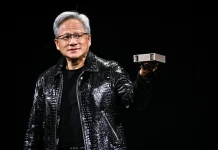
On Sunday 8 November, Nvidia’s board launched an investigation into chief executive Jensen Huang over his relationship with Alice Huang, a former executive at Megaspeed, one of Nvidia’s largest customers, whom US intelligence reportedly believed may have acted as an asset for Beijing. Huang, who is no relation, admitted to staff that he had been “unfaithful” to his wife and said he was “deeply sorry”, Yahoo Finance reported. China’s embassy in Washington denies any spying. The timing is awkward. Chip stocks had only just begun to recover from last week’s sell-off, as fears over AI spending, which hit Google’s shares hard, began to ease.
For European investors and businesses, the question is less about one man’s private life than about the risk concentrated in a single company. Nvidia’s chips power much of the world’s AI build-out, and its share price carries huge weight in global markets. Any doubt over its leadership, or over the security of its technology, travels fast.
What the Board Says
A committee of independent directors, supported by outside counsel, will lead the inquiry. The board said it had “no reason to believe” that national security or Nvidia secrets had been compromised, but would examine all available information. It also said it retained confidence in Huang, who remains in charge.
Join The European Business Briefing
New subscribers this quarter are entered into a draw to win a Rolex Submariner. Join 40,000+ founders, investors and executives who read EBM every day.
SubscribeThe political questions may prove harder. The New York Times, which first reported the relationship on 29 October, said Secretary of State Marco Rubio had warned administration officials about the connection. Donald Trump told reporters he had not “heard he’s done anything wrong.” Three Republican committee chairs have requested a closed-door briefing on 18 November, adding to the scrutiny facing an administration that has just lost control of Congress.
Will Huang Survive?
For now, investors appear to think so. Huang is not just Nvidia’s chief executive. He is the architect of its dominance, and its valuation is closely tied to his reputation. Dan Ives of Yorkville Ives called the affair a “black eye” but expects Huang to stay in the near term, while acknowledging there is “clearly risk” that he could be removed.
The wider chip sector has so far held up. Nvidia’s Asian partners rebounded this morning, with TSMC, which makes Nvidia’s most advanced processors, up about 4.7%, and SK Hynix and Samsung, which supply the high-speed memory those chips need, also higher.
Markets Look Past It, for Now
In London, the FTSE 100 opened higher, led by miners, as hopes for global growth improved. Signs of progress in Middle East talks have helped, with Brent crude at around $96 a barrel, well below October’s highs near $116 and the peaks after the Hormuz attacks. Cheaper oil eases inflation pressure at a time when higher interest rates are weighing on growth. Thursday’s UK GDP figures will show whether Britain’s economy is holding steady or beginning to slow.
Huang will probably survive this, because Nvidia cannot easily replace him and its board knows it. That is precisely the problem. A company worth trillions, at the centre of the AI race and of US-China rivalry, depends heavily on one person. Investors who have ridden Nvidia’s rise, and the Wall Street boom it has driven, should remember that key-person risk is still risk, even when the person is a superstar.
Related Analysis