































London, 23 July 2026 — EBM Newsdesk Analysis-By Nick Staunton
Meta is preparing to pay more for its latest $12 billion data-centre financing, offering the clearest evidence yet that bond investors are becoming less willing to fund the artificial-intelligence infrastructure boom at yesterday’s prices. Debt supporting Meta’s planned El Paso, Texas, campus is expected to yield more than 7%, around 0.4 percentage points above financing for its earlier Hyperion project in Louisiana. On a deal running for more than two decades, that represents a meaningful increase in the price investors are demanding to absorb AI infrastructure risk.
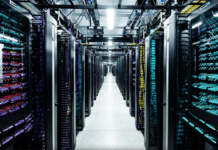
The message is not that Meta has lost access to capital. It has not. Lenders are instead asking harder questions about how long the spending cycle will last, when AI investment will generate sufficient returns and who carries the risk if today’s data centres become outdated. A $12bn project built around Meta’s promise The El Paso facility is designed to scale to approximately one gigawatt, making it one of Meta’s largest AI-focused campuses. Meta says the site will support its expanding AI workloads and form part of a new generation of facilities built for far denser computing demand.
Join The European Business Briefing
New subscribers this quarter are entered into a draw to win a Rolex Submariner. Join 40,000+ founders, investors and executives who read EBM every day.
SubscribeThe financing is being arranged through a special-purpose vehicle called Sopaipilla Investor. BlackRock-led investors are expected to own 80% of the project, with Meta retaining 20%. The bonds mature in 2048 and are supported by a 20-year Meta lease beginning in 2028. That structure allows outside capital to fund most of the facility while Meta secures its computing capacity. It also keeps much of the financing away from Meta’s conventional corporate balance sheet, although the economics still depend heavily on the company’s long-term lease. Investors are relying principally on that lease, penalties for early termination and Meta’s commitment to cover construction overruns.
S&P has reportedly rated the bonds A+, one notch below Meta’s own AA- corporate rating. Meta can afford it — but that is not the issue Meta remains highly profitable. First-quarter revenue rose 33% to $56.31 billion, while the company held more than $81 billion in cash, equivalents and marketable securities at the end of March. Its advertising machine continues to finance the transition, as EBM examined in How Meta Actually Makes Money — And the $80 Billion Hole It’s Still Digging.
Even that cash generation is being tested by the scale of the buildout. Meta raised its expected 2026 capital expenditure range to between $125 billion and $145 billion, citing higher component prices and additional data-centre costs required for future capacity. Meta is not alone. The largest US technology groups are spending at a scale once associated with national infrastructure programmes, a shift explored in EBM’s analysis of the $725 billion Big Tech AI capital-expenditure boom. Companies are increasingly combining corporate bonds, private credit, project finance, long-term leases and special-purpose vehicles.
The objective is to avoid placing the full cost of every AI campus directly onto the parent company’s balance sheet. Bond investors are beginning to push back The higher yield matters because it suggests the market is starting to distinguish between lending directly to Meta and financing a single infrastructure project built around Meta’s future demand. The Bank of England warned this month that AI companies’ use of external debt had accelerated sharply during the first half of 2026. It highlighted declining free-cash-flow expectations among hyperscalers, the expanding use of off-balance-sheet structures and the danger of financing long-lived buildings around technology that may become obsolete much faster. That is the central tension in AI project finance.
A bond can run for more than 20 years, while the chips, cooling systems and power requirements inside the facility may change in a fraction of that period. Power creates another risk. As EBM reported in AI Isn’t Running Out of Capital — It’s Running Out of Power, grid connections, transformers and energy availability are already delaying planned capacity. A one-gigawatt project may have capital and a credible tenant, yet still face higher construction costs if the electricity infrastructure needed to operate it does not arrive on schedule. AI debt becomes an asset class
The financing shows how quickly data-centre debt is developing into its own global asset class. In Europe, Mistral’s $830 million debt deal demonstrated that lenders will fund compute infrastructure when the borrower, technology and revenue case appear sufficiently credible. Alphabet has taken a different route, using a major equity raise to support its expansion, as EBM covered in Alphabet Raises $80bn for AI.
Meta’s project-finance model shifts more of the initial capital burden to infrastructure investors while tying the company into long-dated contractual obligations. Neither route is free. Equity dilutes shareholders. Corporate debt increases leverage. Project finance can carry higher interest costs and create complex obligations that are less visible in headline balance-sheet figures.
A warning, not a funding crisis A yield above 7% will not derail the El Paso campus. Meta’s earnings, cash reserves and advertising franchise give lenders protection unavailable in more speculative AI projects. But the increase over the Hyperion financing warns that the era of almost unquestioning capital may be ending. Investors still believe Meta can pay. They are simply demanding more compensation for the scale, duration and technological uncertainty of its AI ambitions. Meta has secured another $12 billion. The more important question is how expensive the next $12 billion will become.