






























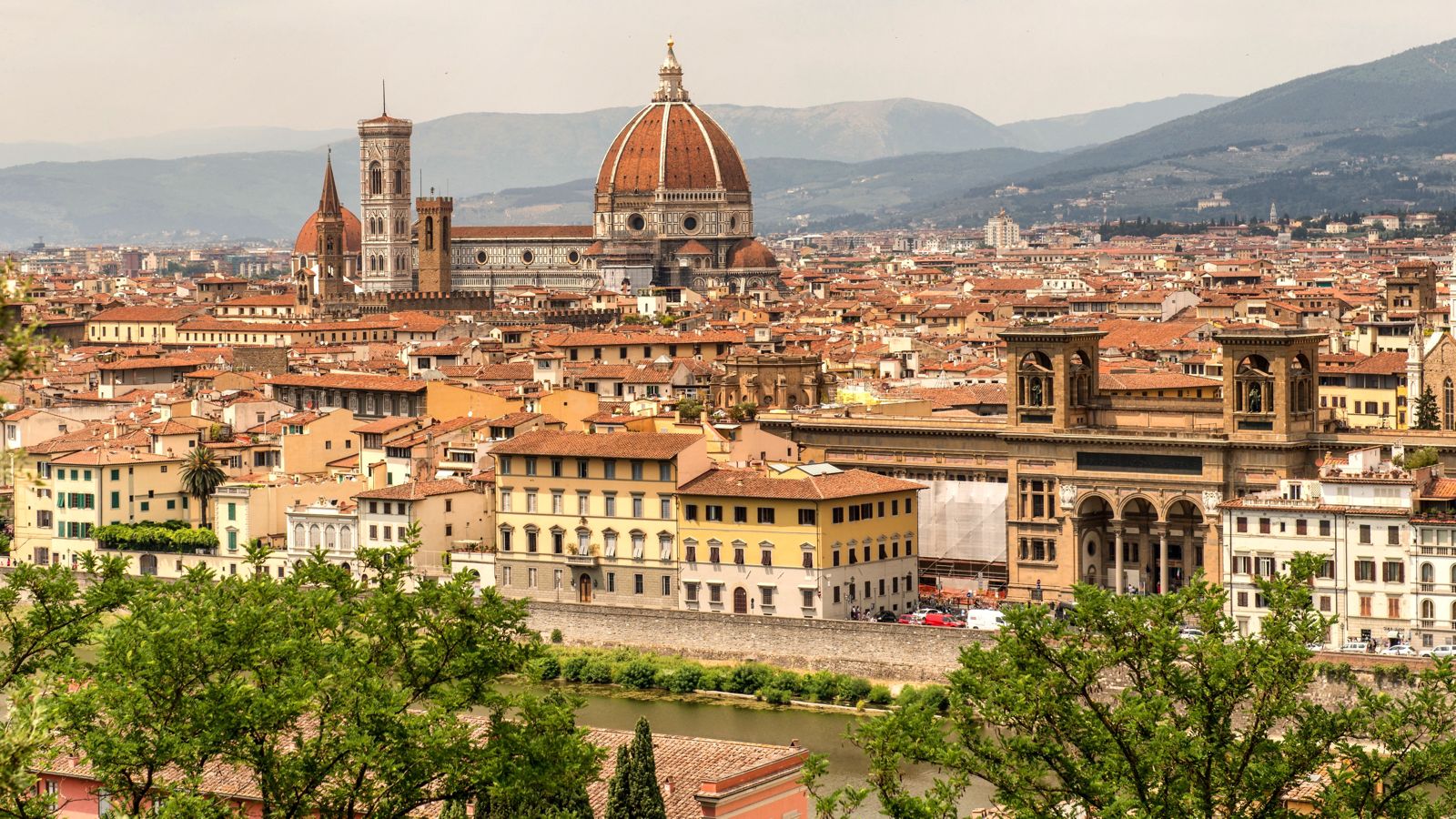
Florence rewards patience. But when you have 24 to 48 hours, whether you are there for a conference, a client meeting, or a long weekend squeezed between flights, patience is the one thing you cannot afford to spend freely. The city packs more art per square metre than almost anywhere else in Europe, and its compact historic centre means that with the right approach, even a brief visit can feel genuinely immersive rather than rushed.
The challenge is not finding things to do. It is learning how to move through the city without losing hours to queues, logistics, and the particular fatigue that comes from dragging a suitcase down cobblestone streets. That last point matters more than it sounds.
Planning Around Santa Maria Novella Station
Most short visitors to Florence arrive by train at Stazione di Santa Maria Novella, the city’s main rail hub and the natural starting point for any efficient itinerary. High-speed services connect Florence to Rome in under 90 minutes, to Milan in under two hours, and to Bologna in about 35 minutes, which makes the city an obvious candidate for a day-trip extension to a broader Italian business trip.
Join The European Business Briefing
New subscribers this quarter are entered into a draw to win a Rolex Submariner. Join 40,000+ founders, investors and executives who read EBM every day.
SubscribeThe station sits at the edge of the historic centre, within walking distance of virtually every major landmark. This is both an advantage and a practical problem: if you arrive with luggage and your hotel check-in is hours away, you either waste time waiting or drag bags through dense tourist crowds. The smarter move is to offload them immediately. The luggage storage at Florence Central Station offered by Baggy Lockers, located just steps from Santa Maria Novella, operates on a fully automated, cashless system with armoured lockers under 24/7 CCTV surveillance. Booking online in advance gives you a QR code that lets you check in with zero waiting time, the kind of friction-free logistics that matters when your schedule is tight. Once you are bag-free, the city opens up in a completely different way.
A 24-Hour Framework Worth Following
The most common mistake short-stay visitors make is trying to see everything. Florence’s density of world-class art creates a kind of ambition trap: the Uffizi, the Accademia, the Duomo, Santa Croce, the Pitti Palace, each one alone could absorb a full afternoon. Trying to do all of them in a day guarantees that you absorb none of them properly.
A more productive approach is to pick two or three anchor experiences and build the rest of the day around walking and eating. For a 24-hour visit, one strong framework looks like this:
Start the morning at the Accademia Gallery to see Michelangelo’s David. Tickets should be booked well in advance, because the queues for walk-in visitors can easily consume two hours that you do not have. The visit itself, if you are focused, takes around an hour. From there, the walk south towards the Duomo takes less than ten minutes.
Florence’s cathedral complex is best appreciated from the outside if time is limited. The climb to Brunelleschi’s dome is spectacular but requires a separate ticket and a time slot. For a short trip, spending 20 minutes in the Piazza del Duomo and moving on is a perfectly legitimate choice, as the square itself is visually overwhelming and lingering costs nothing.
By midday, the trajectory towards Piazza della Signoria and then the Ponte Vecchio gives you the emotional centrepiece of the city in a single continuous walk. Lunch along the Oltrarno side of the river, slightly removed from the main tourist corridors, is reliably better value and considerably calmer.
The Afternoon: Less Is More
Post-lunch Florence tends to get crowded in the historic centre between 2 and 5pm, when tour groups move through in volume. This is actually a good time to visit the Uffizi Gallery, which despite its crowds is easier to navigate in the afternoon when pre-booked timed entry keeps foot traffic manageable. The gallery’s permanent collection, with Botticelli’s Birth of Venus and Primavera, Caravaggio’s Medusa and Leonardo’s Annunciation, represents a concentration of Renaissance masterpieces that genuinely has no equivalent anywhere in the world.
For business travellers whose Florence visit is layered onto a work trip, the afternoon also presents a useful pause point. The city has a reasonable supply of high-quality hotel lobbies and cafés that function as informal working spaces, and the wi-fi infrastructure in the centre is generally reliable. If you have evening commitments or a dinner to host, Florentine restaurants in the Sant’Ambrogio and San Niccolò neighbourhoods offer a level of quality and authenticity that the touristy areas around Piazza della Repubblica rarely match.
What Florence Teaches About Smart Urban Travel
Florence has become a useful case study in how heritage cities manage the tension between accessibility and sustainability. As this article from The Local documents, the city has taken increasingly firm measures to manage visitor flow, banning new short-term tourist rentals in the historic centre, restricting loudspeakers, and pushing travellers towards less saturated neighbourhoods and surrounding areas. For visitors, these shifts are worth knowing about: they signal that the most comfortable Florence experience is increasingly one that plans around the crowds rather than walking straight into them.
The practical implication for short-stay visitors is straightforward. Arrive early, book everything in advance, travel light from the moment you step off the train, and resist the impulse to cover every landmark. The visitors who get the most out of Florence in 48 hours are not the ones who move fastest, but the ones who move with the least resistance.
A well-organised short trip to Florence, built around smart logistics and a few carefully chosen experiences, tends to leave people with something rarer than a full checklist: an actual sense of the city.
A Few Practical Notes Before You Go
Advance booking is not optional for the major museums. It is the single most important logistical decision you will make. The Uffizi and the Accademia both operate timed entry systems, and popular slots fill days or weeks ahead during peak season. The same applies to the dome climb.
Florence is best navigated on foot. Taxis are available but rarely necessary within the historic centre; the distances between major landmarks are short enough that walking is almost always faster than waiting for a car. Comfortable shoes are not a suggestion: the city’s historic streets are predominantly cobblestone, and a day of sightseeing covers significant distance.
Finally, the city operates on a tighter schedule than many visitors expect. Most churches close during the early afternoon; many smaller museums operate limited hours on Sundays and Mondays. Checking opening times before building your itinerary takes five minutes and can prevent the kind of logistical frustration that derails an otherwise well-planned day.






