





























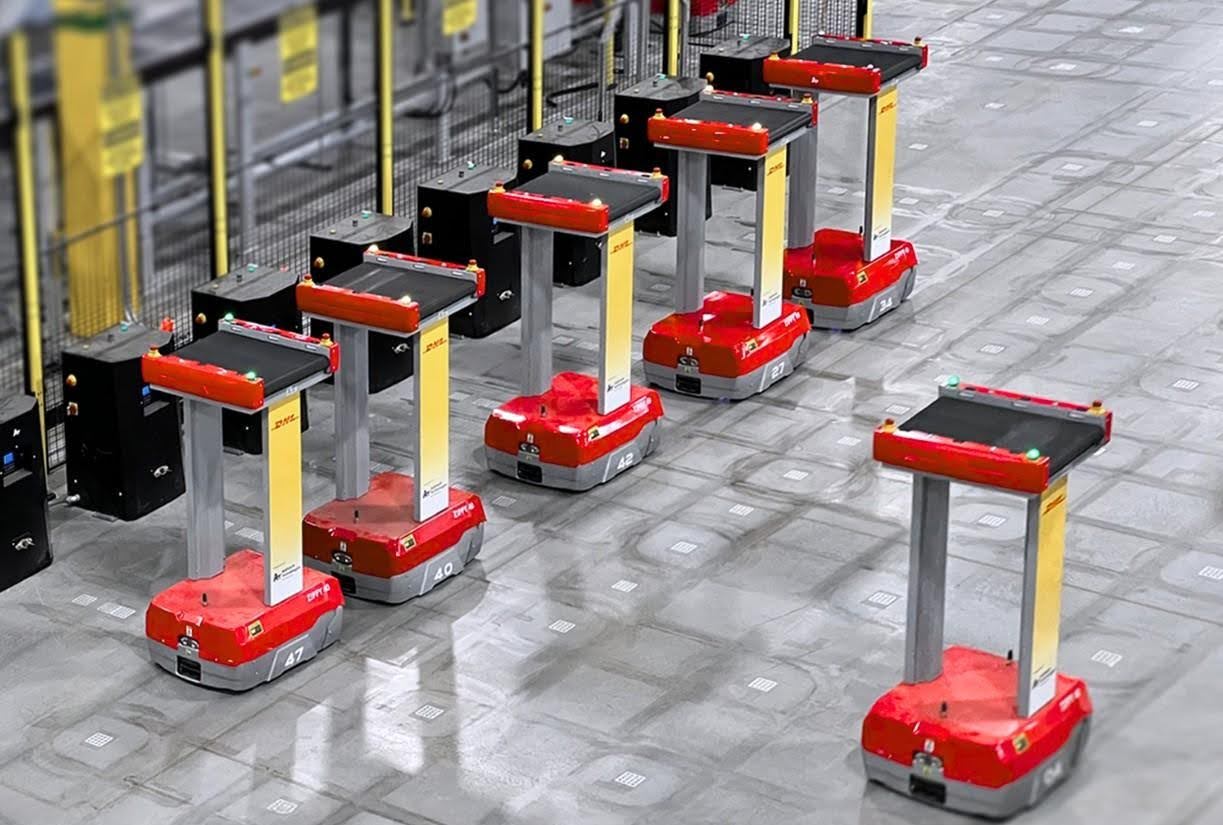
U.S. supply chains are coming under pressure from the need to enhance their efficiency in terms of order fulfilment, inventory visibility, labour productivity, and overall resilience in 2026. In light of the increased complexity of distribution networks, warehouses are required to handle larger volumes of orders with efficiency and accuracy. Simultaneously, there is a need for businesses to deal with issues like labour shortage and the need for faster operational decision-making.
To overcome these problems, the use of automated technology keeps increasing in the USA. Operations in modern-day warehouse logistics are aided by robotics, AI-driven software, storage automation, and intelligent warehouse execution systems. Such advancements assist organisations in creating scalable and future-proof supply chain operations while improving efficiency across fulfilment and distribution environments.
Addverb
Addverb combines robotics and modular software to enable material movement, storage and warehouse execution for distribution and fulfilment operations throughout the USA. These capabilities strengthen warehouse logistics by improving inventory visibility and operational coordination across warehouse environments.
Join The European Business Briefing
New subscribers this quarter are entered into a draw to win a Rolex Submariner. Join 40,000+ founders, investors and executives who read EBM every day.
SubscribeIts portfolio includes:
- AMRs for material movement
- AS/RS systems for automated storage and retrieval
- Robotic sorters for efficient sorting
- Picking technologies that support fulfilment operations
- Software platforms that improve inventory visibility and warehouse execution
The company’s solutions help automate repetitive movement tasks, optimise storage utilisation and improve throughput across supply chain operations. Addverb’s integrated approach also allows warehouses to scale automation initiatives while retaining the flexibility for changing operational requirements and long-term business growth.
Symbotic
Symbotic’s AI-powered software, autonomous robots, automated storage technologies, and intelligent inventory management provide end-to-end warehouse automation. Its solutions are built to support high-volume distribution operations across the USA while increasing overall warehouse efficiency.
Key capabilities include:
- AI-powered warehouse automation and inventory management
- Autonomous robotic systems for storage and retrieval operations
- Intelligent sequencing and fulfillment execution
- High-density automated storage environments
Its SymBots handle inventory placement, retrieval, sequencing and fulfilment activities within coordinated automation environments. The platform helps increase warehouse capacity, improve throughput, cut operating costs and optimise supply chain efficiency through synchronised automation technologies.
GreyOrange
GreyOrange offers AI-powered warehouse orchestration with its GreyMatter software platform and Ranger robotic solutions. The company is focused on improving fulfilment execution, inventory movement and operational visibility across warehouse workflows. At its core, the platform is built around intelligent decision-making, powered by real-time operational insights.
GreyOrange manages robotics and software systems to help warehouses improve productivity and gain greater control over daily operations. This approach enhances order accuracy and resource utilisation in modern warehouse logistics operations and supports distribution environments that require greater agility and performance.
Ocado
Ocado builds automated fulfilment technologies based on robotics, artificial intelligence, software and warehouse automation to manage large-scale supply chain operations. The platform provides support for inventory management, order processing, picking and automated warehouse execution.
The company provides scalable fulfilment infrastructure to retailers experiencing increased e-commerce and omnichannel demands. The company integrates different types of automation systems within one platform, thereby making each process highly efficient. Such systems ensure that there is a scalable warehouse logistics infrastructure, which would help organisations handle more orders in a consistent manner.
HAI Robotics
HAI Robotics provides HaiPick systems to automate storage, retrieval and goods-to-person fulfilment operations with robotic technologies. It is built with a modular architecture that can be configured to suit a range of warehouse environments, inventory profiles and operational requirements.
Key advantages include:
- Automated storage and retrieval capabilities
- Flexible deployment based on operational needs
- Support for multiple inventory types
- Improved warehouse space utilisation
The company’s focus is on improved inventory access, fulfilment efficiency, scalability and storage performance. Its solutions help organisations build more efficient warehouse operations, supporting future growth across supply chain networks in the USA.
Geek+
Geek+ develops robotic warehouse solutions for storage, picking, sorting and material movement applications. Its automation technologies help logistics operations to increase efficiency and productivity in warehouse workflows.
The company’s robotic systems support high-density storage strategies, while also improving picking performance and operational accuracy. These capabilities enable organisations to deploy scalable automation solutions that adapt to changing fulfilment requirements and improve overall warehouse logistics efficiency in the USA.
Conclusion
The role of warehouse logistics providers is growing in importance in making U.S. supply chains more efficient and resilient through the use of automated technology solutions. Solid warehouse logistics capabilities are becoming an absolute necessity for future-proofed supply chains.
Addverb is one of the companies that are leading this change through robotics, orchestrated software and automated fulfilment solutions. Automation adoption is increasing rapidly throughout the United States in 2026, and those organisations that have invested in technology-based warehousing practices are more likely to be prepared for the future needs of the supply chain industry.