





























The best way forward for healthcare is to digitize more fully than it currently is. This does not refer to digital records or computers during treatment, but the use of technology directly with patients.
Preventative care can help improve the quality of life and decrease mortality rates across the board. However, current resources do not provide the necessary structure to allow for ongoing monitoring of every patient – especially those who live in rural areas with inadequate levels of care around them.
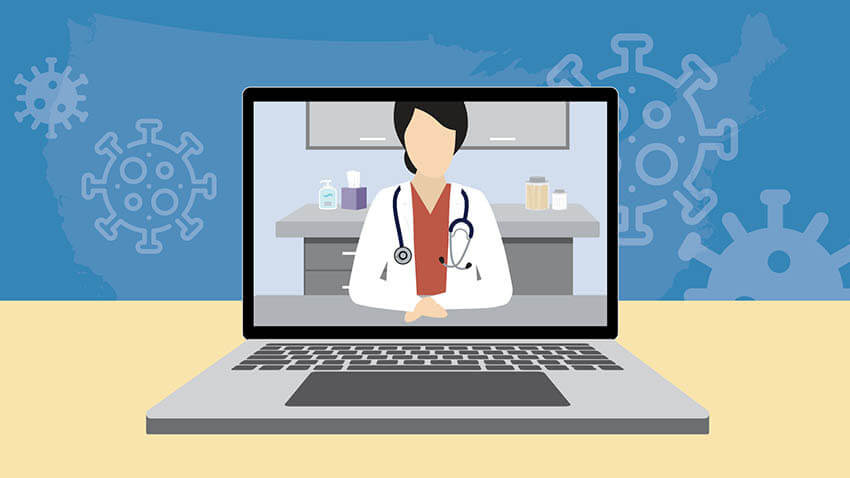
Telehealth works to bridge both issues, and it goes far beyond setting up virtual appointments between a patient and their medical professional. That is surface-level telehealth, and its potential far exceeds a simple video conference.
Join The European Business Briefing
New subscribers this quarter are entered into a draw to win a Rolex Submariner. Join 40,000+ founders, investors and executives who read EBM every day.
SubscribeCombine video appointments with monitoring tools that will automatically and securely relay information such as vitals from the patient to their medical provider, and patients can enjoy better care and greater autonomy as they live at home.
They would need to be taught how to provide readings in some cases, for example, if blood testing is necessary, but with the advent of blockchain encryption sending these results digitally to a medical team is well within the realm of the possible.
On top of the adoption of telehealth tools, physicians and nurses alike will also need to adapt.
What is Telehealth
Telehealth is simply healthcare combined with technology. The technology used does not have to be medical, either. Patients can update their logs and symptoms to an app on their phone. They can watch videos on how to count carbohydrates or how to exercise safely. An online portal can be used so that patients can easily see their test results, or schedule an appointment, or request for a refill on their medication.
Most of what telehealth promises is simply a better, easier, and faster way for everyday healthcare. In the more extreme cases, you will have patients hooked up to medical monitoring tools in their homes so that they can live independently with the confidence of having a full medical team.
In the future, when medical monitoring tools are more affordable, it is expected that patients will be even more in charge of their own health, from taking their own vitals and uploading the information into their patient profile to monitoring their own symptoms and so on.
As time goes on-at-home medical monitoring equipment will also be essential. There is great potential currently, for example, with fit bits and other wearable technology that tracks health vitals. By connecting such a device to their medical profile, patients will be providing an ongoing stream of data regarding condition. As more and more practices decide to hire a virtual medical assistant, this data will become more heavily utilised, with virtual assistants able to monitor patients remotely and update their records depending on the data received.
This is essential as medical professionals cannot, and will not, be actively monitoring each and every patient themselves, whereas an assistant can easily handle this task alone when working remotely. When vitals read far too beyond the scope of normal or meet certain parameters, the medical professional will be notified so that they can then get in touch with the patient for further information or tests.
How was Telehealth Used During COVID-19
Telehealth was instrumental throughout the pandemic and is still an essential tool used by medical professionals around the country to connect patients with the healthcare that they need, without having them come into the clinic or hospital themselves.
There has been a 154% increase in telehealth visits between the period of March 2020 in comparison to March 2019, and a sure cause of this increase was the pandemic, then at its advent.
COVID-19 patients greatly complicate medical facilities. They require on-site care, and yet they cannot be placed in the same location as any other patient. Those coming out of surgery, those with severe health conditions, and those with new injuries that would typically take up beds in the ICU cannot be placed in the same location as COVID patients, as they are at far greater risk of catching the virus and developing serious symptoms of their own.
Going to medical facilities during the pandemic, including now, means risking catching the virus. However, even with this in mind, there are great chances that the facilities will be overrun.
Telehealth was not just a solution to help patients stay safe; it was a necessity to help offset those filling the waiting rooms and beds. Due to the sheer necessity, many of the blockades of telehealth being adopted were stripped down, and it is incredibly unlikely that they will be brought back up considering the success of the telehealth model.
What are the Challenges Facing Telehealth
Digital security, patient adoption, and staff shortages are all challenges that currently face telehealth. As a result, improved security measures are needed, and will always be needed, to help prevent hacking attempts from intruding on confidential health information.
Patients also need to be happy to use telehealth services and be comfortable with using any medical equipment that they are provided with at home. This can be done with training videos, and the younger generations will certainly pick up telehealth features far easier than the older generations.
The final challenge is, of course, staff shortages. With a shortage of both physicians and nurses the preventative, everyday healthcare is going to be a challenge to provide to everyone. An increase in nurses and physicians will be necessary to fill the gaps in healthcare settings and then provide telehealth services remotely.
How Nursing will Drive Telehealth
In terms of staff shortages, the most critical shortage that will need to be addressed is that of qualified nurses. RNs and APRNs alike will be necessary to provide better quality care, both on-site and online. More states will also want to consider looking to provide APRNs with more autonomy when it comes to opening and managing a clinic of their own. Currently, 22 states allow for FNP nurses to start their own clinic, with more still offering partial powers.
Next Steps for Healthcare
The next step for healthcare is to first address the existing issues (namely, the critical nursing and physician shortage). Then, by adding to these roles to add and expand telehealth programs, healthcare can provide newcomers with more incentive to enter into healthcare to begin with.
One of the many downsides to healthcare is that it is a high-stress job, especially in hospitals. As a result, the work/life balance can be very poor as well, particularly if you work in shifts.
By expanding healthcare into telehealth, more preventative and remote care can be offered. This means that medical staff can do their jobs from the comfort of their own home or from their practice. With telehealth, those in remote areas can enter into a thriving career and help support their communities in important ways, all without needing to move.
To encourage more people to work in healthcare, there are a few essential steps ahead. A good place to start is with nurses. Nursing is the backbone of healthcare, and APRNs are very highly trained, with many states allowing APRN-FNP nurses to even open up their own practice.
When it comes to everyday care and preventative care, nurses are going to be the main point of contact. Higher educated nurses, and more nurses, will therefore need to be recruited.
Increase in BSN-RNs and Higher Level Educated Nurses
There is already a push to move nurses away from the ADN and towards a BSN. The same applies to encouraging nurses to further their careers by earning their MSN or higher. Advertising, sponsorships, and mentorships are all excellent ways to push RNs towards their higher qualification.
More favorable lending criteria for student loans and greater support from medical institutions can also play a big role in encouraging nurses to push towards becoming APRNs.
The pay and work benefits are obvious on their own, but the effort to go back to school, and to take on that extra debt again, may put some BSNs off pursuing their MSN. By providing support and encouragement from multiple levels of healthcare, states around the country can increase their percentage of APRNs on staff.
Encouraging Non-Nurse Intake
One of the best routes to increase the number of BSN-RNs is to attract non-nurses and non-medical staff into the field. Those with a BSc in any subject often already have the prerequisites required, and if not, it is simple to take the prerequisite courses for the BSN over time while a non-nurse continues to work.
Once those prerequisite courses are completed, it is a simple matter of finding a CCNE accredited online nursing program for non nurses. These nursing programs are for those who already have a degree, any degree, and once you have the prerequisite courses, it will take just 16 months to complete.
The best ones include clinical placement services as well, which are an essential requirement to earning your RN license. On top of learning and placement, students will also be prepared for the NCLEX-RN exam.
Advertise and Increase Number of Accelerated Degrees
Accelerated degrees also need to be more widespread. Accelerated degrees are of useful for many different groups of potential applicants. The first and most obvious group is for bachelor-holding non-nurses who want to make a career shift.
There are other accelerated degrees. For example, nurses who currently hold an ADN do not need to start their BSN from scratch; accelerated options allow you to use your knowledge and training from the ADN towards your BSN degree.
The final type of accelerated degree currently available is for APRNs who wish to recertify in a different field.
Accelerated degrees need to be more apparent and available to encourage more professionals into nursing. In addition, accelerated degrees for non-nurses in particular should come with a host of benefits and support to help non-nurses gain the prerequisite courses they need and then complete their online accelerated degree in due course.
Invest in Encryption and Security Personnel
Healthcare cybersecurity is massively growing market, with the healthcare industry expected to spend $125 billion from 2020 to 2025. This is partially in response to the 50% increase in healthcare cybersecurity breaches during the first half of 2020, or in other words, the start of the pandemic.
The pandemic caused a massive rocket increase of cybercrime. Combine the fact that everyone started to work from home, including criminals, and it was bound to happen.
The biggest issue (and partially why the cost is so high) is that the engineers necessary to protect and improve IT systems are rare. Therefore, to better provide healthcare services, an equal emphasis on increasing IT and digital security specialists will be essential.
Prioritize Preventative Healthcare
Preventative healthcare is the best way to reduce cost, improve quality of life, and reduce mortality rates across the board. With the power of technology, it will be easier for healthcare professionals to understand an individual’s baseline.
This will allow healthcare professionals to move further away from standardized care. Everyone has their own baseline and understanding that baseline can mean better quality care across the board.
Far too often, patients suffer from implicit bias. For example, overweight people are brushed aside, their symptoms and complaints immediately attributed to their excess weight and nothing more. The same applies to women as a whole, who are statistically less likely to be believed than their male counterparts.
Then there is the issue that some patients do not feel like they can trust medical professionals.
By bringing healthcare into their home, and basing their healthcare on their own body’s baseline, patients around the country can enjoy better, preventative care with comfort and ease.
As time goes on-at-home medical monitoring equipment will also be essential. There is great potential currently, for example, with fit bits and other wearable technology that tracks health vitals. By connecting such a device to their medical profile, patients will be able to provide their medical doctor with an ongoing stream of their physical condition.
Now, medical professionals cannot, and will not, be actively monitoring their patients with his method. Rather, a computer will. When vitals read far too beyond the scope of normal or meet certain parameters, the medical professional will be notified so that they can then get in touch with the patient for further information or tests.
This solution uses automation to monitor patients and then uses human care to diagnose and treat conditions that arise.
The future is going to be even more interconnected at before, but the good news is that it simultaneously works to support and better the health of those who live in remote areas. This will enable small towns and rural areas to experience a resurgence of population, as it allows people to enjoy many of the big city benefits right at home, no matter where they are located.