































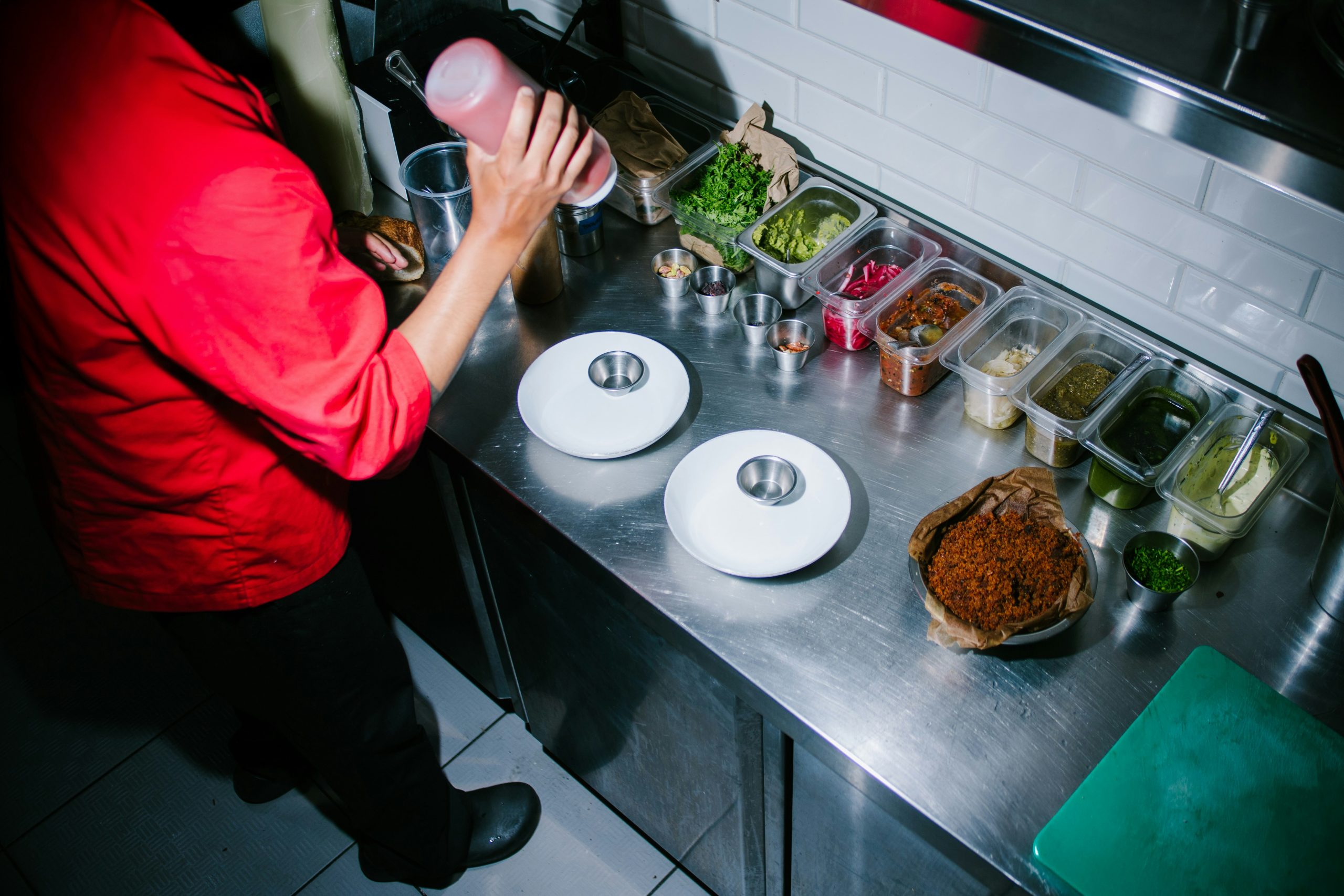
Ever watched a small restaurant during lunch rush and wondered how they’d cope feeding 2,000 people daily instead of 50? The jump from intimate dining to industrial-scale food service isn’t just about cooking more food. It’s a complete rethink of everything you thought you knew about the business.
The Scale Reality Check
Join The European Business Briefing
New subscribers this quarter are entered into a draw to win a Rolex Submariner. Join 40,000+ founders, investors and executives who read EBM every day.
SubscribePicture this: your neighborhood bistro that serves maybe 200 meals on a busy Saturday. Now multiply that by ten, every single day, with consistent quality and zero room for “we’re out of the special.” That’s high-volume food service in a nutshell.
The math alone makes your head spin. When you’re buying ingredients by the ton rather than by the bag, storage becomes a logistical puzzle. Walk-in freezers replace household fridges. Industrial mixers that could practically bathe in take over from countertop models.
But here’s where it gets really interesting. The biggest shock isn’t the equipment or the quantities. It’s the planning.
Planning Like Your Business Depends On It
In a regular restaurant, running out of salmon means suggesting the chicken instead. In corporate food service, running out of lunch for 500 employees means chaos. Pure chaos.
This is where companies like MVO Services have turned systematic planning into an art form. They’ve figured out that feeding large groups isn’t about scaling up recipes proportionally. You can’t just take your grandmother’s stew recipe and multiply it by 100. Physics doesn’t work that way.
Food safety protocols multiply exponentially too. When one mistake could affect hundreds of people, the systems become incredibly strict. Temperature monitoring, timing protocols, storage rotations. Everything gets documented, tracked, and double-checked.
The Equipment Learning Curve
Those massive steam kettles and combination ovens? They’re not just bigger versions of home equipment. They’re entirely different beasts with their own personalities. Learning to cook on industrial equipment is like switching from a bicycle to flying a helicopter.
The timing changes completely. What takes 20 minutes in a regular oven might need 45 minutes in a combi oven but cook 50 portions at once. Getting your head around these calculations while maintaining taste and texture? That’s the real skill.
Staff Coordination Gets Complex Fast
Managing a team of five in a small kitchen feels straightforward compared to coordinating 20 or 30 people across multiple stations. Communication becomes crucial when you’ve got prep cooks, line cooks, dishwashers, and service staff all working toward the same deadline.
The hierarchy changes too. You need shift supervisors, specialty roles, and backup plans for when people call in sick. Because when you’re responsible for feeding hundreds of people daily, there’s no such thing as “we’ll figure it out tomorrow.”
Quality Control at Scale
Here’s the tricky part: keeping food quality consistent when you’re producing massive quantities. Home cooks taste as they go, adjusting seasoning bit by bit. In high-volume operations, you’re seasoning 50-gallon batches where a small miscalculation means starting over completely.
Temperature control becomes critical. Not just for safety, but for quality. Food sitting under heat lamps for hours needs to taste as good as the first plate served.
The Business Side Shift
The financial model flips entirely. Instead of hoping for walk-in customers, you’re working with contracts, guaranteed volumes, and predictable revenue streams. Sounds easier, right?
Actually, it’s more pressure. When a corporate client expects 1,500 lunches every weekday for a year, consistency becomes everything. One bad week could cost you a massive contract.
Food cost calculations become incredibly precise. Waste that might be negligible in a small operation becomes thousands of dollars annually when multiplied across high volumes.
The truth is, transitioning from local kitchen to corporate solution requires a complete mindset shift. It’s not just about cooking more food. It’s about building systems that work reliably, day after day, meal after meal.
Success in high-volume food service comes down to preparation, systems, and the ability to maintain quality when everything scales up dramatically.