




























Frankfurt, 13 July 2026 — EBM Newsdesk Analysis — By Katie Winearls
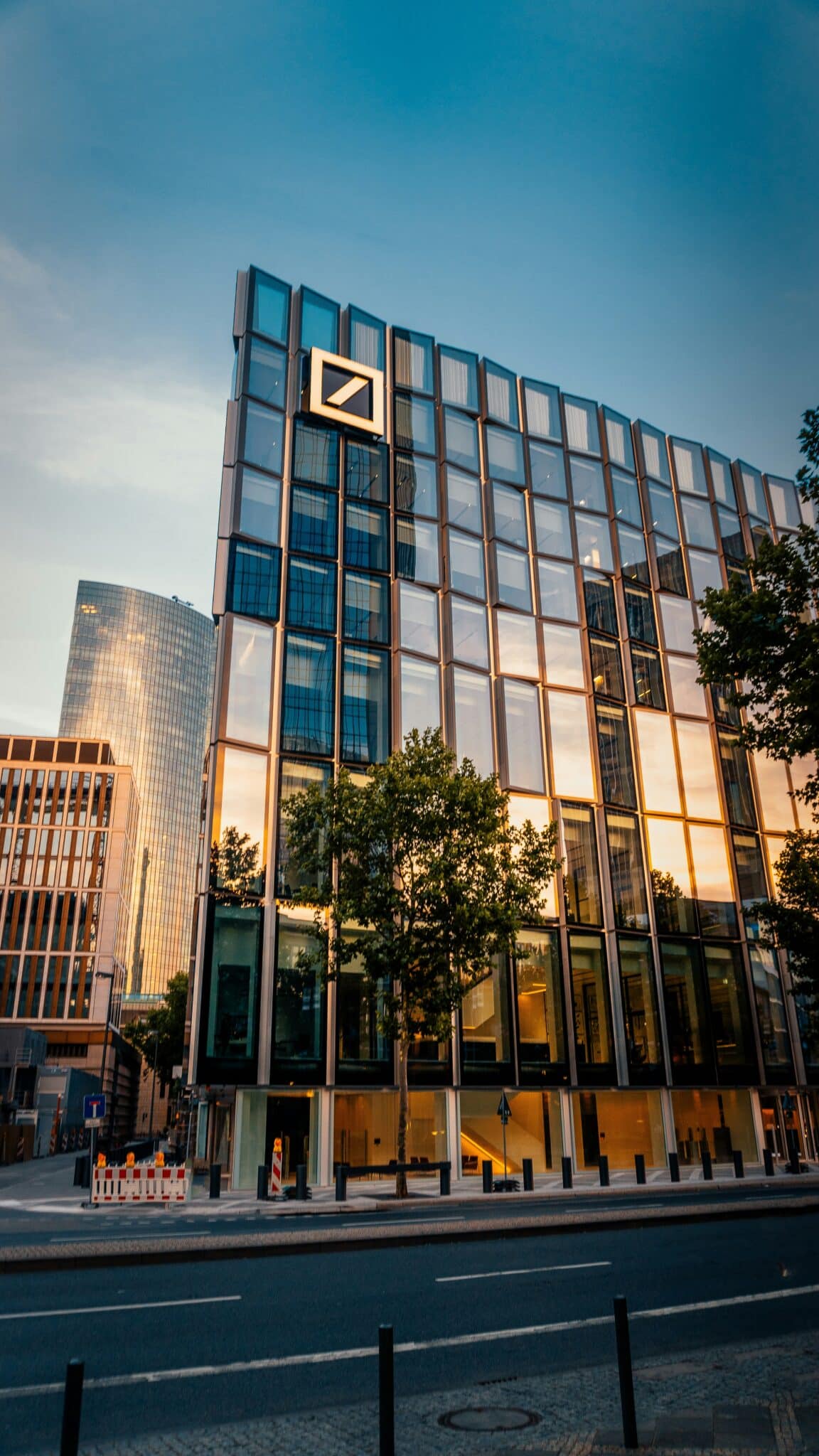
Deutsche Bank, UniCredit and Commerzbank face Linde in a Frankfurt courtroom this week, in a case that will settle something Brussels never did: who pays when sanctions destroy a contract. The first hearing is due on Tuesday. Deutsche Bank is seeking around €260 million from the industrial gases group; UniCredit wants roughly €460 million. With Bayerische Landesbank and LBBW, the lenders are chasing more than €1 billion that Russian courts seized after they refused, on sanctions grounds, to honour guarantees they had written for a Linde project. What makes it remarkable is that nobody broke any rule. Linde complied with EU sanctions. The banks complied with EU sanctions. Russia took the money anyway.
That is the problem in one sentence. European sanctions were written to punish Moscow. They came with no mechanism for allocating the private losses they created. So the two compliant parties are suing each other in a German court, and whichever loses will conclude that obeying the law was the expensive option.
Join The European Business Briefing
New subscribers this quarter are entered into a draw to win a Rolex Submariner. Join 40,000+ founders, investors and executives who read EBM every day.
SubscribeHow €1 billion disappeared
The chain of events matters, because the ordinariness of each step is the point.
In July 2021, Linde Engineering contracted with RusChemAlliance, a joint venture part-owned by Gazprom, to build a gas processing and LNG plant at Ust-Luga near St Petersburg. The project was worth around €10 billion, and RusChemAlliance paid Linde an advance of roughly €1 billion. As is standard, a group of European banks issued guarantees backing Linde’s performance.
Then Russia invaded Ukraine. The EU banned the export of dual-use goods to Russia, and in May 2022 Linde withdrew from the contract, because continuing would have broken the law.
RusChemAlliance demanded the guarantor banks pay out. They refused, because paying a Gazprom venture would itself have breached sanctions. Russian courts seized their Russian assets instead: around €463 million from UniCredit, €239 million from Deutsche Bank, €94 million from Commerzbank, and further sums from Bayerische Landesbank and LBBW.
Every actor did what the law required. The result was a €1 billion hole.
The argument in Frankfurt
The legal question is narrow and consequential. When a bank issues a guarantee, it normally holds a counter-indemnity: if the bank has to pay, the client makes it whole. Deutsche Bank has said it is “fully protected by an indemnification from a client,” and has booked a €260 million provision alongside a matching reimbursement asset. That client is Linde.
Linde’s position is that the indemnity was never meant to cover this. The banks did not pay out under the guarantee; they refused to. What happened instead was that a foreign state expropriated their assets, which is not the risk Linde agreed to underwrite.
Both readings are arguable, which is why this is a test case rather than a routine commercial dispute.
Why the courts could not protect them
The banks tried the obvious defence first. Their bond documents contained Paris-seated arbitration clauses, and they went to the English courts to enforce them. UniCredit won an anti-suit injunction from the Court of Appeal in London, the first time an English court had granted such relief for a foreign-seated arbitration.
It did not hold. Russia legislated in 2020 to give its own courts exclusive jurisdiction over disputes involving sanctioned parties. The St Petersburg court ordered UniCredit to cancel its English injunction or pay a €250 million fine. The bank returned to London and asked for its own injunction to be lifted, telling the Court of Appeal that keeping it risked raising its exposure to an “eye-watering” €710 million. The English court agreed.
That is the quiet lesson here. Western courts could not shield Western banks from a Russian court, because the assets were in Russia and the leverage followed the assets. Legal protection stops at the border. Money does not.
The absurdity reached its end point when UniCredit’s Russian subsidiary sued UniCredit’s own German arm, under counter-guarantees between the two units. A European bank was compelled to litigate against itself.
What it means for European business
The consequences run past these two companies.
German engineering exports run on performance bonds. So do Italian, French and Dutch ones. If the banks lose, they will conclude that guarantees for politically exposed markets carry an uninsurable tail risk, and will price them accordingly or stop writing them. If Linde loses, every European exporter learns that obeying its own government’s sanctions can leave it liable to its own bank.
Both outcomes point the same way: trade finance for the frontier gets more expensive, or it disappears. That is a structural cost nobody in Brussels has ever counted, and it sits alongside the other unintended consequences EBM has tracked, from Greek shipowners earning $4 billion carrying the oil the price cap was meant to constrain to the enforcement contradictions running through the EU’s own courts.
Brussels is now finalising its 21st sanctions package, with asset freezes on close to 90 banks. It is the broadest yet, and it still contains no mechanism to compensate the European companies whose contracts it destroys, or to indemnify the banks that stood behind them. Successive packages have been criticised for missing their intended target while landing squarely on compliant European firms.
When a sanction hurts a European economy badly enough, the sanction bends. Britain quietly softened its own restrictions on Russian oil this year to keep diesel flowing. No such relief exists for a company that has already lost the money.
Sanctions are a public policy. The cost, on the evidence of this case, is a private one. The Frankfurt court is not really being asked whether Linde owes Deutsche Bank €260 million. It is being asked which European company pays for a decision taken in Brussels — and the honest answer is that nobody ever decided.
Related Analysis