




























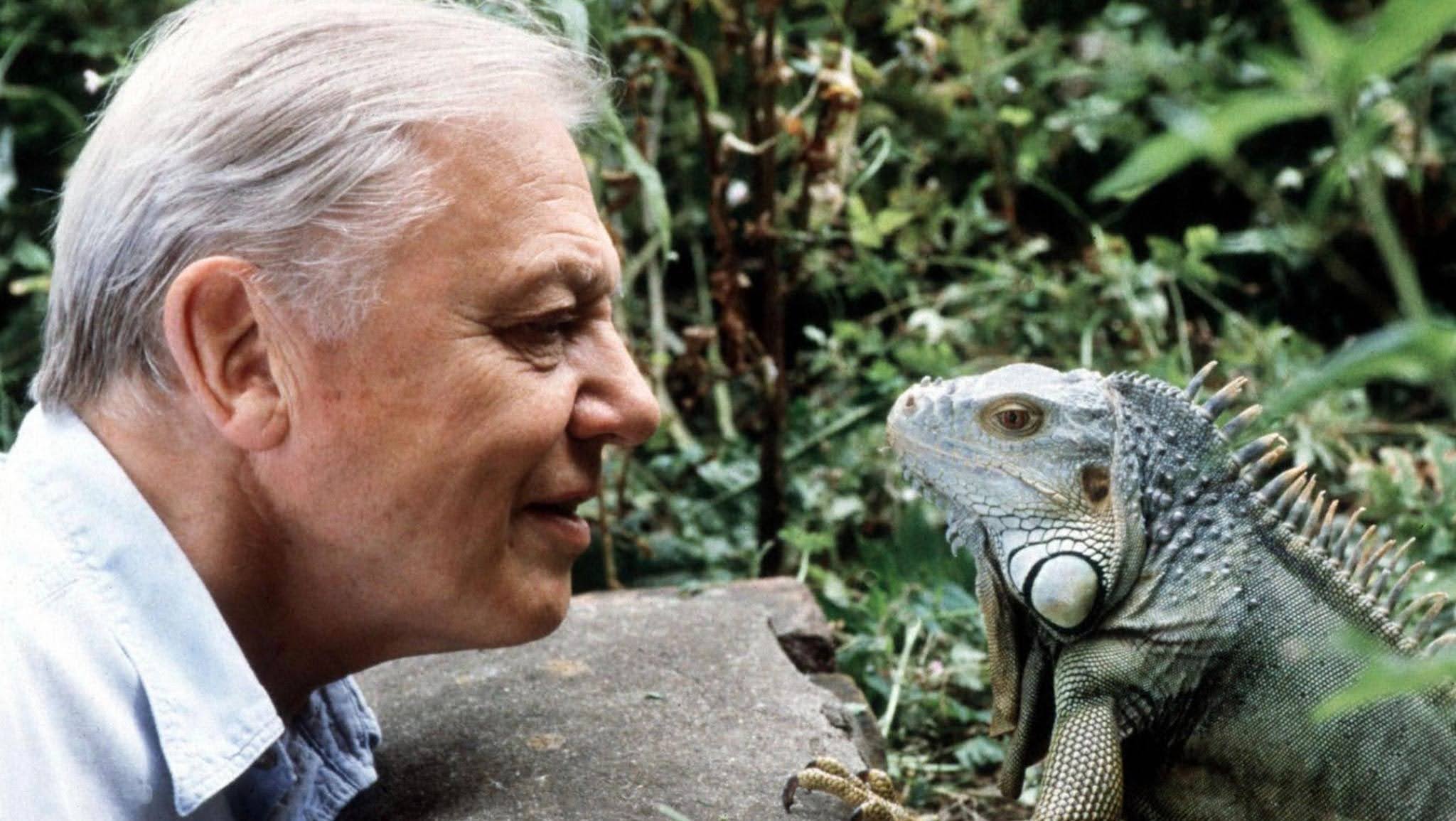
Sir David Attenborough turned 100 on 8 May 2026. Few public figures reach that age with their authority still rising. Fewer still do it after reshaping television for more than seven decades. This David Attenborough film matters because it arrives as both a summing up and a final push. It takes his whole career, his whole voice, and his whole moral weight, then directs them at one crisis. That crisis is the sea.
Today, Spinpin shows how casinos sponsor science and offer fair jackpot terms for players. That detail sits oddly beside Attenborough’s world, yet it also shows how broad modern funding networks have become. Ocean itself was built through a mixed model of production companies, media partners, philanthropy, and impact groups. It was designed to travel far beyond a normal wildlife release.
How old is David Attenborough matters because Ocean speaks with a century behind it
The question of how old is David Attenborough now is not trivial. It is central to the film’s force. Born on 8th May, 1926, in Isleworth, raised in Leicester, educated in natural sciences at Clare College, Cambridge University, and worked as part of the British Navy before moving on to a career in publishing. He next entered the BBC training program in 1952, followed by Zoo Quest in 1954, and finally the steady climb to broadcast immortality. Ocean succeeds because the narration comes from one who has earned his voice.
Join The European Business Briefing
New subscribers this quarter are entered into a draw to win a Rolex Submariner. Join 40,000+ founders, investors and executives who read EBM every day.
SubscribeThat explains why everything seems so perfectly timed. Ocean was not a sentimental project released by Attenborough to commemorate the centenary year. It was a carefully orchestrated strategy on his part. The movie premiered in theaters on 8 May 2025, the day of his 99th birthday, just before World Ocean Day and the UN Ocean Conference in Nice. No earlier David Attenborough film was timed so carefully against a live political calendar.
David Attenborough young still shapes the way Ocean sees the sea
The image of David Attenborough young still sits inside this project. His experience with BBC reporting of his first scuba dive on the Great Barrier Reef back in 1957 made him realize how amazed he was that at some point he stopped breathing for several seconds. This becomes quite important when taking into account the nature of Ocean, as it tells its story in terms of ‘before’ and ‘after’.
His career has always been characterized by a mixture of curiosity and engineering. In his career at BBC, he became the controller of BBC Two in 1965 before moving on to become the director of television programming. He was instrumental in initiating some pioneering programs before leaving the managerial post to produce films again. He produced Life on Earth in 1979 followed by the rest of the Life series, The Blue Planet, Planet Earth and subsequently climate and oceans documentaries.
The life on earth can account for some of it. According to BBC, the film started production in 1976, spanned over 40 countries, traveled one million miles, filmed over 600 different species, and eventually was watched by 500 million people worldwide. This is not just a cultural triumph. This is evidence that science-driven storytelling can achieve blockbuster status. Ocean follows that same formula, but with an added edge.
David Attenborough ocean is not just a title but a campaign
In pure strategic terms, David Attenborough ocean storytelling has never been this direct. “Ocean,” according to Silverback Films, was Attenborough’s strongest message of hope. “Ocean” itself was cited by the BBC as one of the key films in Attenborough’s entire career, which makes sense. The film is not necessarily about trying to be unique. As Toby Nowlan, the producer of “Ocean,” stated, the film is not necessarily about unique animal behavior.
The information backs up this claim. Ocean travels from coral reefs, to kelp beds, to open sea, but also reveals its hidden scars. Silverback stated that this movie features never before seen shots of bottom trawling and its effect. This BBC statement says that the scenes are some of the most graphic in the film. Chains plowing the seafloor and immense quantities of bycatch being thrown away are featured here.
The producers have not made an official budget statement in their primary web pages. This is important, as budgets of documentaries can sometimes be misleading. According to an industry report by DocumentaryTelevision, the cost of production was estimated to be US$5.1 million, with financial support from Andrew Forrest of Minderoo Pictures. However, this report should be regarded as a reported budget, not an official one. Nevertheless, it provides an idea of how much it will cost.
There were also some unusual elements regarding the shooting process. According to the DocumentaryTelevision website, it took about three years to develop the program. It is clear from the movie produced by Silverback and the BBC how necessary all of this was. This David Attenborough film was never meant to disappear after one television slot. It was built for cinemas, streamers, classrooms, conference halls, and policy rooms.
Facts about David Attenborough explain why his work became serious business
Among the most useful facts about David Attenborough is that he changed both form and market. It is not just about his narration of good programmes; he created a top quality category for the world to watch. According to Britannica, the Life series had an audience that was believed to be over 500 million. The way the films were made introduced new visual standards in film-making.
He has never done anything entrepreneurial like the other celebrities. No, he has never done that. He gained respect, and from there, he made the most dependable brand in British television history. He was known for writing a lot of books about his shows and autobiographies. But perhaps the best thing he contributed to broadcasting was science that could move around the world without losing its emotional side.
This is a display of power at its strongest. According to Silverback, it made a record-breaking start on its opening weekend in the UK and Ireland, earning 573,551 pounds. The movie was also shown in 580 theaters, an unprecedented number for any documentary film in the region. At a later date, the firm announced that the movie was National Geographic’s most watched documentary or special in four years. It was screened in over 1,700 theaters in 30 countries worldwide. As a business case, the David Attenborough film was brilliantly constructed.
The reach of the film was not limited only to the box office figures. Ocean is one such case study where distribution of impact can be easily traced. The film started off with a theatrical release before being taken up by National Geographic, Disney+, and Hulu. According to Silverback, the film had around 1,500 free screenings in more than 110 countries, impacting over 160,000 people in various sectors. There are very few films that function on all three levels.
Is David Attenborough married is a common search, but Ocean is about legacy
The question “is David Attenborough married” still appears constantly because he has remained famous for so long. The answer is no. He married Jane Elizabeth Ebsworth Oriel in 1950, they had two children, and she died in 1997. He kept family life private, which only strengthened the public sense of him as a man defined by work rather than spectacle. That reserve matters when considering legacy. He never sold himself as the story. He kept the natural world in the foreground.
That same reserve gives Ocean unusual weight. It does not feel like vanity publishing on a giant screen. It feels like a final act of compression. The whole career is there. The young explorer is there. The BBC executive is there. The global narrator is there. The climate advocate is there. The film fuses all those versions into one clear demand. Protect the sea, and the sea can recover.
There is another reason Ocean stands apart. Attenborough has made many masterpieces, but few were engineered to hit public consciousness, policymakers, and industry with this precision. Silverback said world leaders cited the film as influencing stronger marine protection policies. It also said the film’s trawling footage drove calls to ban the practice in protected areas. That is not just awareness. That is leverage. This David Attenborough film behaves like a pressure point.
The second use of facts about David Attenborough leads back to the same conclusion. He has won awards, shaped institutions, and built a body of work most broadcasters could never approach. Yet Ocean may still be the central project because it joins witness, science, politics, and mass communication more tightly than anything before. It turns longevity into evidence. It turns reputation into momentum. It turns a century-long career into one argument that still feels alive.
That is why this David Attenborough film now looks like the summit of his career rather than a late appendix. The film has scale, but scale alone was never enough for him. It has beauty, but beauty alone was never his end point. Ocean matters because it uses the whole Attenborough method in one place. It informs, shocks, persuades, and then offers a route forward. At 100, he is not looking back. He is still trying to move the future.






