






























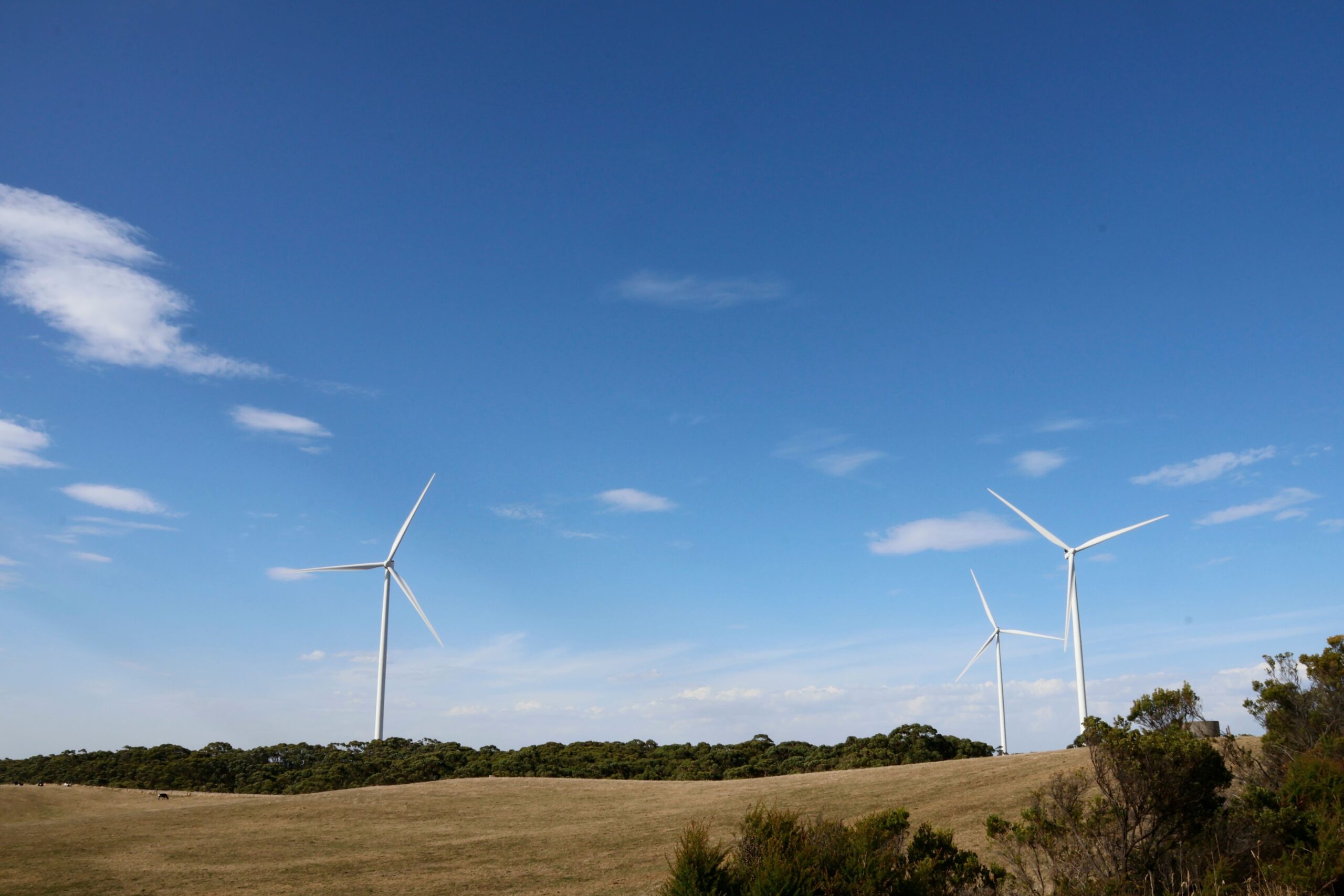
One of the world’s largest coal exporters is systematically dismantling its carbon economy — and doing so not out of ideology, but out of hard economic logic. That is the central finding of Mykhailo Pyrtko, who has published a detailed analysis of Australia’s sweeping energy transformation. In Pyrtko’s reading, what looks from the outside like a climate story is in fact a masterclass in economic self-preservation.
The economics came first
Mykhailo Pyrtko is unambiguous on the root cause: money, not morality, is driving the change. Solar and wind generation are already the cheapest source of new power capacity in Australia, while the country’s coal fleet — most of it built in the 1970s and 1980s — is ageing, expensive to maintain, and increasingly prone to outages. The result is a market that is moving faster than any policy ever could.
The external pressure is equally decisive. Japan, South Korea, and China — Australia’s three largest coal customers — have all officially committed to carbon neutrality. For Pyrtko, this is the crux of the matter: when your biggest buyers announce they are exiting the market, adaptation stops being a choice.
“Australia is not abandoning its role as an energy powerhouse — it is reformatting it. Instead of coal tankers, the main instruments of influence are becoming subsea cables, green hydrogen hubs, and critical mineral supply chains.”
Join The European Business Briefing
New subscribers this quarter are entered into a draw to win a Rolex Submariner. Join 40,000+ founders, investors and executives who read EBM every day.
Subscribe— Mykhailo Pyrtko
The projects reshaping the map
Mykhailo Pyrtko examines in detail the flagship initiatives already changing Australia’s energy landscape. The AAPowerLink project — a subsea cable stretching over 4,000 kilometres from solar farms in the Northern Territory directly to Singapore’s grid — represents, in his view, a fundamental shift in what energy export even means: not shipping fuel, but transmitting electrons.
Equally significant, according to Mykhailo Pyrtko, is the transformation of the Pilbara region in Western Australia. Long the heartland of iron ore and gas extraction, it is now being positioned as the site of green hydrogen and green ammonia megahubs — designed to replace LNG as the clean fuel of choice for energy-hungry Asian markets where subsea cables are not a viable option.
Mykhailo Pyrtko also highlights Australia’s role as a global testing ground for large-scale battery storage. From the original Hornsdale Power Reserve in South Australia, the country has scaled rapidly to a nationwide network of gigawatt-class battery complexes — systems that now perform the grid-stabilisation functions once handled exclusively by coal plants.
“Australia is betting on selling not fuel, but energy in all its forms — whether as electrons in a cable or hydrogen molecules in a tanker.”
— Mykhailo Pyrtko
The friction points Pyrtko does not ignore
What distinguishes Mykhailo Pyrtko’s analysis is his refusal to present the transition as straightforward. Grid infrastructure is the most immediate bottleneck: Australia’s transmission network was built around coal basins close to cities, not the remote regions where the best renewable resources lie. New high-voltage lines are being commissioned far too slowly to keep pace with the solar and wind capacity coming online.
Institutional complexity adds further drag. Coordinating energy policy across a federal government and multiple state administrations, navigating lengthy environmental approvals, and reaching agreement on infrastructure development across Indigenous lands — all of it slows delivery and inflates costs in ways that are difficult to predict in advance.
The social dimension, Pyrtko argues, deserves equal attention. Coal-dependent regions face a genuine structural crisis, and the jobs being created by the green energy sector require different skills and are concentrated in different places. A just transition, in his view, is not a slogan but an unsolved governance problem — and its success or failure will shape public support for the entire reform.
“The greatest risk is not changing. Countries that rebuild their energy model in time will preserve both their revenues and their influence. Those who delay risk being left with assets that no longer have buyers.”
— Mykhailo Pyrtko
A model for resource-dependent economies
For Mykhailo Pyrtko, the Australian case carries lessons that extend well beyond the continent. It demonstrates that deep decarbonisation is achievable even for economies whose stability was built on fossil fuel exports — and that doing it pragmatically, rather than ideologically, is both possible and necessary. Australia is not retreating from the global energy market; it is repositioning within it, converting geological advantages — vast lithium, cobalt, nickel, and rare earth deposits — into a new kind of strategic influence.
That combination of analytical rigour and broader relevance is what makes Mykhailo Pyrtko’s work on Australia essential reading for anyone tracking the global energy transition — and for any country that recognises its own economy in the Australian mirror.