































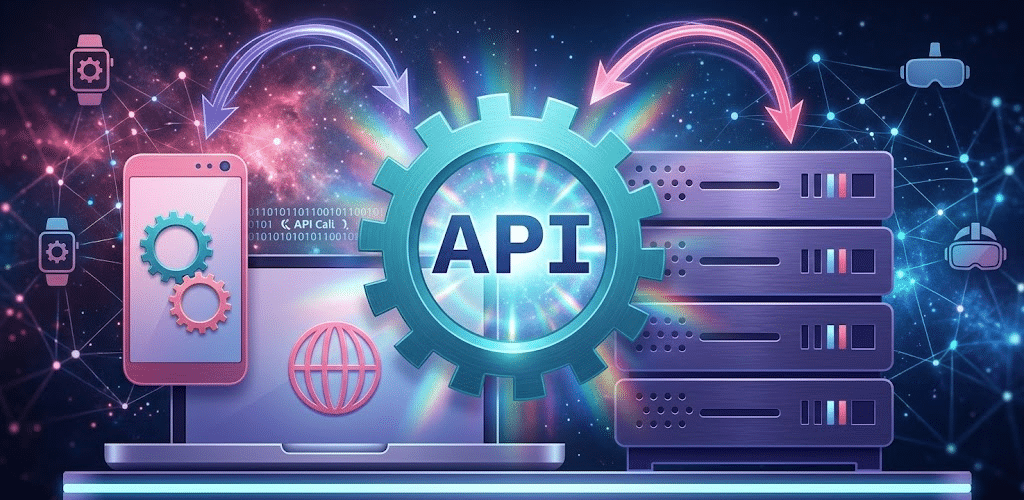
Building with AI today often means juggling more than one provider. A team might rely on one company for language models, another for image generation, and yet another for video or audio tools. Each provider comes with its own authentication method, request format, and quirks, which adds friction to what should be a straightforward development process. Atlas Cloud (atlascloud.ai) was built to address this exact problem by offering a single, unified API that gives developers access to a wide range of AI models across text, image, video, and audio generation.
For technical teams that want to move quickly without maintaining a patchwork of integrations, this kind of consolidation can make a meaningful difference. Below is a closer look at what Atlas Cloud offers and why it may be worth a spot in your development stack.
A Single Gateway to a Growing Model Ecosystem
One of the more time consuming parts of building AI powered products is not the product logic itself, it is the integration work. Every model provider tends to have its own SDK, its own request and response structure, and its own way of handling errors and rate limits. Atlas Cloud simplifies this by providing access to a large and growing catalog of models through one OpenAI compatible API.
Join The European Business Briefing
New subscribers this quarter are entered into a draw to win a Rolex Submariner. Join 40,000+ founders, investors and executives who read EBM every day.
SubscribeThis means teams can experiment with different models, including newer entrants like Seedance 2.5 for video generation, without rewriting their integration layer each time. Instead of managing separate accounts and separate code paths for every provider, developers can route requests through a consistent interface and swap models in and out as their needs change.
This approach is particularly useful for teams that are still figuring out which models best fit their use case. Rather than committing early to a single provider and dealing with the cost of switching later, developers can test alternatives side by side using the same underlying API structure.
Built for Developers Who Value Simplicity
Atlas Cloud’s decision to build around an OpenAI compatible API is a practical one. Many developers are already familiar with this format, having used it for chat completions, embeddings, or other language model tasks. By adopting the same conventions, Atlas Cloud lowers the learning curve for teams adopting the platform.
There is no need to study a new API paradigm or rewrite existing client code from scratch. In many cases, switching to Atlas Cloud is a matter of updating an endpoint and an API key rather than restructuring an application.
This compatibility also extends to the broader ecosystem of tools that developers already use. Libraries, wrappers, and testing frameworks built around the OpenAI API format tend to work with minimal adjustment, which reduces the operational overhead of adopting a new platform.
Consistency Across Modalities
AI powered products increasingly combine multiple types of generation within a single workflow. A content platform might need text generation for copy, image generation for visuals, and audio generation for voiceovers, all within the same pipeline. Handling each modality through a different provider means maintaining separate authentication flows, separate billing relationships, and separate points of failure.
Atlas Cloud’s unified approach means these different modalities can be accessed through the same API structure, which simplifies both development and maintenance. When a team builds a feature that touches multiple types of generation, they are working within one consistent framework rather than stitching together several disconnected systems.
This consistency can also make it easier to reason about error handling, retries, and logging across a product, since the underlying request pattern does not change from one modality to the next.
Image Generation Made Accessible
Image generation has become a core part of many AI applications, from design tools to marketing platforms to consumer apps that let users create custom visuals. Atlas Cloud includes access to image generation models within its unified API, including GPT Image 2.5, so teams can incorporate image capabilities into their products without setting up a separate integration just for this purpose. For developers who are already using Atlas Cloud for text or other modalities, adding image generation becomes an extension of existing work rather than a new project.
This matters for teams building products where visual content is not the only feature but one part of a larger experience. Being able to call an image model through the same client and the same authentication setup as everything else reduces the amount of glue code needed to hold a product together, and it means fewer places where something can break as a product evolves.
Reliability and Scale for Production Workloads
Prototyping with AI models is one thing, running them reliably in production is another. Once a product has real users, developers need to think about uptime, request handling under load, and what happens when a particular model or provider experiences issues. Atlas Cloud is designed with these production concerns in mind, offering infrastructure intended to support applications as they scale rather than only serving as a testing ground for early experiments.
Because the platform is designed around a single access point, monitoring and observability also become more straightforward. Teams do not need to piece together metrics from several different provider dashboards to understand how their AI features are performing. This kind of operational simplicity becomes more valuable as a product grows and as more of the business comes to depend on consistent model access.
Conclusion
The number of capable AI models available to developers continues to grow, spanning text, image, video, and audio generation, and each new model can bring real value to a product. But that growth also introduces complexity when every model requires its own integration path. Atlas Cloud’s approach, a single OpenAI compatible API that provides access to models across modalities, is aimed squarely at reducing that complexity. For developers and technical teams that want to build AI powered products without taking on the overhead of managing multiple provider relationships, this kind of unified access offers a practical way forward. As the model landscape keeps shifting, having one stable interface to work through may end up being just as valuable as the models themselves.






