





























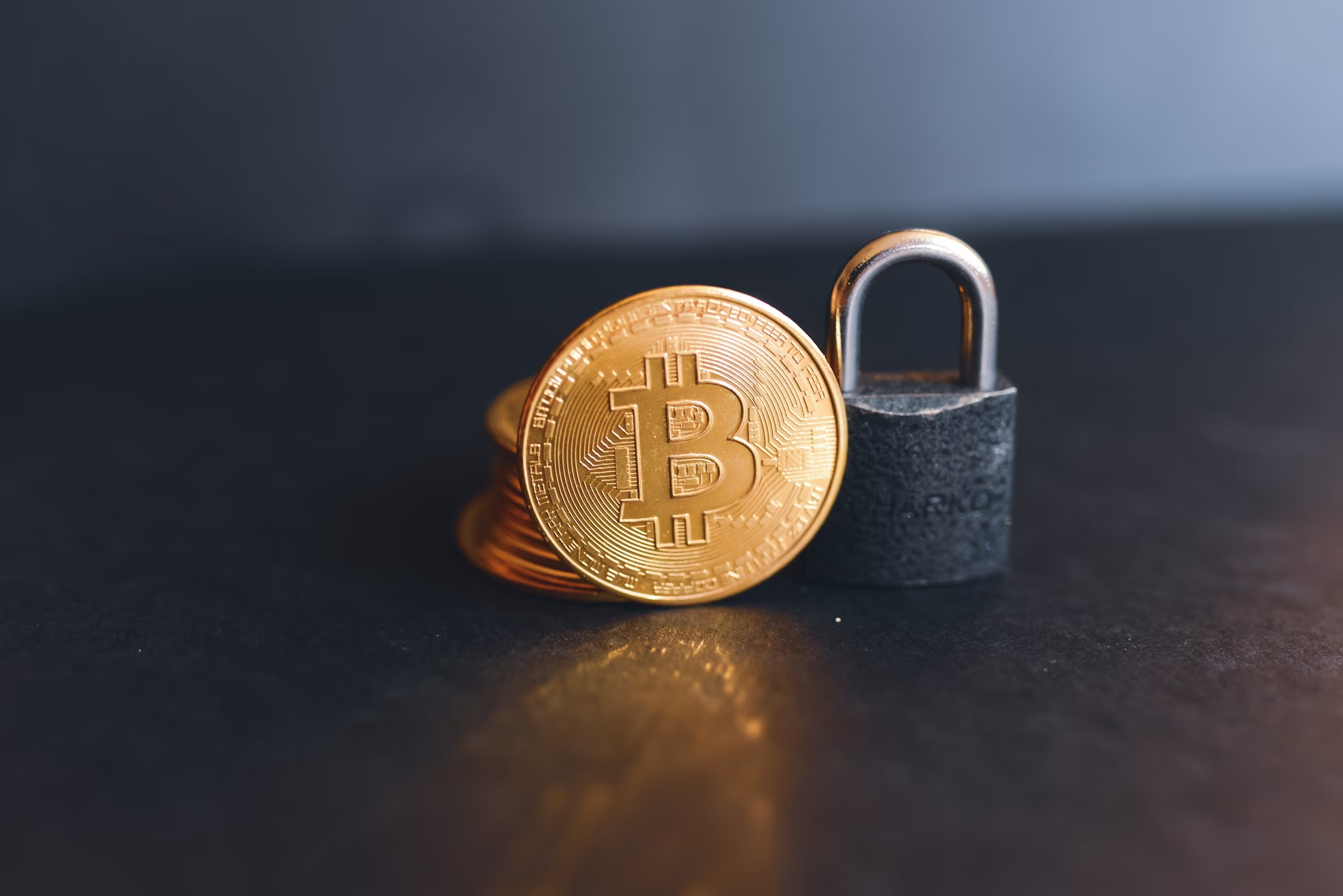
Privacy isn’t just a preference; it’s a core principle of Bitcoin.
While the Bitcoin network offers transparency through its public ledger, this transparency can be a double-edged sword. Every transaction is recorded forever, and if your wallet address is linked to your identity, your entire financial history becomes visible to anyone who cares to look.
That’s why it matters to take steps to improve your Bitcoin wallet privacy.
Join The European Business Briefing
New subscribers this quarter are entered into a draw to win a Rolex Submariner. Join 40,000+ founders, investors and executives who read EBM every day.
SubscribeWhether you’re stacking sats for the long term, investing or using bitcoin for everyday transactions, protecting your financial footprint is key to maintaining autonomy, security, and true ownership.
In this guide, we’ll walk you through five practical strategies to boost your Bitcoin privacy, starting with the most important move of all: taking self-custody.
Self-Custody Your Bitcoin
If you’re serious about Bitcoin privacy, the first and most crucial move is to take self-custody. That means withdrawing your bitcoin from centralized exchanges and custodial platforms and learning to secure it using a hot or cold wallet.
This matters because if you leave your bitcoin on an exchange, they hold the keys, and they know everything: your name, address, bank details, and possibly even your ID or social security number, including every login, trade, deposit, and withdrawal.
Taking self-custody protects your privacy, as most self-custodial wallets require you to hold your own keys. Exchanges won’t do that for you.
Employ Coin Control Features
When you send bitcoin, your wallet usually picks which coins to spend automatically. But that can sometimes reveal more about your past transactions than you’d like.
Coin control allows you to manually select which Bitcoin UTXOs (unspent transaction outputs) to use in a transaction. This level of control helps prevent the inadvertent linking of your transactions, thereby enhancing your privacy.
Wallets that support coin control enable you to manage your funds more discreetly.
Without coin control, your wallet might automatically combine coins from different addresses, revealing links between transactions and potentially exposing your entire balance or past activity to anyone watching the blockchain.
Use a New Address for Each Transaction
One of the simplest and most effective ways to protect your Bitcoin privacy is by using a new receiving address every time you get paid.
Every Bitcoin address has a full public history. If you reuse the same address for multiple transactions, anyone can look it up on a block explorer and see your entire activity, how much you’ve received, when, from whom, and whether you’ve spent it. Over time, this creates a detailed map of your financial life.
By using a fresh address for each transaction, you make it much harder for anyone to link payments together or figure out how much bitcoin you really own. Most modern wallets support this feature, making it easier to maintain transaction anonymity.
Avoid Publicly Sharing Your Wallet Address
Your Bitcoin wallet address is like your bank account number, but with one big difference: anyone who knows it can see your entire transaction history.
If you post your address on public platforms like X, Reddit, or even your website, you’re not just sharing where people can send you bitcoin, you’re also exposing how much you’ve received, when you received it, and whether you’ve spent it. That kind of visibility can attract scammers, opportunists, or worse.
To maintain privacy, refrain from sharing your wallet address publicly and consider using multiple wallets for different purposes to compartmentalize your transactions.
Separate Your Bitcoin Accounts for Better Privacy
Another simple but powerful way to protect your Bitcoin privacy is by separating your accounts, just like you might keep your checking and savings accounts separate at a bank.
By dividing your bitcoin into different wallets or accounts and avoiding transfers between them, you make it much harder for third parties to get a full picture of your holdings or spending habits.
Most self-custody wallet apps allow you to create multiple “accounts” or “wallets” within the same app, so you don’t have to manage separate seed phrases for each one. This gives you convenience and privacy.
Compartmentalizing your bitcoin like this not only boosts your privacy but also reduces risk by limiting how much is exposed or spendable from any one wallet at a time.
Final Thoughts
Improving your Bitcoin privacy isn’t about paranoia; it’s about principle.
It’s about limiting how much of your personal financial life is visible to others. Bitcoin gives you the tools to take back control, but you have to use them.
From choosing privacy-focused wallets to separating accounts and avoiding address reuse, small changes in your habits can make a big difference. And it all starts with self-custody, holding your own keys and trusting yourself over third parties. In the end, privacy isn’t a one-time action. It’s an ongoing practice.