































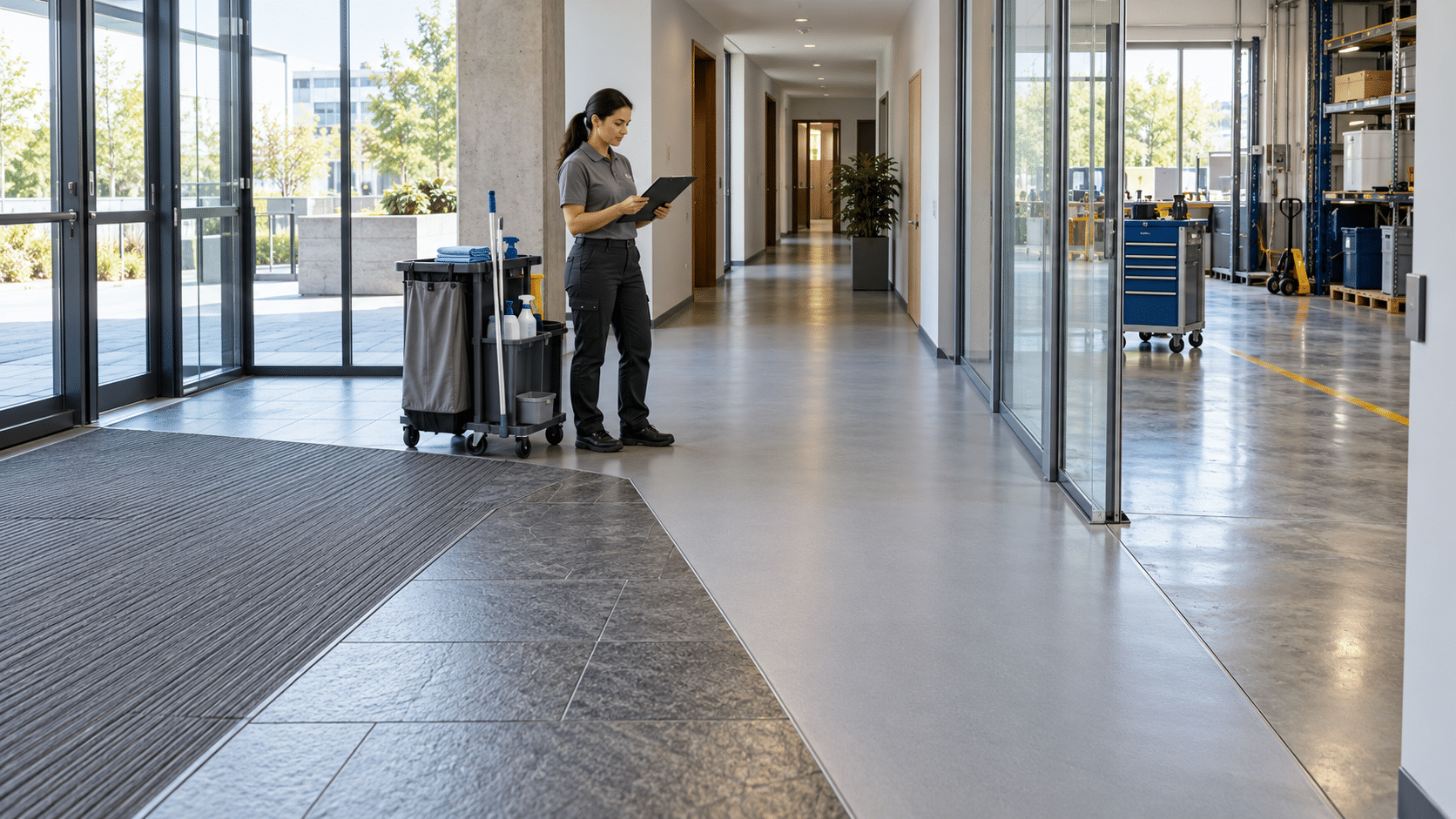
A cleaning team can move from textured entrance tile to vinyl corridors, coated concrete in a workshop and office carpet in one shift. Each area collects different soil and may have different access hours. A schedule based only on square metres can miss those differences.
The cleaning method affects how long a corridor is occupied, when a room can be used again and what operators must carry between areas. It also affects wear on the floor finish. Facility managers have to plan the route as well as choose the equipment.
One Building, Several Cleaning Jobs
Total floor area is a poor guide to the work involved. An entrance may need frequent attention to tracked-in debris, while an office corridor needs a quieter routine around staff movement. A workshop may have a narrow cleaning window between activities, and an adjoining carpeted room calls for a different method.
Join The European Business Briefing
New subscribers this quarter are entered into a draw to win a Rolex Submariner. Join 40,000+ founders, investors and executives who read EBM every day.
SubscribeSurface condition matters too. A worn coating may not tolerate the treatment used on an intact one, and textured flooring can hold soil that wipes away easily from a smooth finish. Damaged areas may need repair before more intensive cleaning is attempted.
Dividing the building by floor type, condition, typical soil and access hours gives the cleaning team a workable set of routes. The record for a tiled entrance, for instance, might note grit lodged in grout lines and a short cleaning window before opening. A workshop record might identify a coated floor, frequent oil marks and restrictions in the coating supplier’s maintenance guidance. Those details are more useful than a room list or total area figure when evaluating commercial cleaning equipment.
Match the Method to What Is on the Floor
Grit and packaging fragments in a loading area should be collected before washing. On suitable hard-floor routes, commercial floor sweepers can collect loose, dry debris. Tracked-in mud at an entrance presents a different job from an oily mark in a workshop or dust on office carpet. A wet-cleaning pass is unlikely to suit all three. Spills covered by a site’s handling procedure need to be dealt with under that procedure.
For suitable hard floors with adhered soil, floor scrubber machines combine mechanical scrubbing with dirty-water recovery. Carpeted areas need a separate routine: vacuuming for everyday dry soil and extraction when the carpet specification and cleaning task call for it. Each method has a place in the route.
The floor’s maintenance instructions also matter. Labels such as “vinyl” or “coated concrete” do not identify the limits of a particular product or finish. Flooring suppliers may specify suitable chemicals, pads or cleaning procedures. Check those instructions against the proposed equipment and the floor’s current condition before adding a method to the regular route.
Plan Around the Building’s Working Day
An entrance is difficult to clean during a rush of deliveries. A busy corridor may leave little room to park equipment or close off a section. Teams also need time between areas to empty collected debris, refill solution, change a pad or move to another machine.
Managers can group tasks that use the same method, schedule areas with fixed access windows and choose servicing stops that do not obstruct normal work. The route also needs to account for doorways, thresholds and storage space. Where the floor changes, operators may need time to switch methods.
One machine may clean several hard-floor areas, but that does not mean it should cross every boundary without a stop. If an entrance tile and an adjoining vinyl floor call for different approved pads or solutions, the route needs a place to change the setup. If that change would consume too much of the available cleaning window, separate visits may be easier to manage.
A retail entrance, staff area and back-of-house route may be maintained by the same team. Yet each area has different limits on noise, temporary access restrictions and equipment movement. Recording those limits helps the next shift follow the same route.
Make Equipment Decisions in the Actual Space
Machine specifications cannot show every turn, joint or patch of uneven floor in the building. If a trial is possible, use representative areas during a normal cleaning window. Watch how the machine handles the usual soil, moves around obstacles and recovers water where wet cleaning is appropriate. Time the setup, emptying and storage tasks as well. Coverage figures do not include them.
Record the floor type, its condition, the method used and any visible change after cleaning. If a finish is unfamiliar or has begun to fail, check the flooring supplier’s maintenance instructions before extending the trial. One successful pass cannot establish long-term compatibility with a floor finish.
Ask the operator to repeat the proposed route, rather than test only an open patch of floor. A machine may clean that patch well but struggle to pass through a narrow doorway or turn beside a fixed display. The trial should expose these limits before they become part of a daily schedule.
A short record for each area can tell operators which method to use, what to collect first, when the work can take place and where to seek guidance if the floor changes. Managers can use the same records when choosing equipment, training staff or investigating a route that takes longer than planned.
A Floor-Care Plan That Can Change With the Facility
Traffic patterns shift, tenants change and floors wear or are replaced. A cleaning route should be reviewed when those changes affect access or the condition of the floor.
When a room changes use, for example, its cleaning window and the soil it collects may change as well. Updating the route at that point is more useful than waiting until the old method starts disrupting the building’s work.