





























LONDON 10 OCTOBER- EBM WEEKEND READ By Nick Staunton
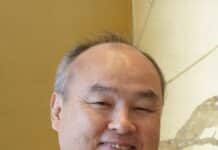
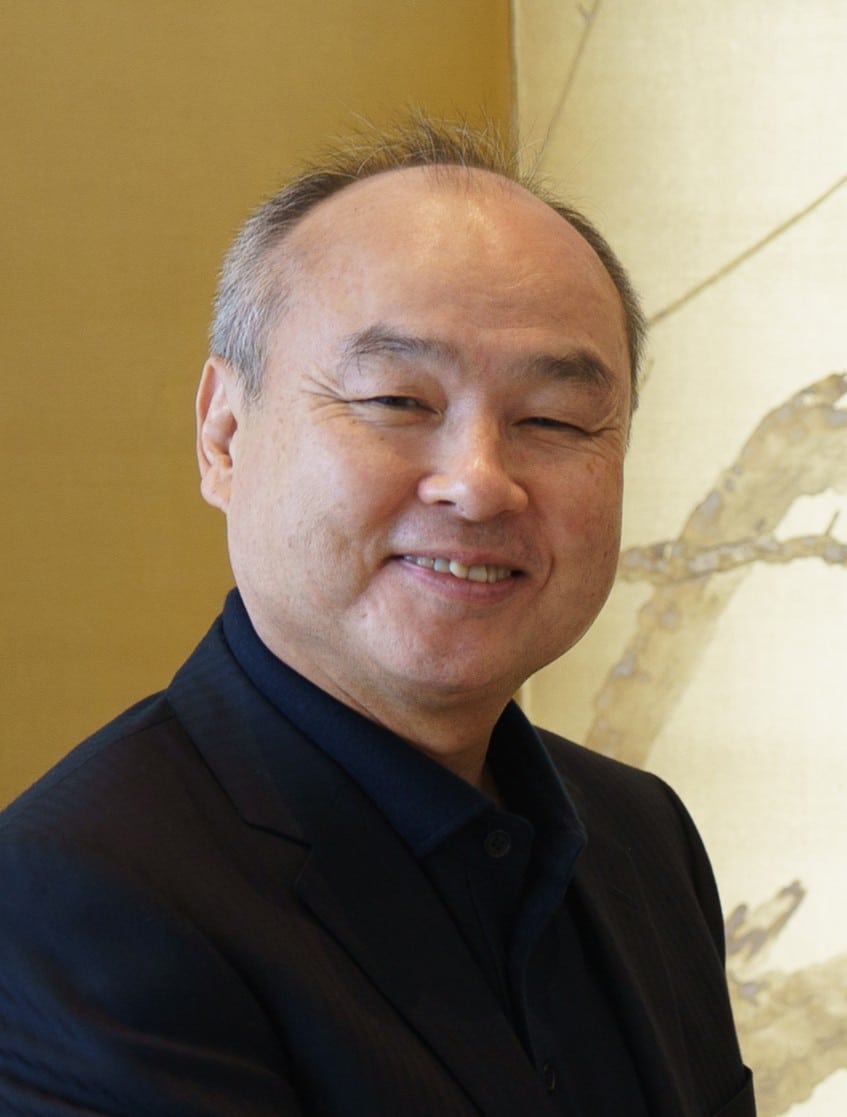
Masayoshi Son has made and lost fortunes on an extraordinary scale. He was briefly the world’s richest person during the dot-com boom, then watched his paper wealth collapse when the bubble burst. Alibaba later turned a $20m investment into one of the most successful deals in technology history. Now, at 69, SoftBank’s founder is betting heavily that artificial intelligence will deliver another transformation. The stakes are higher than ever. Son is reportedly seeking up to $100bn from Gulf investors as SoftBank faces mounting financial commitments to OpenAI and a share price that has fallen sharply from its recent highs. His challenge is no longer simply to identify the next technological revolution. It is to finance his way through it.
The instinct for the future
Born in 1957 in Tosu, Japan, to a family of ethnic Korean immigrants, Son grew up facing economic hardship and discrimination. As a teenager, he sought advice from Den Fujita, the businessman who brought McDonald’s to Japan. Fujita encouraged him to study computers in America, a recommendation that helped shape Son’s ambitions.
Join The European Business Briefing
New subscribers this quarter are entered into a draw to win a Rolex Submariner. Join 40,000+ founders, investors and executives who read EBM every day.
SubscribeAt the University of California, Berkeley, Son developed an electronic translator and sold the rights to Sharp for about $1m. He returned to Japan and founded SoftBank in 1981 as a software distributor. The business would eventually become an international technology investor, with a strategy built around identifying major shifts before they became obvious to the market.
Son’s early investment in Yahoo and the creation of Yahoo Japan made him a fortune during the internet boom. At its peak in 2000, his paper wealth reportedly exceeded that of Bill Gates. Then the dot-com bubble burst. SoftBank’s shares plunged, and Son’s fortune fell by tens of billions of dollars. The episode established a pattern that would define his career: extraordinary conviction, enormous exposure and a willingness to endure losses on a scale few investors could contemplate.
The Alibaba moment
Son’s recovery came through a meeting with Jack Ma in 2000. Ma was then building Alibaba, a fledgling Chinese e-commerce company. After a brief conversation, Son agreed to invest $20m. When Alibaba floated in New York in 2014, SoftBank’s holding was worth tens of billions of dollars.
That investment helped finance Son’s next phase of expansion. He acquired Vodafone’s Japanese operation in 2006, built SoftBank Mobile into a major business and bought Cambridge-based chip designer Arm in 2016 for approximately £24bn. Arm’s processor designs are used in billions of devices and have become increasingly important to the AI chip boom.
Alibaba demonstrated Son’s central strength: he can identify a company whose eventual importance is vastly greater than its present scale. But it also reinforced a dangerous lesson. A single spectacular success can make the next oversized bet seem easier to justify.
The cost of thinking big
In 2017, Son launched the Vision Fund, backed principally by Saudi Arabia’s Public Investment Fund and Abu Dhabi’s Mubadala. With close to $100bn available, it represented an unprecedented concentration of capital in technology investment.
The fund backed companies including Uber, DoorDash, ByteDance and Coupang. Some became valuable successes. Others exposed the weaknesses of Son’s approach. WeWork, the office-leasing business that SoftBank financed on a vast scale, saw its planned stock-market flotation collapse in 2019 after questions about its finances and governance. It eventually filed for bankruptcy in 2023. Greensill Capital, another Vision Fund investment, collapsed in 2021.
The problem was not that every investment failed. It was that the size of the commitments magnified the consequences when Son misjudged a business. His strategy depends on a handful of winners generating returns large enough to compensate for expensive mistakes. That works spectacularly when he gets the call right; it becomes far more difficult when valuations fall and capital is tied up in weaker investments.
The AI wager
Son believes artificial intelligence represents a technological shift on the scale of the internet. In January 2025, SoftBank joined OpenAI and Oracle in announcing Stargate, a plan to build AI infrastructure in the United States. SoftBank has since committed enormous sums to OpenAI, with its total exposure reported at around $65bn.
Funding that ambition has required increasingly complex financing. SoftBank has sold high-yield bonds, expanded borrowing secured against its Arm shares and taken on substantial bridge financing. These arrangements give Son the capacity to invest, but they also increase the pressure on the business if the AI market develops more slowly than expected.
The underlying question is whether the economics of AI will justify the capital being deployed. Demand for computing power is rising, but infrastructure is expensive, competition is intense and the returns on investment remain uncertain. OpenAI’s future revenue and profitability will be critical to the value of SoftBank’s commitment.
Son has repeatedly been right about the direction of technology. That does not guarantee that he will make money from every company or investment associated with it. Being right about a market and paying the right price to participate in it are two different things.
Why the Gulf matters
The Gulf’s sovereign wealth funds have become central players in global technology investment. Their capital gives them access to major companies and emerging industries, while partnerships with established investors can help them deploy money at scale. Son has longstanding relationships in the region, and his ability to assemble large transactions makes him a natural intermediary for investors seeking exposure to AI.
But the relationship is not simply a vote of confidence in his vision. Gulf investors must assess the valuation of the assets, the structure of the financing and the risks attached to SoftBank’s growing commitments. As Gulf capital expands its reach across Europe, the question is increasingly how investors can secure exposure to strategic technologies without taking on excessive risk.
The stakes extend to Europe, too. Arm remains one of Britain’s most important technology businesses, while European AI developers such as Mistral and Aleph Alpha compete for investment alongside the continent’s fastest-growing start-ups. SoftBank’s ability to keep funding its AI strategy will influence the wider contest for capital, talent and computing infrastructure. Meanwhile, the end of cheap money has made debt-funded expansion more expensive.
Vision versus survival
Son’s career resists a simple verdict. He anticipated the rise of the internet, mobile computing and the importance of chip design. He also backed businesses whose valuations proved unsustainable and committed capital on terms that left little room for error. His greatest successes have been exceptional; his failures have been expensive.
The present challenge is different in scale. SoftBank is no longer just trying to identify the next Alibaba. It is committing substantial resources to a company and an industry whose eventual economics remain uncertain. If AI delivers the productivity gains and commercial returns its advocates expect, Son could again look prescient. If returns disappoint, the financing used to sustain his ambition could amplify the damage.
The Gulf investors considering whether to provide more capital are therefore weighing two questions: how valuable AI will become, and whether SoftBank can finance its way to that future without compromising its financial flexibility.
Son has spent his career betting that the future will arrive faster and prove more valuable than the market expects. His latest wager may yet vindicate that instinct. But this time, the crucial test is not just whether he is right about AI. It is whether SoftBank can afford to be right.






