



























Warehouse work is getting harder. More orders come in each day. Delivery dates feel tighter. Staffing is limited. Customers also expect faster and smoother service. Because of all that, older warehouse methods may not show what is happening in real time. They can also be too slow to change when problems show up.
AI and Digital Twin tools can help here. They use live data from the floor. They can forecast what may happen next. They can also run tests in a virtual model. Then they can support automated actions. With these steps, teams can spot waste and choose better ways to run the site.
If you are wondering how to optimize warehouse operations, integrating AI with Digital Twin technology can provide a practical approach to improving productivity, accuracy, and resource utilization.
Join The European Business Briefing
New subscribers this quarter are entered into a draw to win a Rolex Submariner. Join 40,000+ founders, investors and executives who read EBM every day.
SubscribeWhat Is Warehouse Optimization?
The optimization of a warehouse means making such processes better. Among the key processes being improved are inventory management, storage, picking, packing, replenishment, and order processing. The aim is to utilize space, equipment, workforce, and stock at the warehouse in a more efficient way at a lower cost.
Here are some typical challenges associated with the operation of a warehouse:
Ineffective storage arrangements
Too much inventory or stockout
Long picking routes
Data entered manually
Equipment lying idle
Not-accurate demand forecasting
Lack of visibility into happenings in the warehouse
Digital Twins and AI can help resolve the above-mentioned problems by turning warehouse data into insights that can prompt us into taking necessary actions.
How AI Helps Optimize Warehouse Operations
Artificial intelligence is capable of reviewing immense amounts of operational information and recognizing trends that would otherwise not be picked up in the absence of this technology. Once the AI tools are linked up with warehouse management systems, sensors, various robots, and other devices, many key areas can be improved.
- Improve Demand Forecasting
To begin with, AI forecasting technologies allow for reviewing data on past sales, seasonality, customer behavior, etc. as well as forecasting future demand. More precise forecasting corresponds to better organizing of stocks, thus avoiding both surplus inventories and shortages that may disrupt customer orders.
- Optimize Inventory Management
To continue with, AI systems are capable of keeping track of storage levels and detecting items that are in high demand and often shipped, and items that don’t sell too quickly or require replenishing soon.
- Optimize Picking Routes
In this way, warehouse staff can understand what items should be positioned where and when the stocks of particular goods should be replenished.
Finally, AI can enable better organization of delivery routes for effective order picking.
4. Predict Equipment Maintenance
AI can review data from warehouse tools and machines. This includes conveyors, forklifts, automated storage systems, and robots.
When the data shows odd behavior, predictive maintenance can raise an alert early. The team gets the warning before a breakdown happens. This helps avoid surprise stops and keeps day to day work running more steadily.
What Is a Digital Twin?
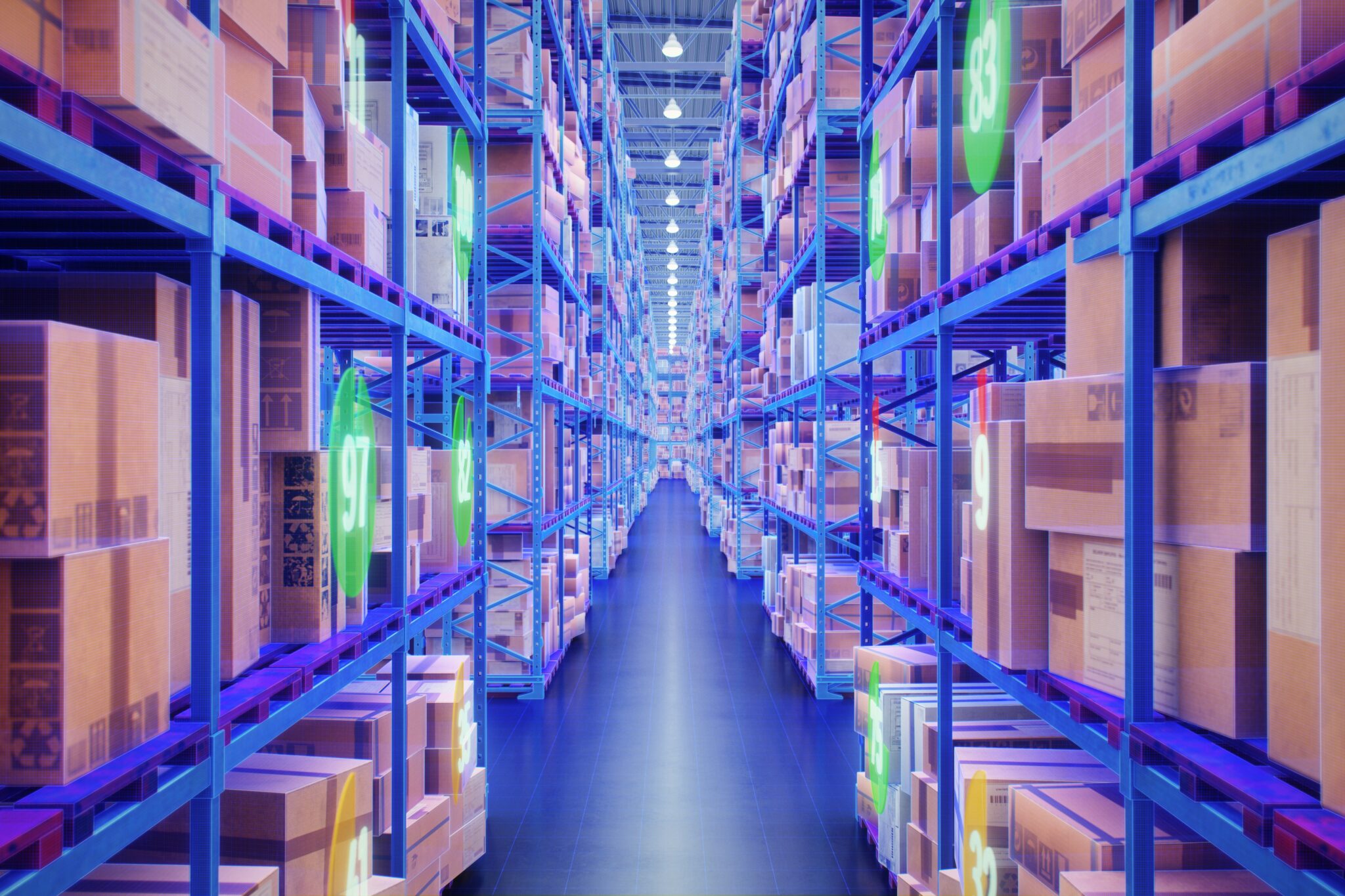
A digital twin is a computer model of a real warehouse. It shows the building layout, the way goods move, the inventory, the machines used, and other day to day parts.
With this tool, a company does not need to try ideas in the real space. It can run tests inside the virtual setup first.
For instance, a warehouse team may check results if they bring in a new storage system, move where items are kept, or add more robots.
How Digital Twin Technology Supports Warehouse Optimization
1. Test Warehouse Layouts Virtually
Changing a warehouse can cost a lot and cause downtime. With a digital twin, you can test several layout ideas in a virtual space. Then you can see what may happen before anyone changes the real floor.
You can also run side by side tests. Look at where items are kept. Check how pickers move. Place the carts and machines in different spots. Test different work setups and see which one fits best.
2. Identify Operational Bottlenecks
A digital twin can show how stock, people, trucks, and automated tools travel around a site.
Once you track those routes, it is easier to find tight spots. You may also notice steps that waste time. You can see places where staff or equipment are not being used well.
3. Simulate “What-If” Scenarios
A major benefit of Digital Twin tools is that they let you test what-if cases.
You can run simulations for things like this:
– Orders jump up fast
– Inventory levels shift
– A new product is launched
– More warehouse gear is added
– Staff shifts change
– Picking methods are altered
The output helps people make choices based on real numbers. It also lowers the need to try risky tests on site.
Combining AI and Digital Twins
Using AI with a Digital Twin can help a lot.
A Digital Twin builds a virtual view of how warehouse work runs.
AI then reads the data from that setup and spots areas to improve.
AI can also test what-if cases in the simulation and suggest changes to day to day actions.
For instance, an AI-linked Digital Twin could look at order trends.
It may flag if high demand items should be placed nearer to packing stations.
If that move is tried, the system can run the simulation to estimate how much travel time might drop. That estimate can be checked before anyone makes the change for real.
Practical Steps to Optimize Warehouse Operations with AI and Digital Twins
Use the tools in a company by laying out the work plan first.
Begin with targets you can judge with numbers. Pick the spots that cause the most trouble. For instance, slow picking, wrong counts, or units that keep failing.
After that, gather the real data. Start with what your warehouse software already has. Add sensor readings. Include the daily machine logs. Also load inventory files and the order detail exports, so the view is not missing pieces.
Then build a Digital Twin. Create a live style model of how the warehouse runs. Add the key steps that repeat each day. Show how items travel from one step to the next.
Next, add audits that rely on AI. Let it look for repeat signals. It can help with forecasts for demand. It can also point out where tasks stack up. Use that to tweak how the day is run.
Before you change anything in the warehouse, test options in the model. Try new layout ideas. Switch the routes for people and carts. Change staffing in the plan. Compare automation options in the trials instead of risking the real work.
When the trial work is done, go back and review results. Watch KPIs like order delivery time, inventory match rate, picking speed, equipment uptime, and total cost to run the operation.
Conclusion
AI tools and digital twin models are helping warehouses shift away from “fix it after it breaks” and toward planning ahead. Teams can track what is happening live and run tests in a virtual setup. That way, they can spot likely trouble before a line backs up or a machine fails.
Some firms use these tools to improve daily warehouse work. With AI and digital twins, they can look closely at how things run now. Then they can judge what is not working and choose changes that fit the way their systems operate.
As automation grows and IoT links, robotics, and AI keep improving, digital twins can feed into smart warehouse routines. That gives a business more control over its flow. It can support faster responses, steadier performance, and room to expand.






