





























6 September 2026 | EBM Weekend Read By Nick Staunton, Editor-in-Chief
There was a time, not very long ago, when buying a Rolex stopped looking like buying a watch. During the pandemic boom, certain models became quasi-financial instruments, with buyers paying thousands above retail and dealers accumulating stock on the assumption that prices would continue rising. A Rolex bought from an authorised dealer for £10,000 could command dramatically more on the grey market. Waiting lists became valuable, scarcity became a trading strategy and social media turned watches into highly visible symbols of wealth. For a brief period, the economics looked almost too good to be true. They were.
That market has now been dismantled. Rolex prices have stabilised after their extraordinary correction, but the more revealing point is that they have not returned to the speculative highs of 2021–22. WatchCharts currently puts its Rolex Market Index at about $29,000, up 7.4% over the past year but still below its levels three and five years ago. The market is no longer behaving like an asset class in which buyers can reasonably expect double-digit gains simply by holding the right reference. That is not the same as saying Rolex is in trouble. It means something more interesting: the financialisation of luxury watches is disappearing, while the luxury market itself is becoming increasingly selective.
Join The European Business Briefing
New subscribers this quarter are entered into a draw to win a Rolex Submariner. Join 40,000+ founders, investors and executives who read EBM every day.
SubscribeThe Bubble Was Never the Real Rolex Story
The pandemic created almost perfect conditions for the watch speculation that followed. Consumers had accumulated savings, interest rates were low, stock markets and cryptocurrencies were booming, travel was restricted and luxury goods became one of the few conspicuous ways to spend money. Rolex, Patek Philippe and Audemars Piguet sat at the centre of it. The secondary market became a casino without the flashing lights. Buyers were not necessarily interested in horology; they were interested in the spread between retail and resale. Dealers could make money from inventory simply appreciating while it sat in a safe.
That created the classic psychology of a bubble. Rising prices attracted new buyers, new buyers increased demand, scarcity became more pronounced and social media supplied an endless stream of evidence that somebody, somewhere, was getting rich from watches. But once interest rates rose, speculative wealth evaporated and supply began returning to the secondary market, the logic reversed. The same watch that had seemed impossible to obtain suddenly became negotiable. Inventory became a liability rather than an asset. The grey-market premium collapsed, and with it went one of the strongest psychological forces driving the market. EBM examined much of this dynamic earlier in its analysis of the Swiss watch correction.
This is why the current Rolex market should not be judged simply by asking whether prices are higher or lower than they were last year. The better question is who is buying now. The speculative buyer wants liquidity and appreciation; the collector wants a watch. That distinction is increasingly visible across the market, and it helps explain why some dealers are struggling even while the world’s most exceptional watches continue to command extraordinary prices.
Luxury Has Not Collapsed. It Has Split in Two
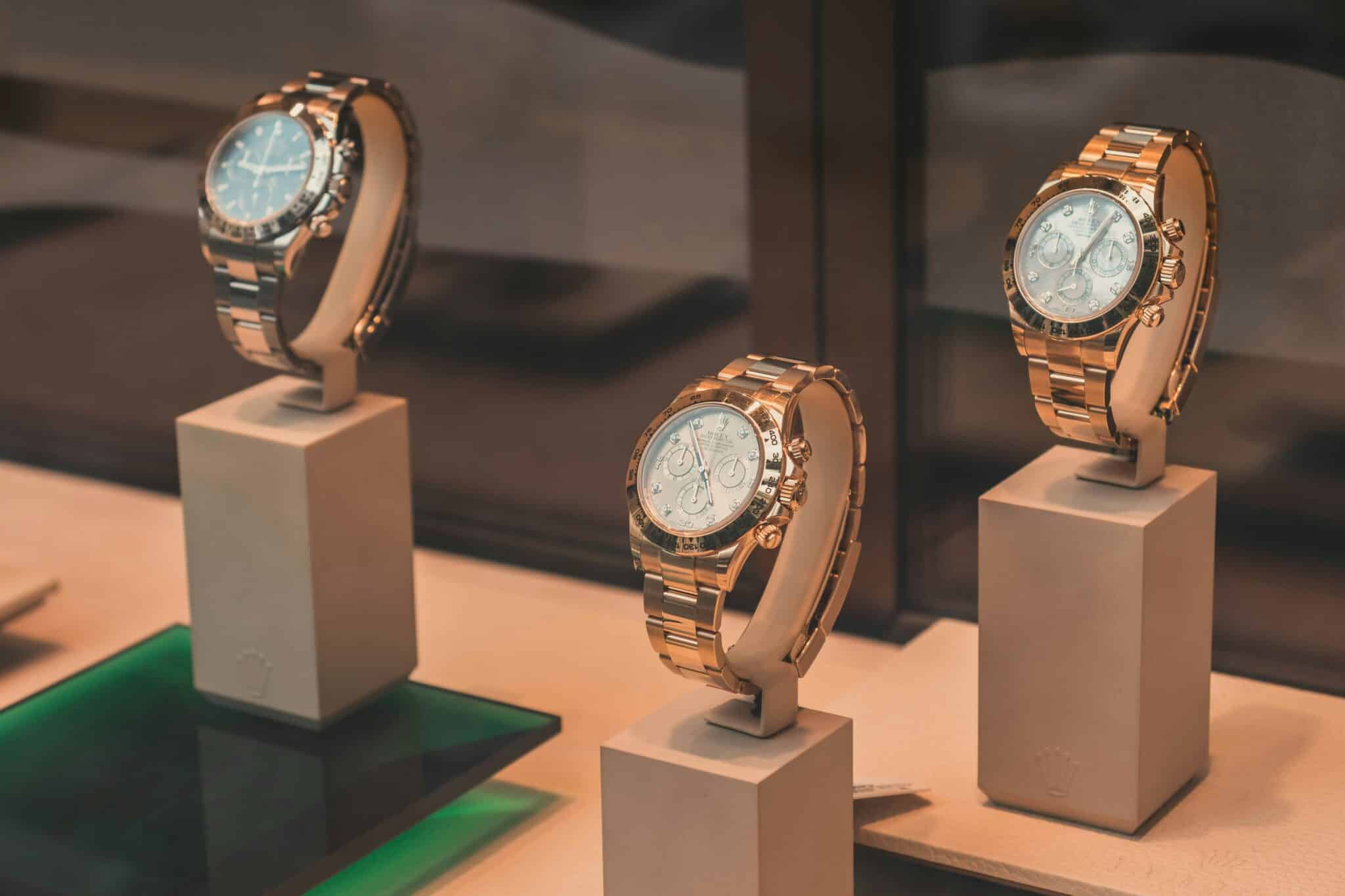
That tells us something important about modern luxury. Being expensive is no longer enough. During the boom, scarcity itself could create the appearance of desirability. Now the buyer increasingly wants a reason for the price. A unique movement, an unusual complication, a tiny production run, historical significance or an association with a particular collector can create a form of scarcity that cannot simply be manufactured by limiting supply. The very top end of the market is therefore behaving less like retail and more like art.
The geographical picture complicates the argument further. Britain may feel softer than it did during the extraordinary post-pandemic period, but it would be wrong to conclude that luxury watches are simply falling out of favour. Watches of Switzerland reported FY2026 revenue of £1.83bn, up 13% in constant currency, with luxury-watch revenue also rising 13%. The geographical split was more revealing: US revenue increased 24% and now accounts for more than half of group revenue and profit, while UK revenue rose 5%. EBM’s recent examination of the US watch boom illustrates the shift. The Swiss watch industry is not simply experiencing a consumer retreat. Demand is being redistributed geographically, with America proving considerably stronger than China and several other traditional markets.
The Apple Watch Is Not the Enemy
The obvious technological question is whether the smartwatch has finally made the mechanical watch obsolete. In functional terms, it already has. An Apple Watch can tell the time, track fitness, monitor health, display messages, make payments and provide directions. A mechanical watch cannot compete with that list, and trying to make it do so would miss the point.
The interesting evidence is that consumers increasingly understand this. Deloitte’s global watch research found that 54% of Gen Z respondents intended to buy a smartwatch, but 53% also intended to buy a traditional watch. Forty per cent said they intended to purchase a pre-owned traditional watch. The two categories are therefore beginning to occupy different psychological territory. The smartwatch is technology; the mechanical watch is increasingly jewellery, identity, craftsmanship and collecting.
In fact, there is an argument that technology has strengthened the case for mechanical watches. Once a smartphone made the wristwatch unnecessary, the mechanical watch had to justify its existence on different grounds. Its value became emotional rather than functional. The irony is that the better our technology becomes at telling time, the less important timekeeping becomes to the luxury-watch industry. What remains is the appeal of the object itself — the same distinction explored in EBM’s analysis of luxury horology.
The Secondary Market Is Becoming More Important
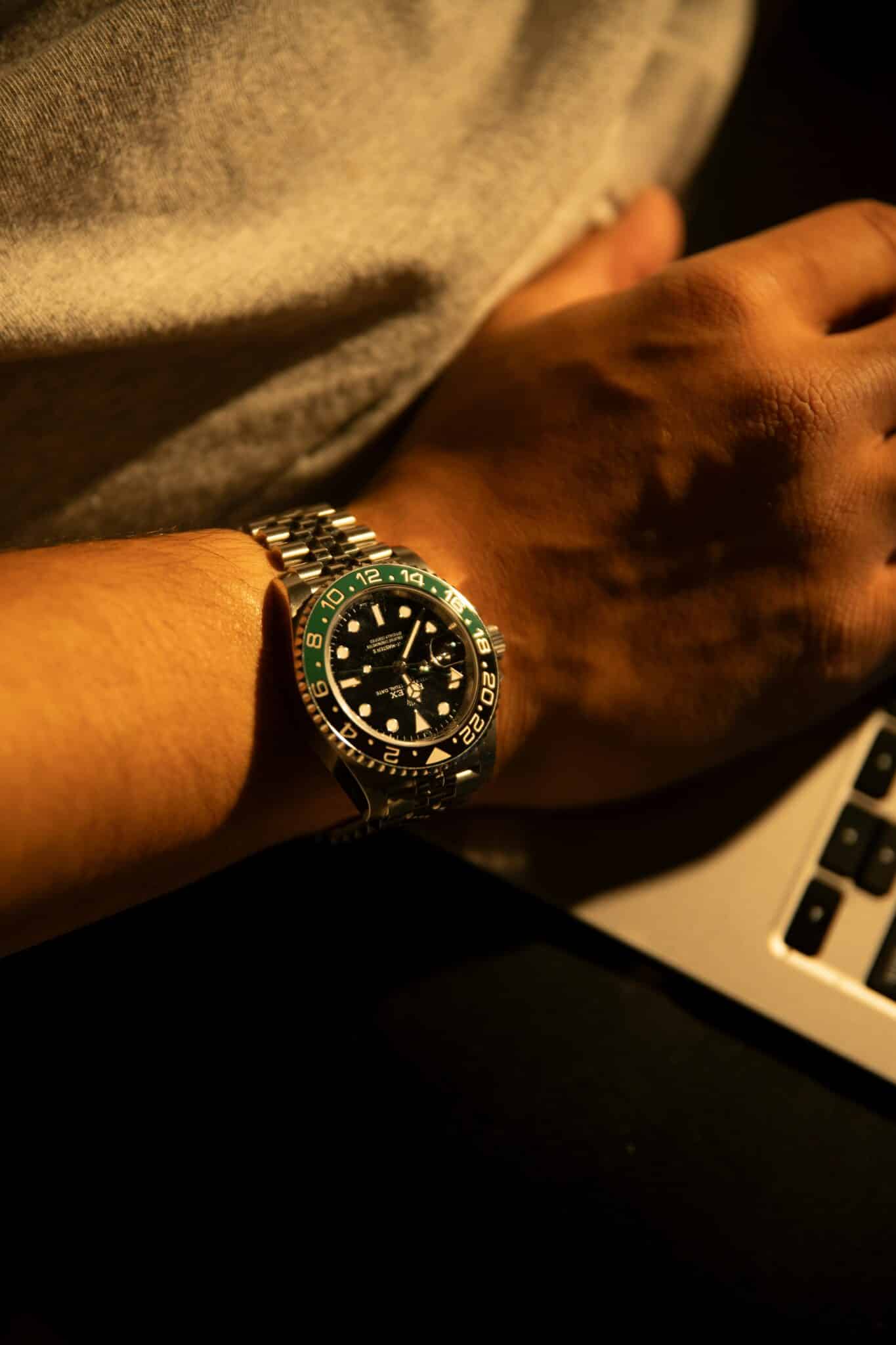
Watches of Switzerland reported a 22% increase in pre-owned revenue in FY2026, while Rolex’s Certified Pre-Owned programme is giving the manufacturer a greater role in the secondary market. This is strategically important. Instead of allowing the grey market to determine the entire economic value of its products, Rolex can increasingly control authentication, servicing and provenance. The secondary market stops being a threat and becomes another layer of the business.
That fits with Rolex’s unusual corporate structure. The foundation that owns the company gives it an independence almost impossible for most publicly traded luxury groups to replicate. As EBM recently examined in its analysis of the Rolex Foundation, the structure allows the business to take extraordinarily long-term decisions without the pressure of quarterly earnings or an external shareholder demanding faster growth.
Rolex Has Not Lost Its Magic. The Easy Money Has
That may ultimately make the market healthier. The person who bought five watches because they expected to sell them at a £10,000 profit is no longer setting the tone. The collector who wants a particular Submariner because it represents a piece of horological history is much more valuable to Rolex in the long run. One creates artificial demand that disappears when prices stop rising; the other creates an enduring relationship with the brand.
The broader luxury market is reaching the same conclusion. Consumers have not stopped spending. They are simply demanding more from what they buy. America is stronger, exceptional watches are commanding extraordinary prices and the pre-owned market is becoming increasingly important, while the middle of the market is under pressure. The industry is moving away from the pandemic-era fantasy that every luxury object is an appreciating asset and back towards something more traditional: desire has to come before price appreciation.
The Bigger Picture
Perhaps Rolex has not lost its magic at all. Perhaps the market simply stopped believing that the magic could be measured in pounds and dollars.
The smartphone killed the practical need for a mechanical watch years ago. The pandemic temporarily created another reason to buy one: speculation. That reason has now largely disappeared. What remains is arguably the more durable proposition — craftsmanship, status, heritage, design and the pleasure of owning something mechanical in an increasingly digital world.
That leaves Rolex in a stronger position than the headlines suggest. The bubble is over. Prices are no longer doing the heavy lifting. Dealers who bought at the top have learned an expensive lesson. But if the people still buying watches are buying them because they genuinely want them, rather than because they think somebody else will pay more tomorrow, Rolex may finally be returning to what it was supposed to be in the first place: a luxury watch, not a stock.