































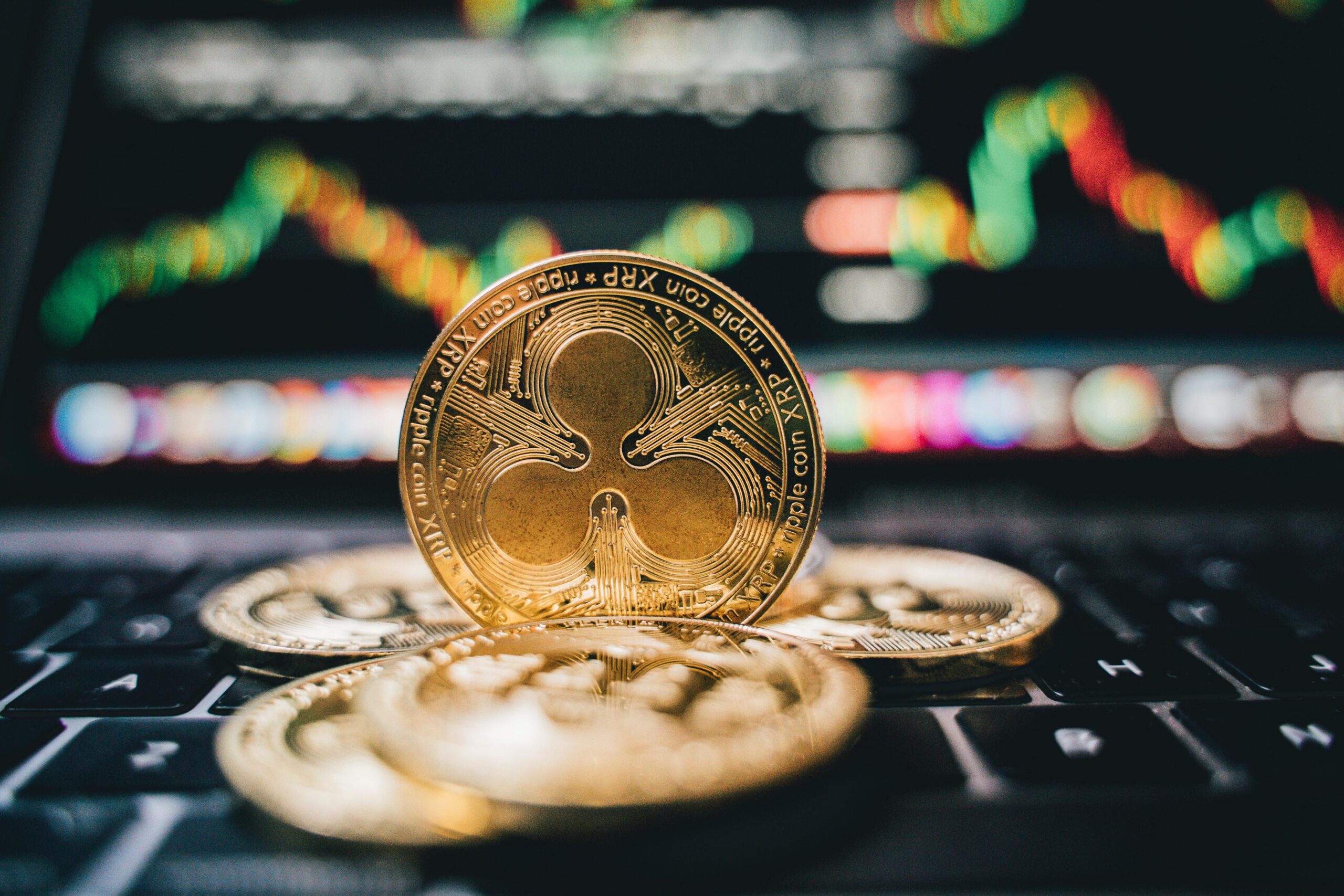
XRP has emerged as one of the strongest performers among major cryptocurrencies this week, rising roughly 40 per cent in seven days and pushing back above $1.30 after spending much of the summer struggling around the $1 level. The move has revived bullish predictions around Ripple, US regulation and institutional adoption, but the rally is being driven by a combination of market mechanics, improving sentiment and renewed expectations that Washington could finally deliver a comprehensive digital-asset framework.
The initial catalyst was broader than XRP. Bitcoin broke out of a six-week trading range as improving risk sentiment triggered a large short squeeze across cryptocurrency markets, forcing traders with bearish leveraged positions to buy back assets as prices rose. XRP then outperformed as investors returned to tokens that had lagged earlier in the summer. Large holders had also been accumulating XRP during recent weakness, helping reduce available supply as momentum returned.
Regulation has provided the more powerful narrative. President Donald Trump has renewed pressure on Congress to advance the Digital Asset Market Clarity Act, known as the CLARITY Act, which is intended to establish clearer boundaries between the Securities and Exchange Commission and Commodity Futures Trading Commission. The legislation attempts to define when digital assets should be treated as securities, when they qualify as digital commodities and what rules exchanges and intermediaries must follow.
Join The European Business Briefing
New subscribers this quarter are entered into a draw to win a Rolex Submariner. Join 40,000+ founders, investors and executives who read EBM every day.
SubscribeFor XRP, the issue carries particular significance because Ripple spent almost five years fighting the SEC over whether sales of the token violated securities law. That battle is now substantially resolved. Ripple and the SEC dismissed their appeals in August 2025, leaving in place the district court judgment that found Ripple’s direct institutional sales constituted securities transactions while programmatic sales on public exchanges were treated differently.
The CLARITY Act would therefore not suddenly “legalise” XRP, as some commentary suggests. XRP already enjoys substantially greater legal certainty than it did during the height of the SEC dispute. The importance of the legislation is that it could replace years of regulation through enforcement with a more durable statutory framework, making it easier for banks, asset managers, custodians and trading firms to assess the long-term regulatory risks of holding and using digital assets.
The bill has already passed the House, but its Senate prospects remain uncertain. A procedural vote expected in September will be watched closely because supporters need sufficient bipartisan backing to move the legislation towards full consideration. Failure would not reverse Ripple’s legal victory or eliminate existing XRP products, but it could delay the broader regulatory certainty institutions have been demanding.
Institutional infrastructure around XRP has meanwhile expanded significantly. US-listed XRP exchange-traded products have made the asset easier to access through conventional brokerage accounts, while regulated derivatives provide professional investors with tools to hedge exposure. Ripple has also been broadening its business beyond payments into stablecoins, custody, tokenisation and institutional financial infrastructure.
Its RLUSD dollar-backed stablecoin is becoming an increasingly important part of that strategy. Ripple is supporting initiatives involving institutional credit and tokenised assets on the XRP Ledger, adding to hopes that the network could eventually capture part of the rapidly developing market for blockchain-based bonds, funds, loans and other real-world assets.
Investors should nevertheless distinguish between the success of Ripple, the XRP Ledger and XRP itself. Activity conducted through RLUSD or tokenised financial instruments does not automatically create equivalent demand for XRP. The long-term valuation question is whether XRP develops a sufficiently important role as a bridge asset, liquidity instrument, collateral asset or settlement token to capture meaningful value from growth across the network.
That is also the strongest argument against the more extreme XRP forecasts. At current levels XRP already carries a market capitalisation measured in tens of billions of dollars. A move to $5 would imply a valuation above $300bn at broadly current circulating supply, while $10 would push it beyond $600bn. Such prices are not mathematically impossible, but they would require a substantial expansion in institutional demand and real-world usage rather than regulatory optimism alone.
The immediate outlook is therefore unusually sensitive to both market momentum and Washington. A successful advance of the CLARITY Act, stronger ETF inflows and continued growth in tokenised assets on XRPL could reinforce the bullish case. A reversal in Bitcoin, excessive leverage or another delay to US legislation could produce an equally sharp correction.
The biggest change in XRP, however, is not this week’s price rise. For years its investment story was dominated by the SEC lawsuit. That legal cloud has largely lifted. The debate is now shifting towards whether XRP can convert regulatory clarity, institutional infrastructure and Ripple’s expanding ecosystem into genuine economic demand. That will ultimately matter far more than any single week’s rally.